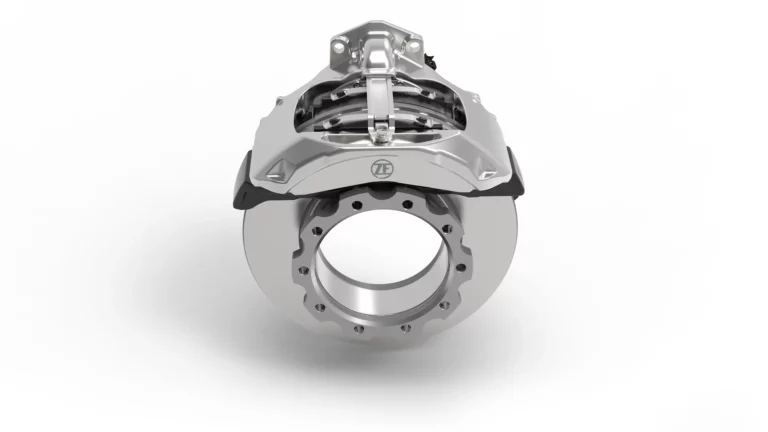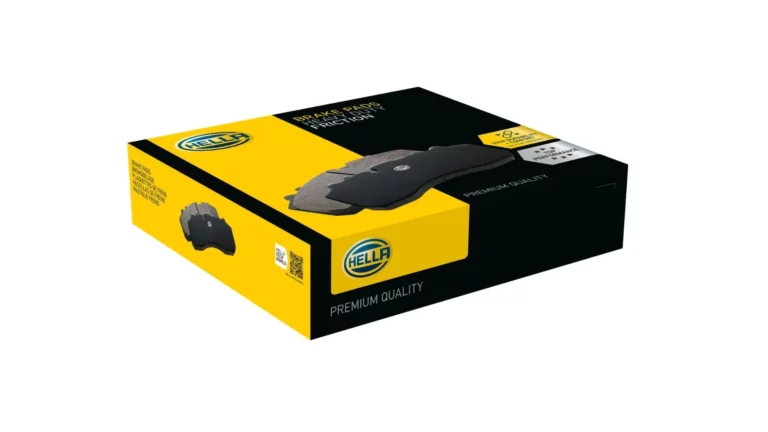


Bosch has introduced a line of disc brake pads for trucks, truck trailers, and buses that the company says reduces brake disc wear by up to 25 percent compared with the corresponding original-equipment pads. The new commercial vehicle pad program is engineered for a balanced ratio of friction coefficient, comfort, and wear characteristics, according to Bosch, and ships with the installation accessories required for the job. The company plans to double the range by the end of 2026, at which point it says the line will cover roughly 90 percent of the European commercial vehicle fleet.
Highlights
- Bosch reports up to 25 percent less brake disc wear than the corresponding OE pads, measured by an independent test institute under ISO 26866 on a Mercedes-Benz Actros
- The range doubles by the end of 2026, targeting coverage of about 90 percent of Europe’s commercial vehicle fleet
- Pads are validated against ISO 26865 and ISO 26866, voluntary procedures that go beyond legal requirements
- Initial launch covers Germany, Poland, France, and Turkey, with additional European markets to follow in stages

Coated Surface Shortens the Break-In Period
The pads are supplied with a specially roughened surface coating intended to improve how the friction material engages the disc from the first stop. Bosch says the coating shortens the break-in period and allows the pads to reach full braking power more quickly after installation — a practical concern for fleets returning vehicles to service immediately after a brake job.
The company frames the design target as a balance rather than a single-attribute优 optimization: a stable friction coefficient held under heavy use, alongside comfort and wear characteristics. Bosch says the result is consistent braking performance for the vehicle owner even under sustained load.
What Do ISO 26865 and ISO 26866 Measure?
Both standards were developed by ISO Technical Committee 22, Subcommittee 2, and apply to air-braked commercial vehicles in UNECE categories M2, M3, N2, N3, O3, and O4. ISO 26865 specifies a standard inertia-dynamometer performance test procedure for brake lining friction materials; ISO 26866 specifies the companion wear test procedure.
Bosch tests to both in addition to the legal requirements, and says the voluntary program evaluates break-in and wear behavior, heat sensitivity, and simulated downhill driving. The 25 percent disc-wear reduction figure comes from the ISO 26866 wear test, measured by an independent test institute on a Mercedes-Benz Actros against the corresponding original-equipment pads. Bosch says the reduction meaningfully extends the service life of the disc.
Coverage Target: 90 Percent of Europe’s Commercial Fleet
The doubling of the range by the end of 2026 is aimed squarely at parts sourcing. Bosch says the expanded coverage will let workshops specify a Bosch solution for the majority of common vehicles they see, consolidating trucks, trailers, and buses under a single supplier. The pad line was first outlined as part of a wider commercial vehicle aftermarket expansion that also added urea filters, steering systems, wipers, and diagnostic software.
Bosch has been building out its commercial vehicle brake position on the systems side as well, including a 50:50 joint venture for electronically controlled air brake systems with India’s TSF Group.
Rollout Begins in Four Markets
The program launches first in Germany, Poland, France, and Turkey. Bosch says other European countries will follow in stages, though the release does not specify a timeline for those markets.
Subscribe to The BRAKE Report. Get free sample chapters.