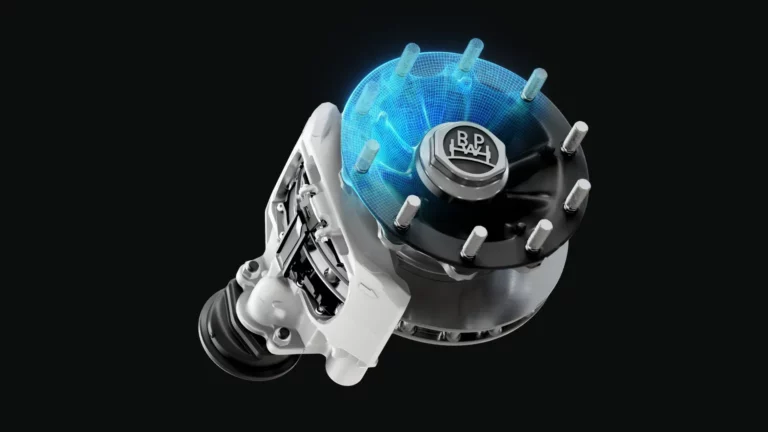
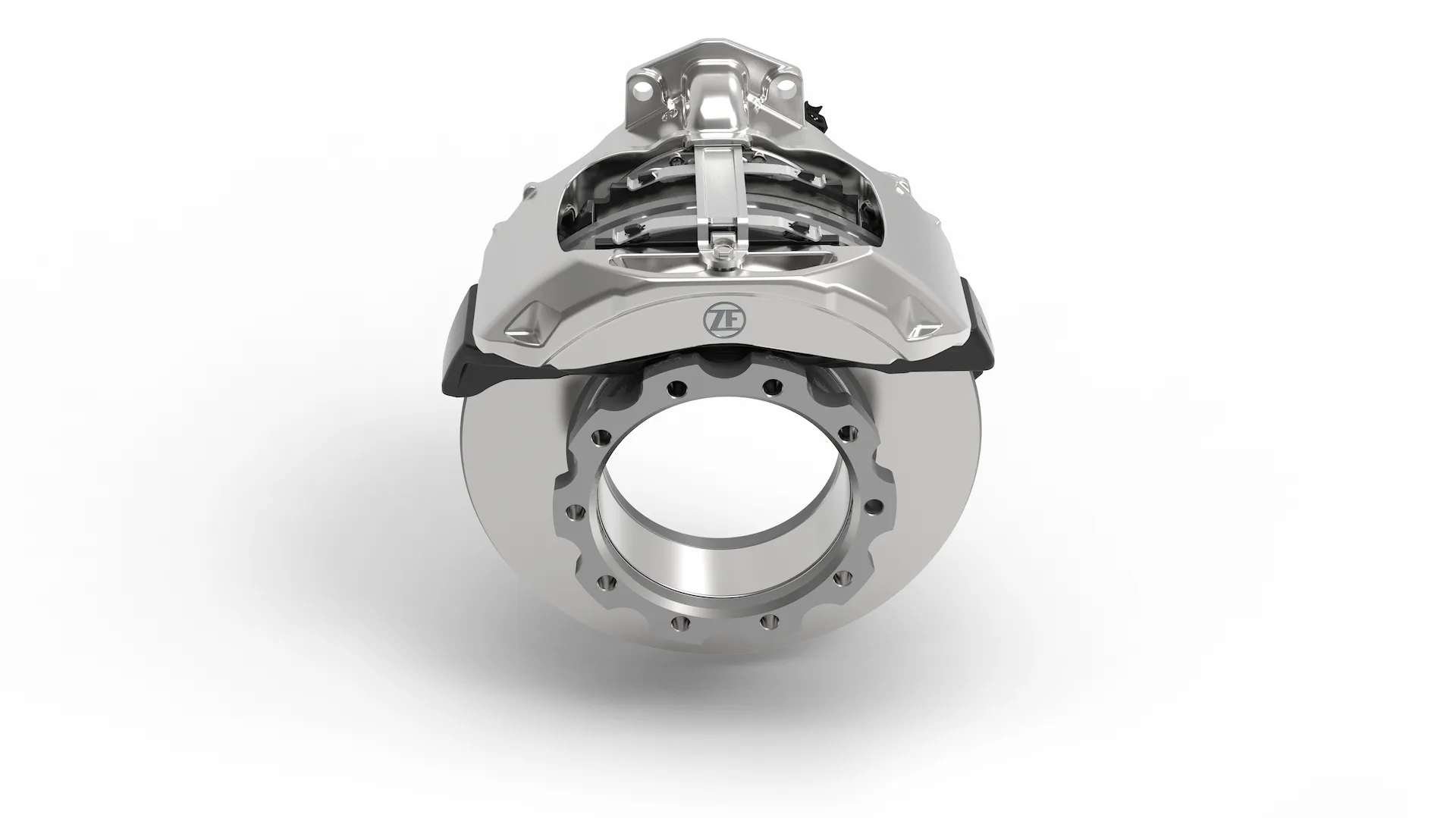

ZF is presenting the world premiere of MAXX Uniper, a next-generation air disc brake for heavy-duty commercial vehicles that the company says cuts brake-particle emissions by up to 65 percent when paired with a specially coated rotor. Introduced this week at IAA Transportation 2026 in Hanover, the brake delivers torque of up to 30,000 Nm (about 22,100 lb-ft) and is intended to help truck manufacturers meet upcoming Euro 7 brake-particle requirements, according to ZF. Start of production is expected in 2027.
Highlights
- Up to 65 percent lower PM10 brake-particle emissions in combination with a specially coated rotor, per ZF
- Brake torque of up to 30,000 Nm (about 22,100 lb-ft) for demanding heavy-duty applications
- Built on 30 years of single-piston air disc brake development and 12 million units sold
- Production start expected in 2027, with a modular design intended for use across global heavy-duty platforms
What Is the ZF MAXX Uniper Air Disc Brake?
MAXX Uniper is the next generation of ZF’s MAXX air disc brake platform. The company positions it as a response to two demands at once: the performance and operational needs of today’s heavy-duty fleets, and the brake-particle limits arriving with Euro 7. ZF says the specially coated rotor is what drives the emissions reduction, while the brake itself is engineered to hold consistent performance under demanding operating conditions.
The design carries forward ZF’s single-piston architecture. The company reports more than 30 years of work on single-piston air disc brakes and 12 million units sold to date.
Single-Piston Design and Bi-Directional Adjuster
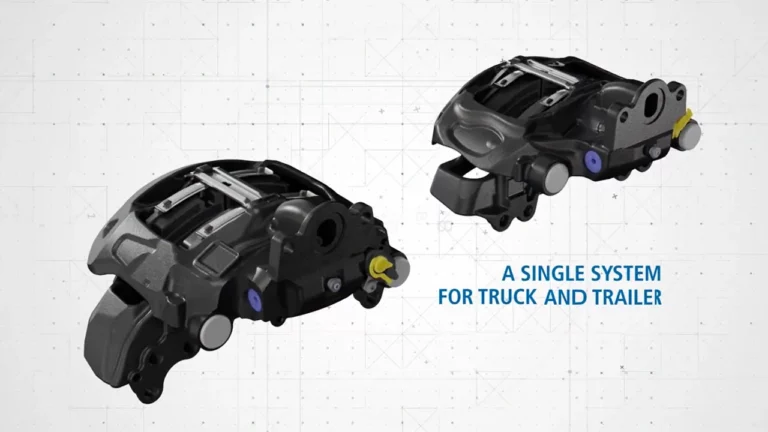
At the center of the brake is a bi-directional adjuster that regulates running clearance between the pad and rotor. ZF says the adjuster has been tested and validated under demanding environmental conditions, and that it supports even pad wear while reducing the risk of overadjustment.
The compact design uses fewer parts, which the company says supports reliability and simplifies servicing. A new carrier and brake pad system is intended to make pad replacement more convenient.
The modular architecture is meant to let vehicle manufacturers apply a single air disc brake concept across global heavy-duty commercial vehicle platforms and applications, reducing application and release effort on the OEM side.
“MAXX Uniper brings together what the commercial vehicle industry needs for the EURO 7 era: reduced brake-dust emissions, powerful braking performance and proven reliability,” said Pawel Porczynski, Head of Business Unit Chassis Solutions, CVS Division. “It demonstrates how ZF is translating evolving regulatory requirements into practical technology that creates value for vehicle manufacturers and fleets.”
Fleet Maintenance Features
For fleet operators, ZF points to the simplified pad replacement and an optional plug-and-play continuous wear sensor. The sensor is exchangeable and calibration-free, which the company says reduces maintenance effort and increases vehicle uptime. Robust sealing protects the brake against dirt and debris in harsh operating environments.
Euro 7 and Integrated Axle Systems
ZF frames MAXX Uniper as one element of a broader technology portfolio aimed at helping manufacturers meet Euro 7 requirements, a regulatory shift that has already pushed suppliers to invest in brake particle emissions testing and coated-rotor development. The company says the brake strengthens its ability to supply integrated axle systems for conventional, hybrid, and fully electric commercial vehicles.
By pairing its low-brake-dust technology with electrified chassis and driveline solutions, ZF says manufacturers can lower the environmental impact of road transportation. The commercial vehicle launch follows the company’s push on the passenger-car side, where its brake-by-wire portfolio also targets reduced pad-abrasion particulates.
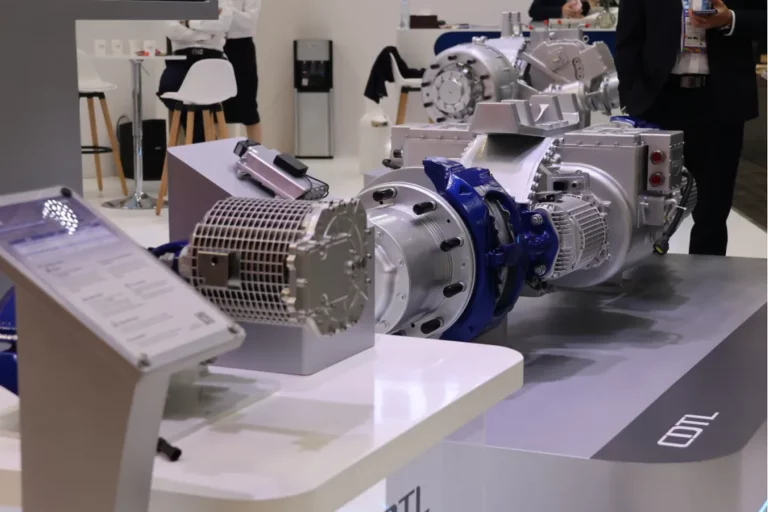
ZF at IAA Transportation 2026
ZF is showing MAXX Uniper alongside its other commercial vehicle technologies at IAA Transportation 2026 in Hanover. The company’s display is in Hall 21, Booth B42, through September 20, 2026.