

Otto Zimmermann GmbH is deploying advanced particle measurement methods and friction-pair development to meet the brake dust limits introduced under the European Union’s Euro 7 standard. The Sinsheim-Dühren-based manufacturer said its testing program centers on the WLTP Brake Cycle and a sealed emissions test bench, with data feeding directly into next-generation brake disc and pad development. Additional detail on the company’s product portfolio is available through Otto Zimmermann GmbH.
Highlights
- Euro 7 imposes a 7 mg/km PM10 limit for passenger cars and roughly 3 mg/km for battery electric vehicles, measured across all four brakes.
- The WLTP Brake Cycle runs 303 braking events over approximately four hours and 192 km.
- A full test sequence, including bedding-in, takes two to three days.
- Zimmermann is using the data to refine disc-and-pad friction pairings for abrasion reduction and sustained performance.
Regulatory Backdrop: Brake Emissions Enter Scope
Euro 7 marks the first time brake-related particulate matter is subject to regulatory limits at the European level. For passenger cars, the standard sets a ceiling of 7 mg/km of PM10 emissions per vehicle, measured across all four corners. Battery electric vehicles, which lean heavily on regenerative braking and therefore engage the friction brakes less often, face a tighter limit of approximately 3 mg/km PM10.
The regulation shifts a meaningful share of engineering attention away from tailpipe output and toward non-exhaust sources, where brakes and tires are now the dominant contributors in electrified fleets. Other suppliers, including Bosch with its high-precision brake test bench, have made similar investments in emissions measurement capability ahead of enforcement.
Inside the Zimmermann Test Setup
According to the company, brake dust emissions are measured under reproducible laboratory conditions rather than on the road. The complete braking system — disc, pads, and caliper — is operated inside a sealed test chamber. A defined airflow, with controlled temperature and humidity, carries the particles generated during braking to downstream measurement systems.
The enclosed design is intended to minimize measurement losses and deliver repeatable results, according to Otto Zimmermann.
The WLTP Brake Cycle
Rather than evaluating isolated braking maneuvers, the test bench runs the WLTP Brake Cycle, a sequence derived from real-world driving data. The cycle mixes city, country-road, and highway conditions into 303 braking events spanning roughly four hours and 192 km.
Bedding-in is a significant portion of the protocol. Zimmermann said the break-in phase involves five repetitions and more than 1,000 braking operations to condition the components before measurement begins. A complete test sequence, including bedding-in, can run two to three days.
Particle Measurement Instrumentation
Zimmermann uses three complementary measurement methods during a cycle:
- Aerosol spectrometers record particle size distribution in real time.
- Condensation particle counters (CPC) determine the number of emitted particles.
- Gravimetric filters measure particle mass via weighing.
The combination allows both particle count and particle mass to be evaluated against the Euro 7 thresholds.
Development Implications
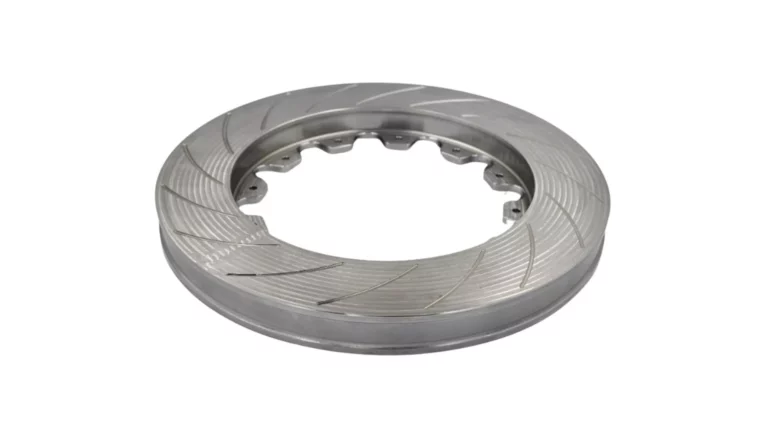
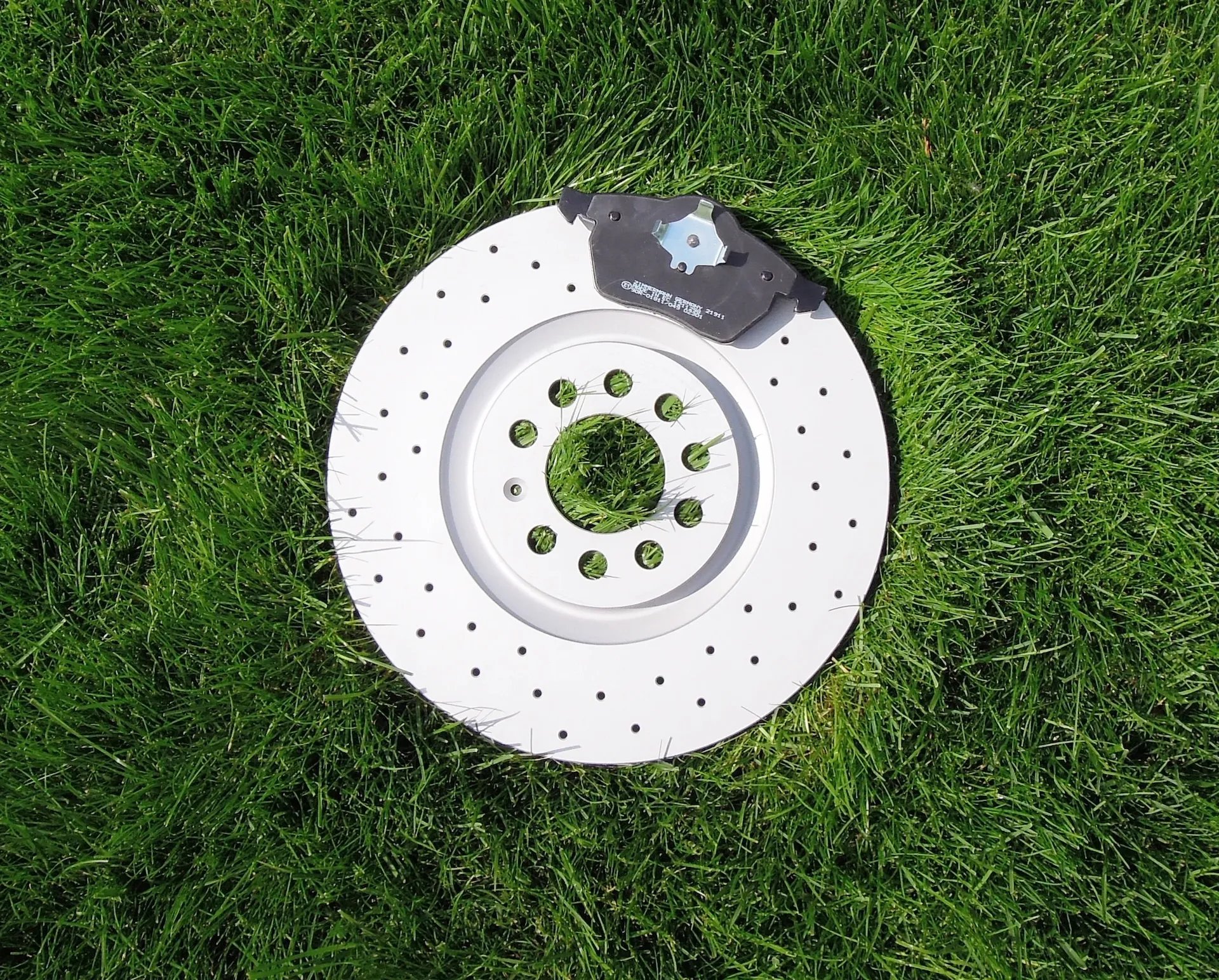
The company said test data is being applied directly to the development of friction pairings — the disc-and-pad combinations that determine both wear behavior and braking characteristics. Zimmermann identified three development priorities: reducing abrasion and fine dust generation, maintaining consistent braking performance, and preserving everyday usability in real-world operating conditions.
“The Euro 7 standard presents the entire industry with new challenges. At the same time, it offers the opportunity to further develop existing technologies and establish innovative solutions,” the company stated.
Insights from the test program are already being incorporated into products aimed at Euro 7 compliance. The company has previously introduced low-dust formulations under its rd:z brake pad line, positioning the test-bench work as part of a broader product roadmap rather than a one-off compliance exercise.
Zimmermann, a TecDoc Premium Data Supplier, distributes more than 4,000 brake components to over 70 countries.
Subscribe to The BRAKE Report. Get free sample chapters.