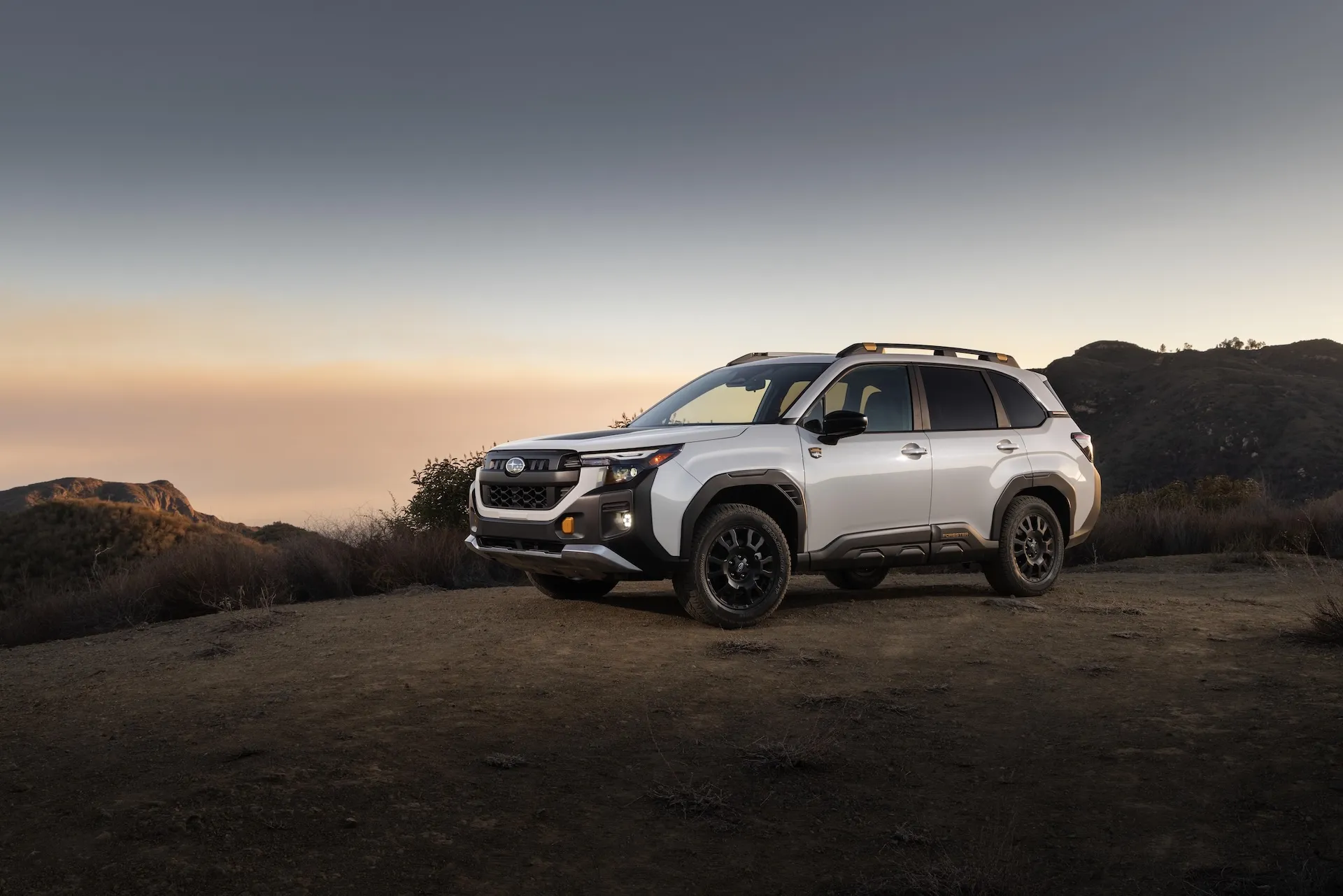

Subaru of America faces a new proposed class action alleging that EyeSight automatic emergency braking activates the hydraulic brake system without driver input or any detected obstacle, covering 2022–2026 model-year vehicles across nine nameplates. The 87-page complaint in Hall et al. v. Subaru of America, Inc., case number 1:26-cv-05266, was filed May 11, 2026 in the U.S. District Court for the District of New Jersey. The filing alleges miscommunication among the ABS control module, transmission control module, engine control module, and Vehicle Dynamic Control module commands unwanted brake application in real-world driving.
Highlights
- Filed May 11, 2026 in District of New Jersey, case 1:26-cv-05266
- Covers 2023–2026 Legacy, Outback, and Ascent; 2024–2026 Impreza and Crosstrek; 2022–2026 Forester and WRX; and 2025–2026 BRZ
- Complaint cites more than 25 NHTSA consumer complaints involving the affected vehicles
- Filing references a 2015 EyeSight-related recall tied to Brake Lamp Switch fault detection
The Brake-Actuation Allegations
The complaint centers on how EyeSight commands brake application. According to the filing, when the system’s stereo cameras and sensors detect what is interpreted as an obstacle, the EyeSight control module instructs the ABS Control Module to apply the brakes, the Transmission Control Module to shift gears, and the Engine Control Module to cut power. Integration and calibration of these modules is described in the complaint as Subaru’s responsibility.
The plaintiffs allege the system was “improperly” tuned to apply full braking force whenever the cameras perceive a stationary object, regardless of size or actual collision risk. As a result, according to the filing, “the systems activate unnecessarily early and with unnecessary force,” producing what the complaint calls a “clear-cut safety hazard.” The filing also alleges the same system fails to activate in some scenarios it was designed to detect, including pedestrians and stopped vehicles entering the path of travel.
The Vehicle Dynamic Control module is identified in the complaint as one of the modules involved in commanding brake application during AEB events. Specific allegations include the AEB system applying the brakes hard enough to cause the antilock brake system to trigger, with one named plaintiff describing decelerations from approximately 40 mph to 15 mph during an unwanted activation event.
A 2015 Recall the Complaint Brings Back
The new filing draws on a Subaru product campaign bulletin from June 30, 2015, that announced a recall of certain 2015 Legacy, Outback, Impreza, Crosstrek, and 2016 WRX vehicles over an interaction between the Driver Assist System and the Brake Lamp Switch. As described in the bulletin and quoted in the complaint, a Brake Lamp Switch failure was correctly detected by the Vehicle Dynamic Control system but not promptly by the Driver Assist System, resulting in delayed driver notification and, critically, “no automatic braking, including Adaptive Cruise Control and Pre-Collision Braking.” The remedy was a reprogramming of the Driver Assist System.
The Hall complaint cites this 2015 campaign as evidence that integration failures between EyeSight and the underlying braking architecture have been documented by Subaru itself for more than a decade. The filing also references an October 2018 technical service bulletin instructing dealers on additional diagnostic procedures around DTC C0075, identified as the Wheel Cylinder Pressure Sensor Output code, with the goal of reducing unnecessary hydraulic unit assembly replacements.
NHTSA Complaints and a Prior Settlement
The complaint references more than 25 NHTSA consumer complaints concerning the class vehicles, including incidents at highway speeds with no obstruction present. One complaint cited in the filing involved a 2024 Crosstrek that allegedly applied its brakes twice without driver input on a highway at 65 mph and was subsequently struck from behind.
The filing also references Sampson v. Subaru of America, Inc., case 1:21-cv-10284, the predecessor class action previously covered by The BRAKE Report, which Subaru settled. The Hall complaint argues that the persistence of the same alleged defect mechanisms into current model years — including vehicles built well after the prior settlement — indicates Subaru has not implemented effective remedial measures.
EyeSight has been continuously revised across model years, with the 2025 Forester adopting an electric brake booster alongside updated control software as part of its EyeSight refresh. The Hall filing nevertheless alleges that 2025 and 2026 model-year vehicles continue to exhibit the same brake-actuation behavior described in earlier-model-year complaints.