

The May international brake recall picture had one clear headline. Hyundai pulled tens of thousands of vehicles across two countries over unintended automatic braking.
Our monthly sweep covered Transport Canada, the EU Safety Gate, Germany’s Kraftfahrt-Bundesamt, car-recalls.eu, and Japan’s MLIT. Brake-specific activity in the European and Asian streams stayed light through the month. Most EU Safety Gate and KBA entries flagged emissions, fire, drive-shaft, or airbag faults instead.
The Hyundai action therefore stands out. It also ties together three themes our readers track: ADAS-integrated braking, supplier exposure, and cross-border scope.
Hyundai’s phantom-braking recall spans the US and Canada
Hyundai is recalling 81,646 vehicles in Canada over a forward collision-avoidance defect. Transport Canada posted the notice on May 19 and later updated it. The notice states that a software problem with the front camera could cause the forward collision avoidance system to brake suddenly.
The Canadian campaign covers 2025–2026 Tucson, Tucson Hybrid, Tucson Plug-In Hybrid, and Santa Cruz models. For the 2026 Tucson, the recall reaches gas, hybrid, and plug-in hybrid variants. Hyundai will advise owners to visit a dealership for a front-camera software update, and owners can contact Hyundai at 1-888-216-2626.
The US parallel is far larger. Hyundai Motor America is recalling 421,078 model year 2025-2026 Santa Cruz, Tucson, Tucson Hybrid, and Tucson Plug-In Hybrid vehicles because the Forward Collision Avoidance system can apply the brakes earlier than the driver expects. The campaign carries recall identification number 26V316. Hyundai’s internal number is 302.
So this is not an international-first action. Both NHTSA and Transport Canada have filed. The international value sits in the supplier and technology detail below.
The defect traces to front-camera software
The root cause is calibration, not hardware. The forward collision avoidance system may exhibit increased sensitivity to forward object proximity in certain driving scenarios because of the front camera software. That condition can result in FCA engagement earlier than the operator expects, leading to sudden braking.
The safety consequence is a rear-end strike. Sudden braking may increase the risk of a rear-end crash with closely following vehicles. Federal documents linked the issue to four reported rear-end collisions, with no fatalities reported.
For our supplier-focused readers, the key name is Mobis. The supplier of the front-view camera is Mobis, the Tier 1 component manufacturer based in Chungcheongbuk-do, South Korea. The recall covers five front-view camera part numbers: 99211-N7050, 99211-CW500, 99211-N7000, 99211-N7020, and 99211-N7030.
The remedy is a software flash, not a parts swap. Dealers will reprogram the multifunction camera at no charge. Hyundai will also reimburse owners for out-of-pocket expenses, under a reimbursement plan submitted to NHTSA on March 2, 2026.
The investigation ran for more than a year
The timeline shows a slow-building field action. NHTSA’s Office of Defects Investigation opened an inquiry about Tucson FCA allegations in September 2025, and Hyundai briefed the agency five separate times between September 2025 and May 2026.
Engineering work crossed continents. Hyundai completed prototype software testing at the California Proving Grounds in February 2026, then ran follow-up evaluation at South Korean test tracks in March and April. Its North America Safety Decision Authority decided on May 11, 2026 to conduct the recall.
The report volume was substantial. As of the decision date, Hyundai had received 376 reports related to FCA operation between October 28, 2024, and April 27, 2026. The estimated defect rate is roughly one percent of the affected population.
The US fleet breakdown shows the scale. The campaign covers the Tucson at 292,805 units, the Tucson Hybrid at 110,844, the Tucson Plug-In Hybrid at 4,347, and the Santa Cruz pickup at 13,082. Canada adds the 81,646 figure on top.
The Bosch brake-booster pattern keeps spreading
A separate supplier thread continued through European registers in May. Ford’s electronic brake booster saga keeps surfacing in national databases beyond the United States.
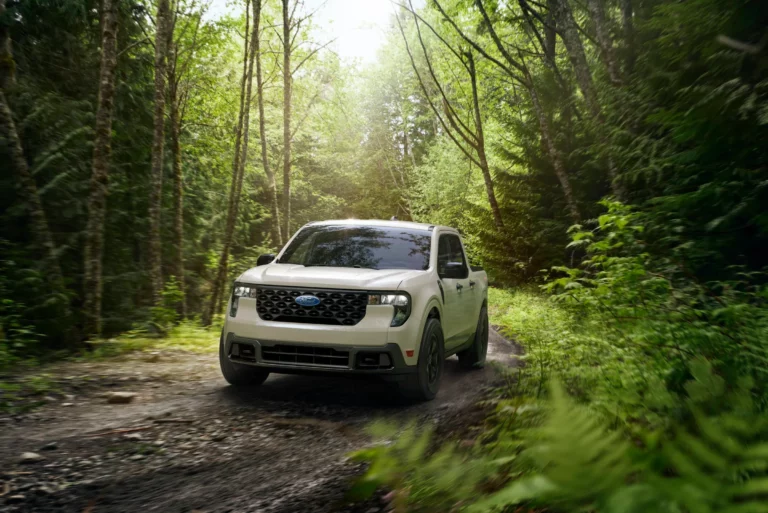
Ireland’s market-surveillance authority lists a Ford Ranger action. The vehicles may suffer a loss of power brake assist, increased pedal travel, and extended braking distance. The listing covers 804 vehicles in the Republic of Ireland, produced between 27 June 2024 and 24 June 2025.
This is the same electronic brake booster family we tracked earlier in 2026. The EU Safety Gate previously logged a Ranger booster campaign exceeding 340,000 units. Bosch supplied the affected modules in the North American actions, which makes this a clear cross-border supplier pattern rather than an isolated build error.
Fleet operators running European Ranger pickups should verify their booster repair status. The defect degrades both manual braking and ADAS-commanded braking.
Regulatory backdrop for automated braking
Both May themes point at the same regulatory shift. Automatic emergency braking is moving from optional feature to mandated system.
In Europe, AEB is required under the General Safety Regulation and governed technically by UN Regulation 152. In the United States, NHTSA has finalized an AEB mandate for light vehicles, with compliance phasing in later this decade.
That context matters for our audience. As AEB becomes universal, calibration faults like Hyundai’s claim a larger share of brake recall volume. The failure mode shifts from worn pads and leaking lines toward sensor logic and software tuning.
Suppliers such as Mobis, Bosch, Continental, and ZF now carry braking-relevant software risk, not just hardware risk. Expect that trend to define the international brake recall landscape going forward.
Story leads we’re watching
Several threads from May warrant continued tracking.
First, watch for a Korean follow-on. A direct sweep of KOTSA found no domestic Tucson or Santa Cruz FCA recall yet. Because the Mobis camera originates with a Korea-based Tier 1 supplier, a domestic-market action remains plausible.
Second, watch Japan. The MLIT recall portal sat under maintenance during our sweep, so we found no confirmed May brake filings there. We will recheck once the database returns.
Third, watch the Hyundai litigation link. The recall lands roughly ten weeks after a class action alleged a phantom braking defect in the 2025 Tucson and Tucson Hybrid FCA system. The recall scope and the litigation describe the same behavior.
Fourth, watch the Bosch EBB campaign migrate further. Ireland’s listing suggests other European national authorities may post parallel Ranger actions as owner data propagates.
Campaign references and contacts
- Hyundai FCA phantom braking — Canada: Transport Canada filings dated May 28, 81,646 vehicles; Hyundai Canada 1-888-216-2626.
- Hyundai FCA phantom braking — US parallel: NHTSA 26V316 / Hyundai 302, 421,078 vehicles; Hyundai customer service 1-855-371-9460.
- Front-camera supplier: Hyundai Mobis, South Korea. Affected part numbers: 99211-N7050, 99211-CW500, 99211-N7000, 99211-N7020, 99211-N7030.
- Ford Ranger power-brake-assist (EBB) — Ireland/EU: 804 vehicles listed by Ireland’s AMSA; continuation of the wider Bosch EBB campaign.
Subscribe to The BRAKE Report. Get free sample chapters.