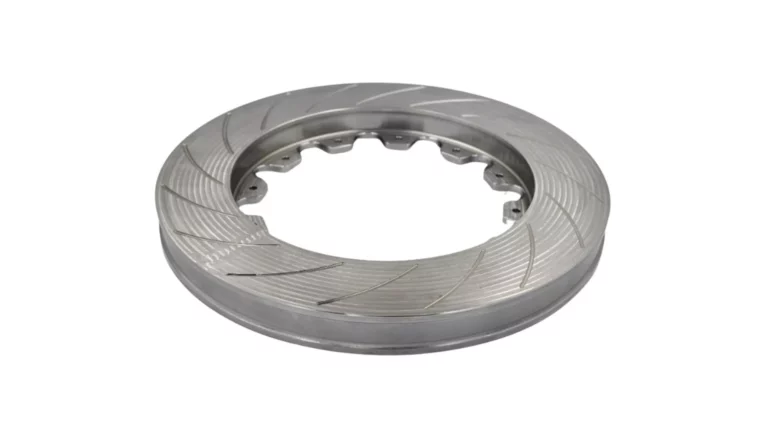
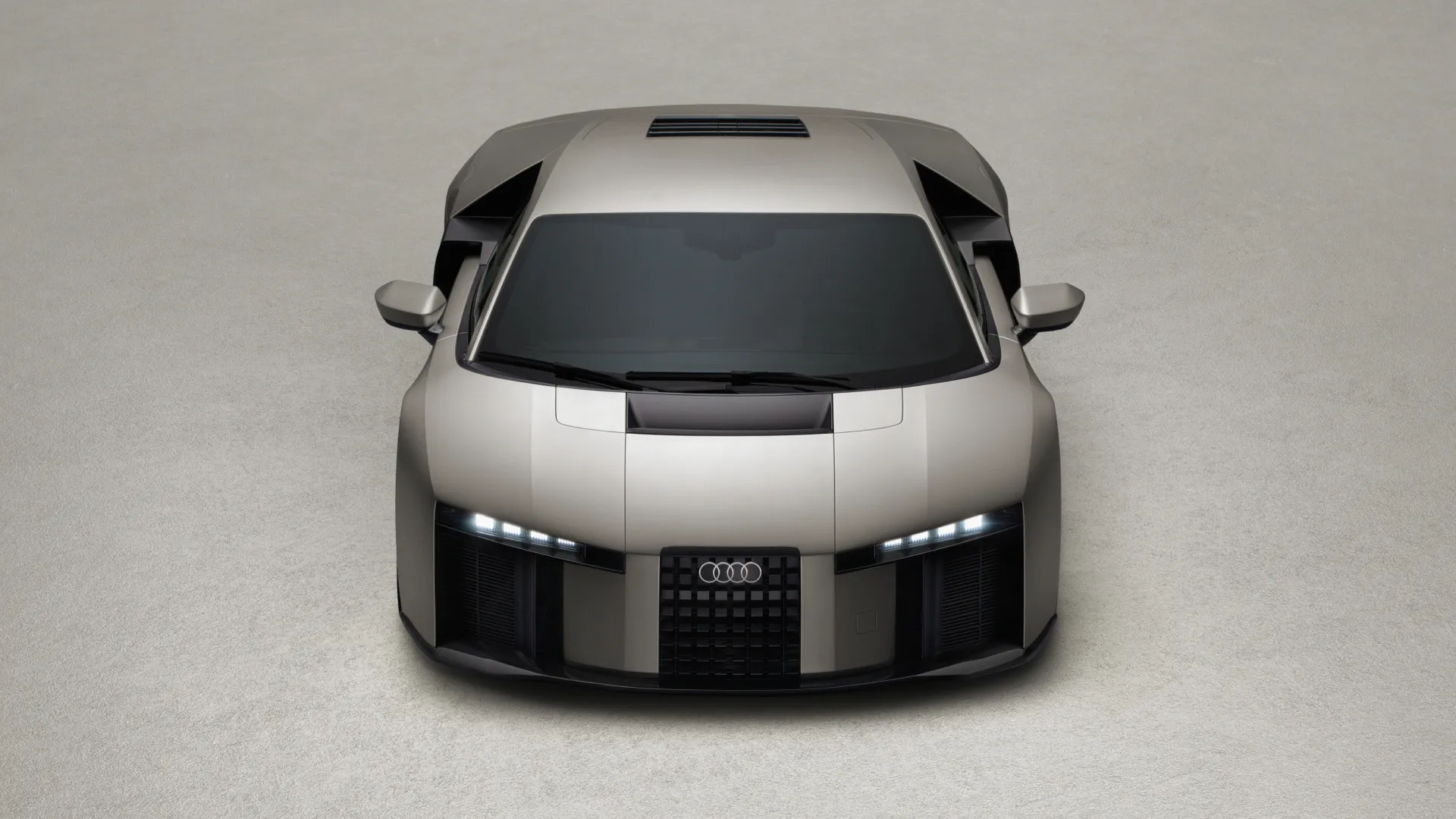

The Audi Nuvolari introduces the new Audi Ceramic Pro braking system, a brake-by-wire setup with ten-piston front calipers on 420 × 40 mm discs and four-piston rears on 410 × 32 mm discs. Audi developed it for its first supercar with a high-performance hybrid powertrain, a 1,001-PS hybrid limited to 499 units. The brake discs use a long-fiber carbon structure derived from Formula 1, and the pedal is functionally decoupled from braking force at the wheels. According to the company, the system can absorb up to 2.8 megawatts of energy — a figure it compares to a current Formula 1 car.
Highlights
- Audi Ceramic Pro system with ten-piston front fixed calipers (420 × 40 mm discs) and four-piston rear calipers (410 × 32 mm discs)
- Brake-by-wire with variable distribution between regeneration and hydraulic braking
- Up to 0.3 g of deceleration from regeneration alone; up to 2.8 MW energy absorption (company-reported)
- Internal disc cooling that the company says raises heat dissipation by up to 21% versus conventional carbon-ceramic systems

Brake-by-wire with a variable regen split
The motorsport-derived brake-by-wire layout allows variable distribution between recuperation and hydraulic braking. Because the pedal is decoupled from actual braking force at the wheels, Audi targets a consistent pedal feel whether the car is slowing through friction or regeneration. Under suitable conditions, a significant portion of deceleration is handled purely electrically; the hydraulic brakes are blended in only under higher braking demand or near the limits of vehicle dynamics.
Formula 1-derived carbon discs
At the center of the system is the Audi Ceramic Pro disc, built on a long-fiber carbon structure derived from Formula 1 and designed to withstand extreme thermal loads without losing structural integrity or consistent friction characteristics. A dedicated internal cooling system improves airflow and, according to the company, increases heat dissipation by up to 21% compared with conventional carbon-ceramic systems. The ten-piston front and four-piston rear calipers are paired with the discs for thermal stability and pedal feedback across the speed range. The use of carbon-ceramic discs and regenerative braking together places the Nuvolari among a growing set of performance models adopting ceramic brakes to manage heavier, electrified drivetrains.
Regeneration carries much of the load
Energy recovery is tied to torque distribution and extended across nearly all driving phases. The front-axle motors take on a significant share of electric deceleration, while the rear axle recovers energy during coasting, partial-load, and traction-control phases. Purely electric deceleration of up to 0.3 g covers a large share of everyday and dynamic braking events, stabilizing the car while charging the battery.

Built to Formula 1 thermal limits
Audi cites an energy-absorption capacity of up to 2.8 megawatts, which the company says is on par with a current Formula 1 car and allows the system to handle extreme deceleration loads without fade or overheating on track. The company also reports reduced longitudinal vibration under heavy braking, improved directional stability, and shorter braking distances at high speed.
The braking system is one element of a broader Formula 1-influenced engineering package on the Nuvolari, which Audi limits to 499 units with deliveries beginning in the first half of 2027.
Subscribe to The BRAKE Report. Get free sample chapters.