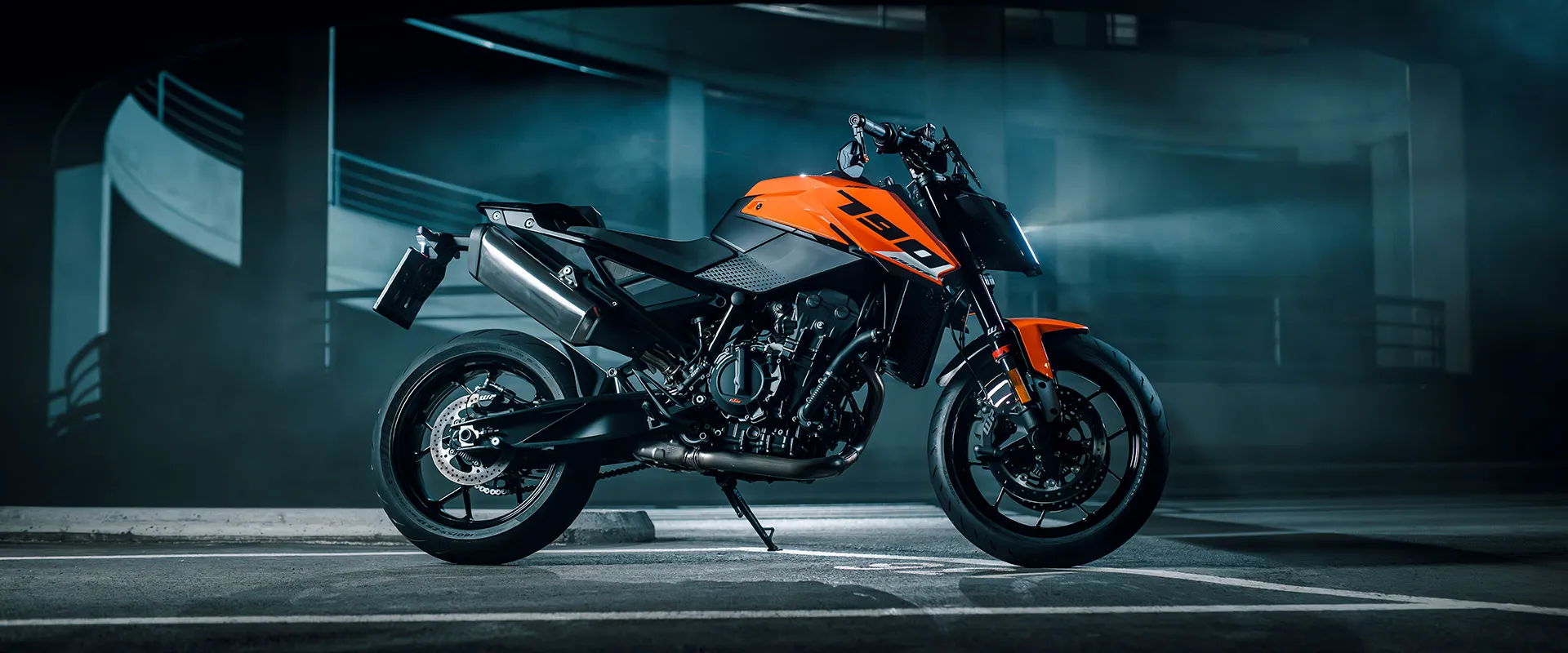

WP’s in-house braking hardware has reached a second KTM model, equipping the 2026 790 Duke after debuting on the smaller 390 Duke earlier this year. The move deepens a vertical-integration strategy that keeps suspension and braking development under one roof, with WP Braking Systems supplying calipers, master cylinders, and braided brake hoses developed specifically for KTM-group machines. On the 790, those brakes are paired with revised, more aggressive pads and 43 mm WP Apex forks offering five-stage rebound and compression adjustment.
Highlights
- WP’s braking hardware now equips the 2026 KTM 790 Duke, its second application after the 390 Duke earlier this year.
- The 790 Duke combines the brakes with 43 mm (1.7-inch) WP Apex forks offering five-stage rebound and compression adjustment.
- WP produces calipers, master cylinders, and braided brake hoses in-house but continues to source discs from Galfer.
- The braking program began roughly five years ago, predating the financial difficulties that surfaced across KTM in November 2024.
A Second Model for WP’s Brakes
The 790 Duke is the second motorcycle to carry WP’s braking hardware, following the 390 Duke that introduced the system earlier this year. The company says the 790 receives more aggressive brake pads intended to sharpen response, working alongside the brand’s own calipers, master cylinders, and braided hoses. At the model’s press launch this week, MCN’s testers reported a strong initial bite and progressive power from the front brakes.
Discs Still Come From Galfer
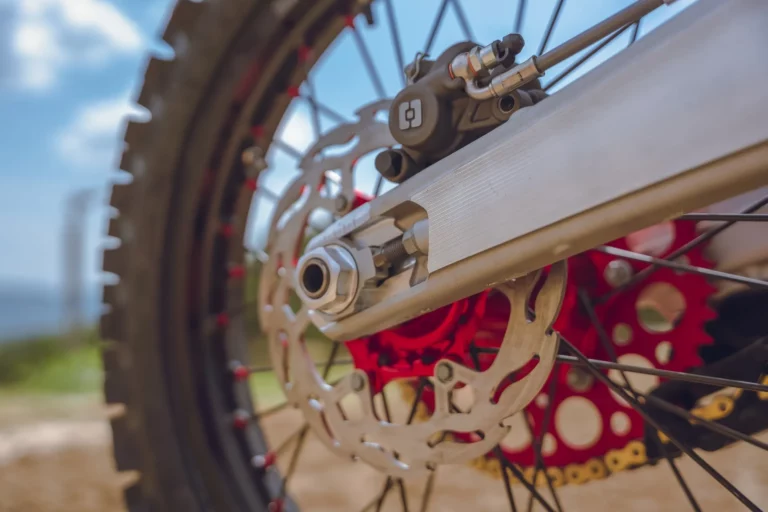
WP stops short of full vertical integration on one component: it does not yet produce its own rotors. The brand continues to source discs from Galfer, the Barcelona-based brake specialist, while keeping caliper, master-cylinder, and brake-hose development internal. That split leaves the friction surface itself with an outside supplier even as the surrounding hardware moves in-house.
A Program Five Years in the Making
The braking line is not a quick pivot. WP launched its braking division at the start of the year, but the team began developing the system roughly five years ago — well before the financial difficulties that surfaced across KTM in November 2024. The company frames the in-house approach as a way to tailor components to a specific bike rather than adapt off-the-shelf parts, and points to having both suspension and braking under one roof as a means of tuning the whole package per model. WP signals that its brakes will spread across more Pierer/Bajaj models, much as WP suspension already features widely on KTM and Husqvarna machines.
Subscribe to The BRAKE Report. Get free sample chapters.