

Editor’s update, September 18, 2026: Since this analysis was published in December 2025, First Brands Group’s Chapter 11 has run its course. The Raybestos brand was sold to Friction One and the Centric Parts brands (StopTech, Posi Quiet, C-TEK) to Motorcar Parts of America in court-supervised sales; the Brake Parts Inc. and Cardone operations were wound down; and on August 24, 2026, the court converted the case to Chapter 7 liquidation after rejecting a plan that relied on litigation recoveries to cover more than $222 million in administrative claims. The original commentary follows as published.
Expert Commentary: By Octus’ Jared Muroff & Mike Legge
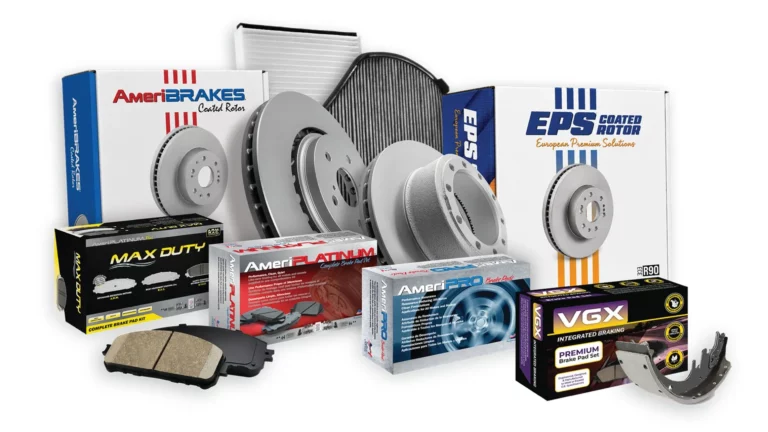
First Brands’ collapse marks one of the most significant failures the automotive supply chain has seen in recent years. Mounting leverage, a failed $6 billion refinancing, and concerns over aggressive off-balance-sheet financing pushed the parent company of Raybestos, Centric, and StopTech into Chapter 11 bankruptcy in September of this year.
What has surfaced since the filing has only heightened the industry’s attention and scrutiny. And with a new management team working to stabilize operations, creditors, regulators, and industry partners are now confronting the broader implications for transparency, supply-chain financing, and the future of several of the brake sector’s most recognizable brands.
To complicate matters further, the debtors have filed an adversary complaint accusing former CEO Patrick James of fraudulent conduct and diverting hundreds of millions of dollars from the company through financing arrangements that enriched himself and his family, alleging that he used erroneous, duplicate, and fabricated invoices to obtain $2.3bn in proceeds through factoring, while using special purpose vehicles to incur another $2.3bn in debt. Against this backdrop, a U.S. bankruptcy judge has ordered an independent probe with a $7 million budget aimed at investigating 3rd party invoices and transferred funds tied to James. New disclosures involving Banco Santander and entities in France, Mexico, and Brazil also add yet another layer of complexity to an already tangled financial picture.
To understand how we got to this point, it’s helpful to examine First Brand’s business model and the events that led to the proverbial house of cards coming down.
How Did We Get Here: Business Model & Industry Impacts
First Brands Group is a diversified automotive supplier that entered bankruptcy with over $11bn in debt, comprising $6.2 billion in on-balance-sheet funded debt and $4.6bn in off-balance-sheet financing tied to affiliate debtors. The company must use the bankruptcy process to restructure this debt while reassuring the market that it can have faith in its business model amid fraud allegations.
The company’s struggles first came to a head after its failed July refinancing, which exposed the fragility of its underlying capital structure and elevated concerns about its business model. Fast forward to this fall, with Founder Patrick James resigning on October 13th amid claims of massive financial irregularities, calling into question the ultimate potential value of the First Brands business. While substantive consolidation remains a real risk, it is one that falls more heavily on creditors across the various collateral stacks rather than on suppliers. Based on what is known so far, the impact on suppliers may be more limited, adding nuance to how stakeholders assess the road ahead.
As these issues continue to surface, pressure has intensified. The U.S. Trustee (UST) and creditors including factoring creditors Raistone and Point Bonita Capital successfully supported the appointment of an examiner to fully investigate the alleged fraud, with Point Bonita citing $885 million in unpaid receivables as a key concern.
On November 7th, First Brands received final DIP approval, unlocking $1.1B in new money to maintain operations. The DIP credit agreement also contains significantly tightened negative covenants and lender protections, setting a potential precedent for heightened oversight for an industry already under stress from tariffs. These measures include enhanced sacred rights that broaden amendments requiring consent from affected lenders, signaling just how closely stakeholders are now guarding against further risk.
At the same time, these sacred rights are not bulletproof, allowing First Brands to expand certain negative covenant flexibilities through majority or supermajority consents. That nuance highlights the complex balance between control and operational breathing room as the case continues to unfold.
However, since filing scrutiny has widened beyond the core debtor group. Aequum Capital Financial filed a motion November 10th to dismiss the chapter 11 case of First Brands debtor Broad Street Financial LLC, arguing the filing impedes its access to collateral while benefiting the broader FBG lender group. The lender underscores what it views as fundamental and irreconcilable conflicts of interest between Broad Street and FBG, who both face allegations of looting their Special Purpose Entities on the eve of bankruptcy, further strengthening calls for a trustee.
Across the industry, the case is drawing attention from regulators and creditors alike. The UST filed a reservation of rights arguing that the DIP budget must include examiner funding and that rights to challenge the DIP lenders’ prepetition secured debt must remain intact until a full investigation is completed. While these have since been resolved, the UST also argued that the final DIP order should not absolve DIP lenders of prepetition conduct before an investigation concludes.
Through its bankruptcy the estate must now satisfy all the claims against it while at the same time convincing the auto-parts market that the ultimately reorganized debtors remain a reliable counterparty, a dynamic that could have ripple effects throughout the sector. The scrutiny highlights deeper concern about transparency and governance, raising questions about how other brake suppliers may need to navigate complex factoring and affiliate structures going forward.
For now, the company is operating as it did pre-petition, with current management seeking accounts receivable financing, though it remains unclear if this will extend to reverse factoring. It is also important to note that Patrick James is no longer involved with First Brands operations, although he is still involved in the bankruptcy case even if only as a potential source of recovery, marking a meaningful shift in how stakeholders assess counterparty risk.
What Comes Next: 2026 Outlook & Beyond
First Brands faces a complicated road through Chapter 11. When the Company ultimately exits bankruptcy possibly in less than a year and potentially leaving behind a litigation trust pursuing recoveries for several years, it may need to raise capital. A reorganized First Brands Group will also likely require supply-chain financing that, in Octus’ view, must now be fully on the books.
For the brake industry, the implications extend well beyond this case. The post-bankruptcy landscape will likely favor a leaner First Brands focused on its high-performing divisions. At the same time, the debtors could not report the disposition of $1.9 billion tied to factored receivables, adding weight to the idea that there was at least ‘small-f’ fraud. Uncertainty around receivables, inventory liens, and adequate protection agreements could ultimately shape which brands (particularly Raybestos and Centric) retain operational continuity under a reorganized entity. We’ve already seen some protection being provided with, for example, DIP proceeds being specifically allocated to nondebtor Ultinon, an affiliate of First Brands that manufactures and sells automotive lighting and accessories, following a motion that was filed and subsequently granted on November 25th.
In the near term, the next phase of the First Brands case is already taking shape, with DIP lenders having agreed to cut extension fees (originally 0.75 percent of the outstanding DIP Term loans) in half, modifying the fee so it becomes payable in exchange for two 90-day extensions of the maturity date at the debtor’s discretion.
Amid continued accusations of fraud and abuse, the U.S. Trustee and creditors remain focused on securing broader oversight into alleged off-balance-sheet manipulation and governance conflicts. While the judge did not approve an injunction against Patrick James, that outcome may simply reflect a delay rather than a final determination. The U.S. Securities and Exchange Commission (SEC) has entered the fray as well, investigating Jefferies over its relationship with First Brands.
And yet, broader questions remain: is the First Brands business model fundamentally broken? And is there enough margin for every financial party involved? As noted in filings, if Patrick James was extracting significant value, the underlying business may have been performing closer to expectations.
So Where Do We Go from Here? – Important Dates to Look Out For
With pressures mounting, several key milestones now have been pushed into early 2026, extending the runway for a clearer assessment of First Brands financial position. What transpires in the following months will be pivotal, shaping how the case ultimately unfolds.
The business plan and quality of earnings reports are now due on Jan 31, 2026, aligning them with the creditors committee’s extended challenge period on the same date. Beyond those near-term deliverables, the restructuring support agreement milestone and formal launch of any sale process have both been extended to March 28, 2026, creating a new timeline for negotiations.
As these developments continue to unfold, Octus will remain closely engaged in monitoring the case, providing ongoing analysis and insights for stakeholders across the automotive, credit, and supply-chain financing markets.