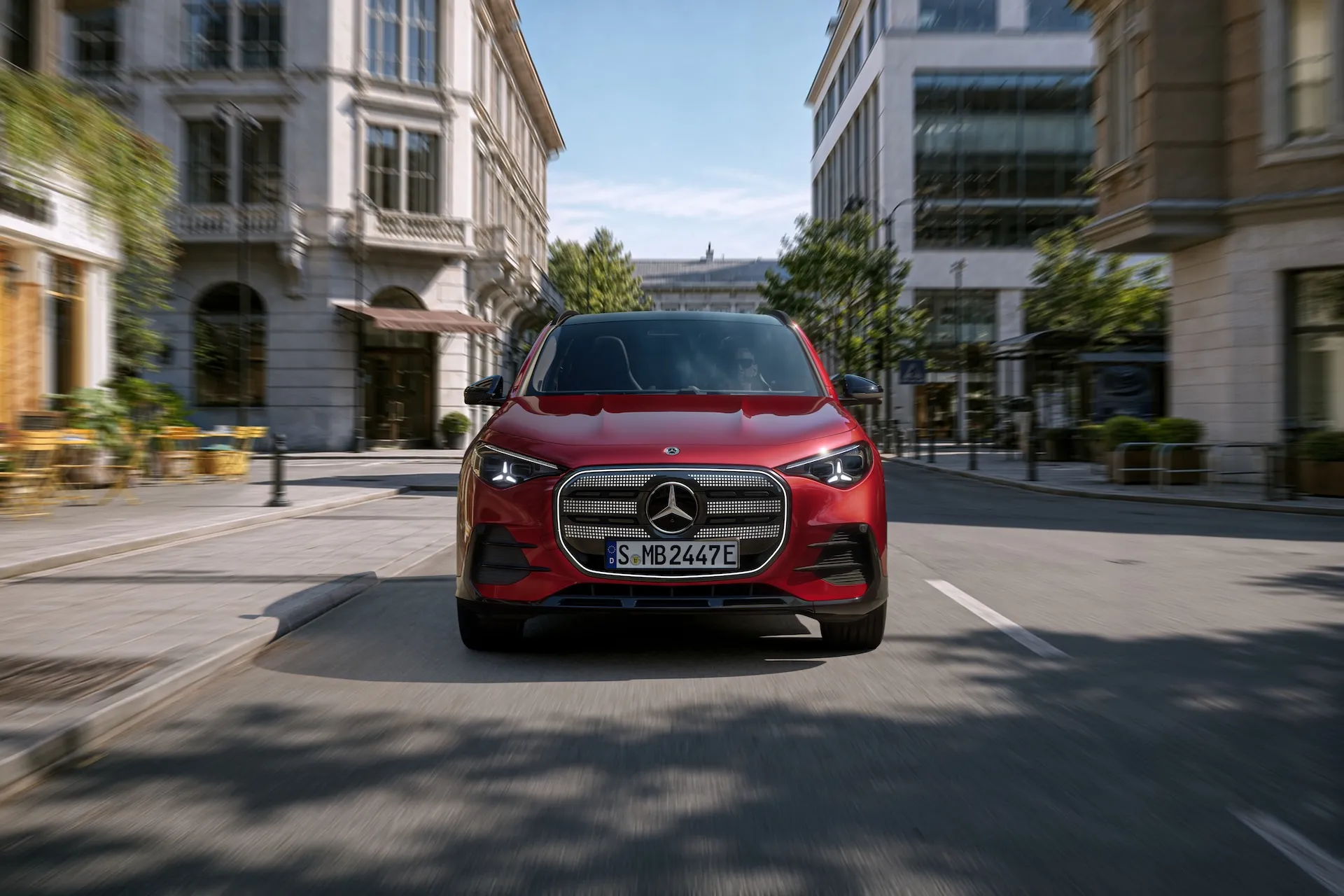

Mercedes-Benz USA is recalling 310,667 vehicles because a corroded microswitch in the driver’s door lock may prevent the electronic parking brake from engaging automatically, leaving the vehicle unsecured against rollaway. Mercedes-Benz AG (MBAG) estimates that 100 percent of the recall population carries the defect, and the scope covers the entirety of the United States and its territories. Vehicle identification numbers become searchable through the NHTSA recall lookup on July 31, 2026, the same day dealers are notified of the campaign, filed under NHTSA number 26V481.
Highlights
- 310,667 vehicles across six Mercedes-Benz platforms, with an estimated defect rate of 100 percent
- Driver-door microswitch corrosion may block automatic engagement of the electronic parking brake and the “Auto-Park” function
- 176 US field cases logged between March 1, 2021 and June 9, 2026, all comfort-function related, with no rollaway reported in the US
- Nine microswitch part numbers covered; dealers replace the driver door lock at no charge
What Causes the Microswitch to Fail?
MBAG determined that the housing material for the door-lock microswitch may be more susceptible to moisture permeation. Over time, that permeation can produce corrosion and then failure of the component, at which point the microswitch may no longer detect when the door is opened. Operation of the door lock itself is unaffected.
The filing attributes the condition to a deviation in a supplier’s development process, which resulted in certain microswitches being produced with a housing material that may not meet robustness requirements under specific climatic conditions. Kiekert AG of Heiligenhaus, Germany, is identified as the Tier 1 component source and listed as a distributor.
Nine microswitch part numbers fall within the recall: A0997201802, A0997201902, A0997202002, A0997202202, A0997202302, A0997202602, A0997202802, A0997203002 and A0997204902.
How a Door Switch Becomes a Braking Problem
Should the microswitch fail on the driver door, the electronic parking brake and the “Auto-Park” feature tied to driver-door opening may not engage automatically. The vehicle would then not be secured against rollaway and could move, increasing crash risk.
Drivers may get an early signal from comfort functions rather than from the braking system. The filing notes that the radio remaining on after the driver exits is one such indication.
Vehicles and Platforms Affected
| Model family | Model years | Platform |
|---|---|---|
| A-Class | 2019–2022 | 177 |
| CLA | 2020–2021 | 118 |
| C-Class | 2022–2023 | 206 |
| CLE | 2024 | 236 |
| GLA / GLB | 2020–2026 | 247 |
| GLC | 2023–2024 | 254 |
The 247-platform crossovers account for the largest individual populations, led by 71,696 GLB 250 4MATIC and 56,879 GLB 250 units and followed by 30,084 GLA 250 4MATIC vehicles. Among sedans, the A 220 contributes 27,057 units.
How Mercedes-Benz Reached the Recall Decision
MBAG received reports of quality failures during the 2021–2024 timeframe, including radios and lights that continued operating after vehicles were exited. Those reports appeared linked to door-lock corrosion but did not appear to raise safety concerns at the time, and the company continued monitoring field data.
In May 2025, a report from outside the United States prompted a more detailed technical assessment of the affected vehicle and the door lock component. Between June and December 2025, MBAG reviewed diagnostic data, ran vehicle and component investigations, and coordinated analyses with the supplier, examining how corrosion might affect microswitches in different environments.
Through the first half of 2026, MBAG worked to define the climatic conditions under which failure is most likely. Refinement during June and July 2026 indicated that systematic moisture accumulation requires sustained exposure to elevated humidity and temperature, along with condensation-related conditions, before moisture reaches the electrical contact surfaces. Door use patterns matter as well, since more use means more exposure. MBAG also concluded that moisture diffusion runs in both directions: in regions without sustained heat and humidity, absorbed moisture can diffuse back out of the potting material, interrupting accumulation.
That analysis produced a market categorization by climatic suitability, cross-referenced against field data. Production-data reviews showed no abnormalities tied to specific build periods. On July 17, 2026, MBAG concluded that a potential safety risk could not be ruled out and decided to conduct a recall.
MBAG reports 176 field cases in the United States received between March 1, 2021 and June 9, 2026, all comfort-function related, and states it is not aware of any rollaway case in the US.
Remedy and Notification Schedule
An authorized Mercedes-Benz dealer will replace the driver door lock on affected vehicles. Replacement locks use microswitches that meet robustness requirements. Under 49 C.F.R. § 577.11, MBUSA plans to provide notice about pre-notice reimbursement to owners, since some involved vehicles may already have been exposed to the described conditions.
On the production side, a change in the supplier’s production procedure ensures the condition can no longer occur from May 20, 2026 onward.
Dealers will be notified on July 31, 2026, and owners will be notified on or before September 18, 2026, under a phased recall. Owners may contact MBUSA customer service at 1-800-367-6372.