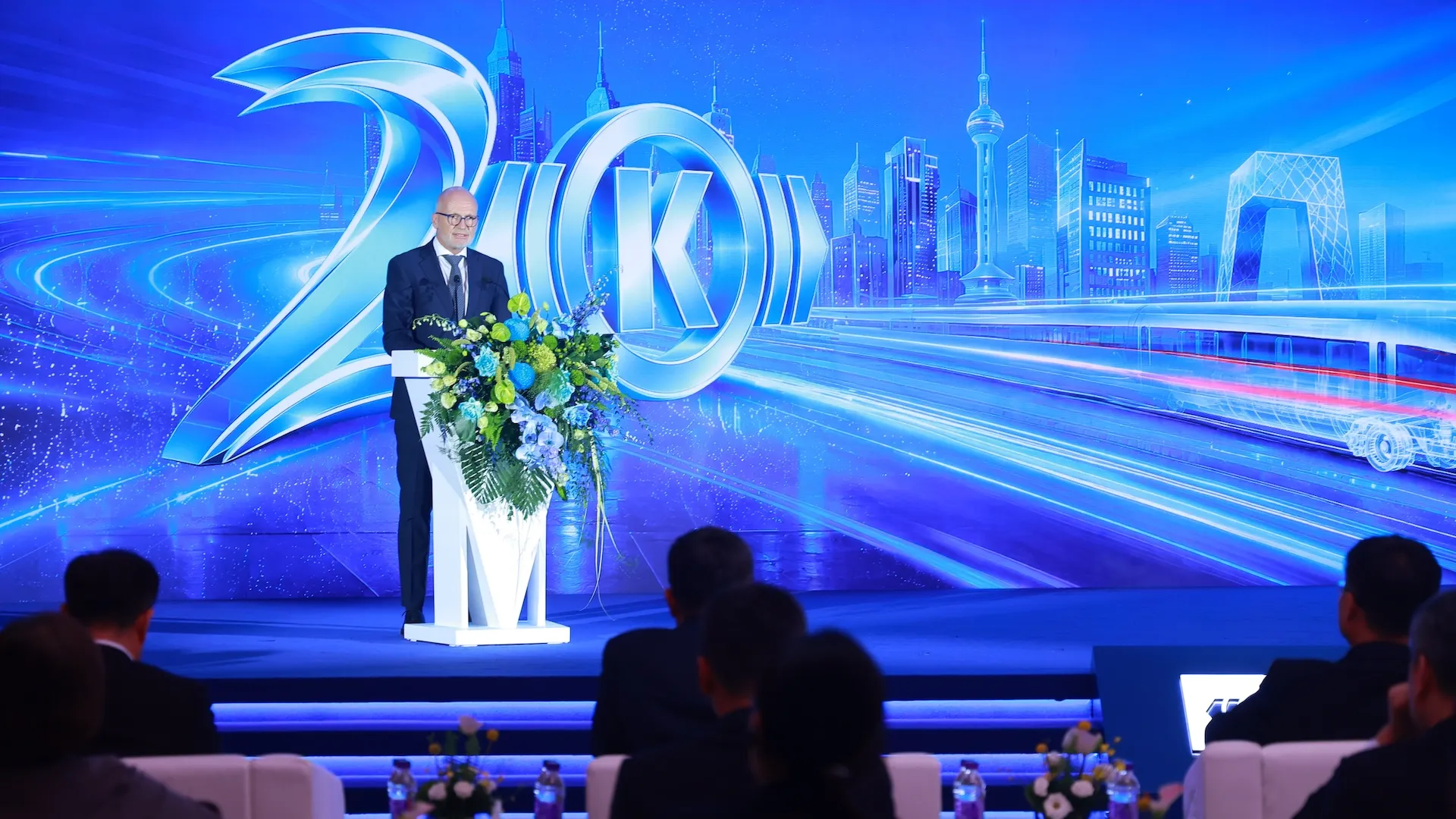

Knorr-Bremse and China Railway’s CARS (China Academy of Railway Sciences) have signed a memorandum of understanding to develop next-generation rail freight technologies, a partnership the German brake supplier says supports a long-term global revenue potential of more than €1 billion ($1.16 billion) per year. The agreement launches the China Freight Cooperation Program, signed this week in Beijing, which focuses on freight digitalization, driver assistance systems, and advanced braking for longer, heavier trains. According to Knorr-Bremse, China is shifting more long-distance freight to rail as part of its economic and sustainability agenda, creating demand for trains that can operate safely and efficiently at greater length and weight.
Highlights
- Knorr-Bremse and CARS are expanding a partnership of more than 20 years from product supply to joint system-level development.
- The program covers three technology areas: freight digitalization, driver assistance, and braking systems for heavy-haul transport.
- Knorr-Bremse estimates the European OE market for upgrading up to 500,000 freight cars at approximately €25 billion ($28.9 billion).
- The company targets long-term global annual revenue potential exceeding €1 billion ($1.16 billion) across Europe, China, and the United States.
From Product Supply to System-Level Innovation
The China Freight Cooperation Program builds on more than 20 years of cooperation between CARS and Knorr-Bremse. The company describes the new phase as a move beyond product-focused collaboration toward joint development of system-level innovations for China’s rail freight network.
Dr. Nicolas Lange, Executive Board Member responsible for Rail at Knorr-Bremse AG, said: “Together with CARS, we are elevating our long-term partnership in the Chinese railway industry to the next level – from product collaboration to joint development of system-level innovations. China is a key growth market for Knorr-Bremse, and by combining our global expertise with local excellence, we are strengthening our role as a systems partner while shaping the future of efficient, intelligent, and sustainable rail freight.”
Which Technologies Will the Partners Develop?
The joint work targets three areas:
- Freight digitalization: Digital train architecture, predictive maintenance, wagon monitoring solutions, and digital automatic couplers, which Knorr-Bremse is also preparing for market deployment in Europe. Beyond coupler-based systems, the partners will develop wireless functions running on wagon-bound energy storage for fleet monitoring and service optimization.
- Driver assistance: Technologies to improve energy efficiency and fleet performance, based on systems such as LEADER that are already in operation in Europe, the United States, and Australia. Knorr-Bremse introduced the LEADER Flow driver assistance system last year, reporting average energy savings of 10.2 percent in European freight testing.
- Braking systems: Advanced brake technology tailored to the requirements of long-distance and heavy-haul freight operations.
Rail Freight Modernization as a Growth Market
Knorr-Bremse frames the agreement within a broader global push to modernize rail freight. The company says the most comprehensive programs are currently planned in Europe, where it expects the original equipment market alone to reach approximately €25 billion ($28.9 billion) for upgrading up to 500,000 freight cars. Knorr-Bremse targets an annual revenue opportunity in the mid triple-digit million-euro range in that market.
China operates one of the world’s largest rail freight fleets and is pursuing comparable modernization and modal-shift programs, which Knorr-Bremse says point to a market potential similar in scale to Europe’s. With the United States as the third major rail market expected to adopt next-generation freight technologies, the company estimates its long-term global annual revenue potential at more than €1 billion ($1.16 billion). The company has been building out its rail electronics and software capabilities in support of this strategy, including its acquisition of the duagon Group last year.
Marc Llistosella, CEO of Knorr-Bremse AG, said: “Our ambition is clear: we want to grow, leverage new business opportunities, and succeed in a competitive global market. To achieve this, we invest with a long-term perspective and entrepreneurial mindset. Our collaboration with China Railway is an excellent example of how strategic initiative, a clear focus on our core strengths, and strong partnerships enable us to develop new markets, drive innovation, and create sustainable value together.”