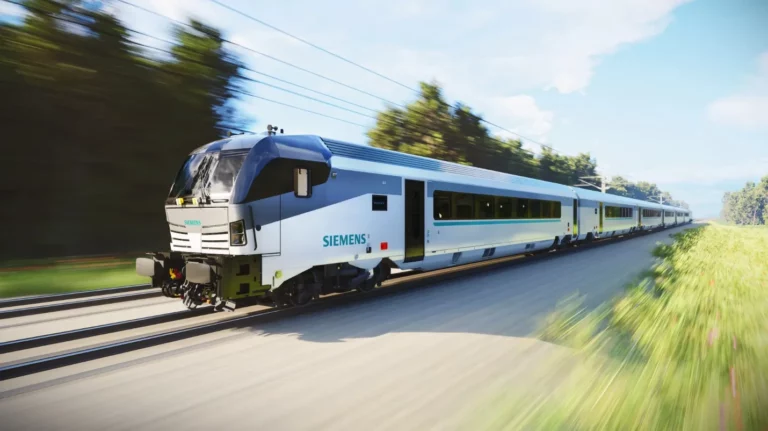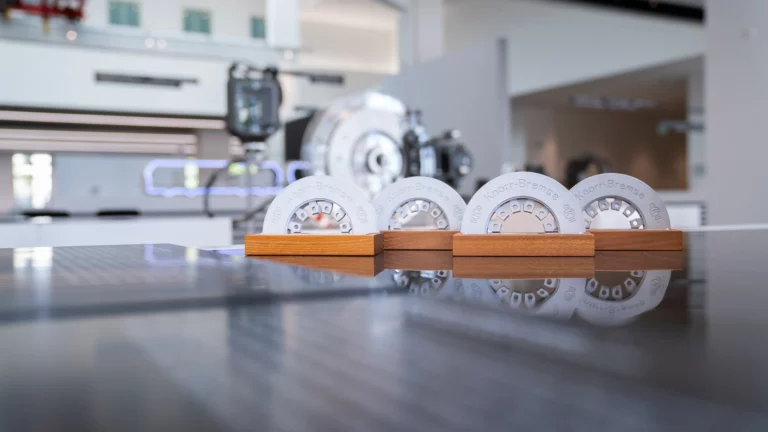

Knorr-Bremse’s EM brake, a digital-electromechanical rail braking system with brake-by-wire control, is now running in regular service on a Trenitalia regional train in Italy, the first deployment of the technology in daily rail operations. The EM brake replaces the pneumatic and hydraulic components found in today’s train braking systems, sending the braking signal electrically and generating brake force with electric motors. Knorr-Bremse and Trenitalia, part of Gruppo FS, disclosed the deployment this week at InnoTrans, where the supplier positioned the system as a building block for trains that brake without compressed air or oil.
Highlights
- First in daily service: The EM brake is operating on a Trenitalia regional train that has entered regular service in Italy.
- No air or hydraulics: Braking signals travel by wire, and electric motors generate the braking force.
- Built-in diagnostics: Every system ships with telemetric monitoring, diagnostics, and predictive maintenance functions.
- Live demonstration: Knorr-Bremse is showing the system at its InnoTrans booth from September 22–25, 2026.

How Does Rail Brake-by-Wire Work?
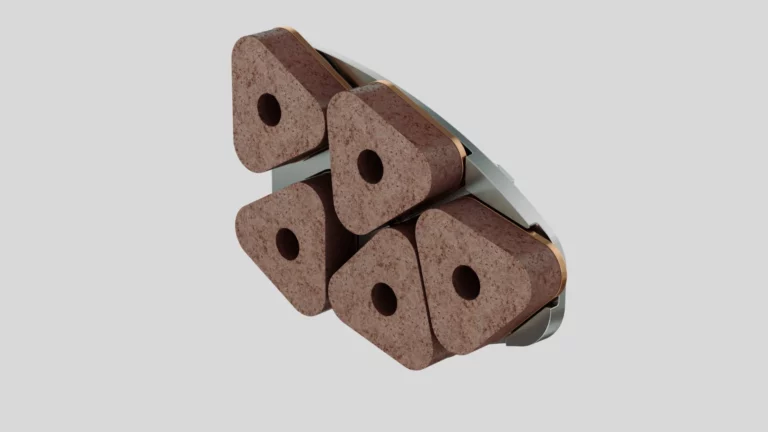
Conventional train brakes rely on compressed air and hydraulic systems, which Knorr-Bremse notes have been the global industry standard for decades. The EM brake removes those components entirely. The braking command moves as an electrical signal, and electromechanical brake calipers driven by electric motors apply the force.
The system also carries telemetric monitoring and diagnostic capabilities from delivery, including predictive maintenance functions.
What Benefits Does Knorr-Bremse Claim?
According to Knorr-Bremse, the more dynamic control of the electromechanical calipers improves braking performance in several ways:
- Faster response times compared with conventional systems
- More precise brake-force control
- Shorter stopping distances, which the company links to improved safety, stability, and reliability in daily operations
The company also reports that the system can be made significantly lighter than conventional braking systems because it uses fewer components, which it says contributes to energy savings. Knorr-Bremse adds that the design reduces the effort required for installation, servicing, and retrofitting, and lowers lifecycle costs for operators.
Trenitalia Deployment Supports Market Readiness
Knorr-Bremse frames the Trenitalia service as a source of operating data for broader rollout.
“Trenitalia has long proven to be an innovative partner, engaging with new rail technologies at an early stage and integrating them into operations,” said Matthäus Englbrecht, CTO of the Knorr-Bremse Rail Division. “The EM brake is a key technology with enormous potential to enhance performance, energy efficiency, and maintenance optimization, delivering significant benefits for the rail industry. The first deployment of the EM brake in daily operations will provide further valuable insights to help bring this innovation to market readiness across vehicle types and standards.”
Simone Mantero, managing director of Knorr-Bremse Rail Italy, pointed to the operator’s role in the project.
“I would like to thank Trenitalia for this valuable collaboration. The rail industry needs innovation more than ever, especially to make rail transport even more efficient and competitive. This project demonstrates just how essential collaboration between operators and industry is to accelerate the transformation of mobility and turning innovation into tangible progress,” Mantero said.
Toward the Airless Train
The Trenitalia service marks the next stage in Knorr-Bremse’s development of the EM brake, which the company describes as a key building block for the train of the future. Its stated goal is the “airless train,” a vehicle whose braking system operates without compressed-air or hydraulic systems, relying instead on purely electric brake-force generation.
Visitors to InnoTrans can see a live demonstration of the EM braking system and its capabilities at the Knorr-Bremse booth through September 25, 2026.