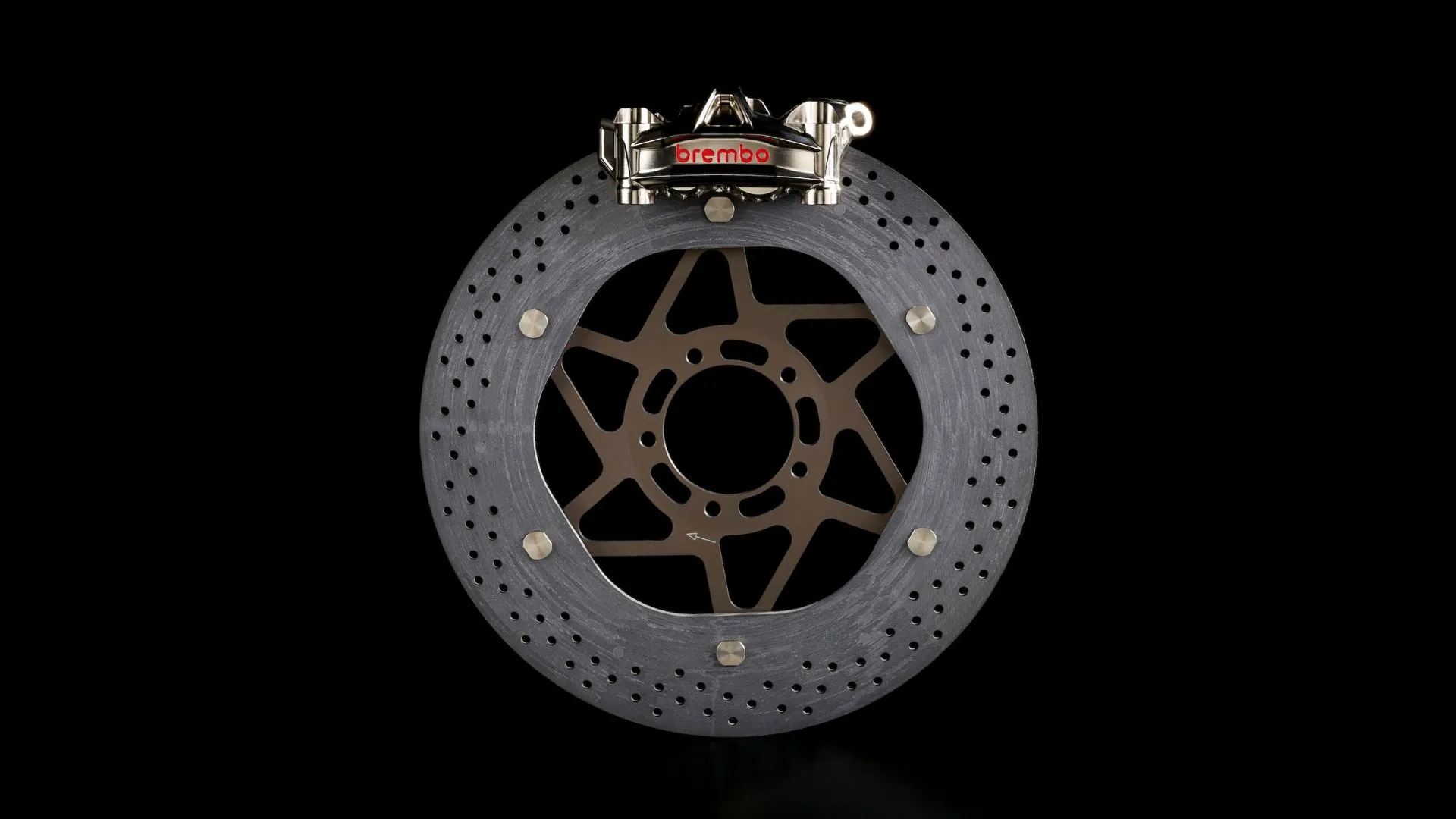

Brembo has introduced the Hyction carbon ceramic brake disc, marking the first use of carbon ceramic composite technology on a production road motorcycle. The disc debuts on the Ducati Superleggera V4 Centenario alongside a matched GP4-HY caliper, a floating rear disc, and an Öhlins NPX 25/30 Carbon fork. Together, the components target reductions in unsprung mass and rotational inertia.
Highlights
- Hyction carbon ceramic disc weighs 1.375 kg, cutting 450 grams per disc and reducing inertia by 40% compared to a steel superbike disc.
- GP4-HY caliper uses a racing-derived boosted mechanism that increases brake force without added lever effort.
- Öhlins NPX 25/30 Carbon fork is the first pressurized carbon fiber fork on a production road bike, reducing weight by 10% versus the standard Panigale V4.
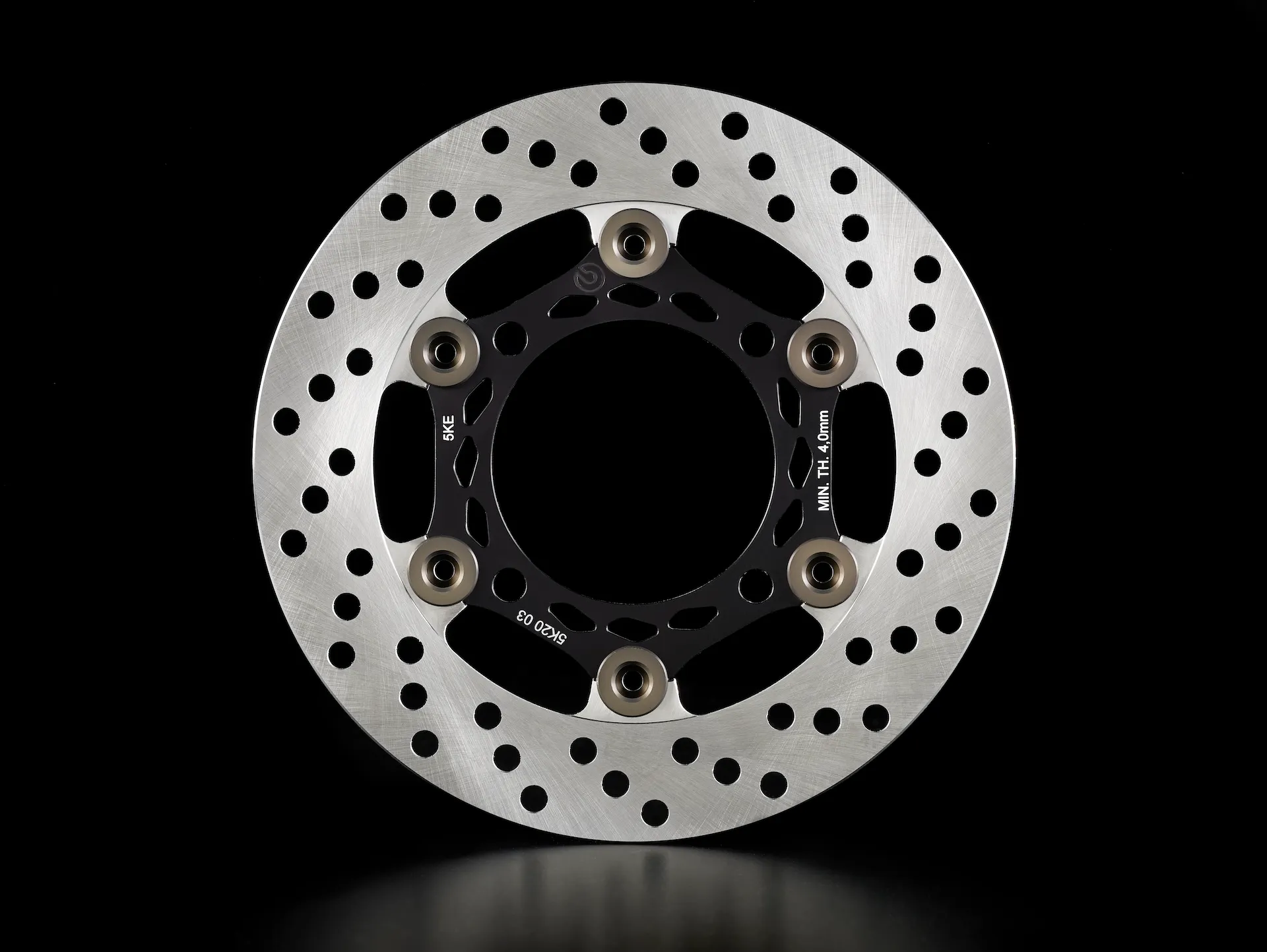
- Floating rear disc measures 223×4.5 mm and uses aluminum bushings instead of steel to further reduce mass.
Hyction Carbon Ceramic Disc
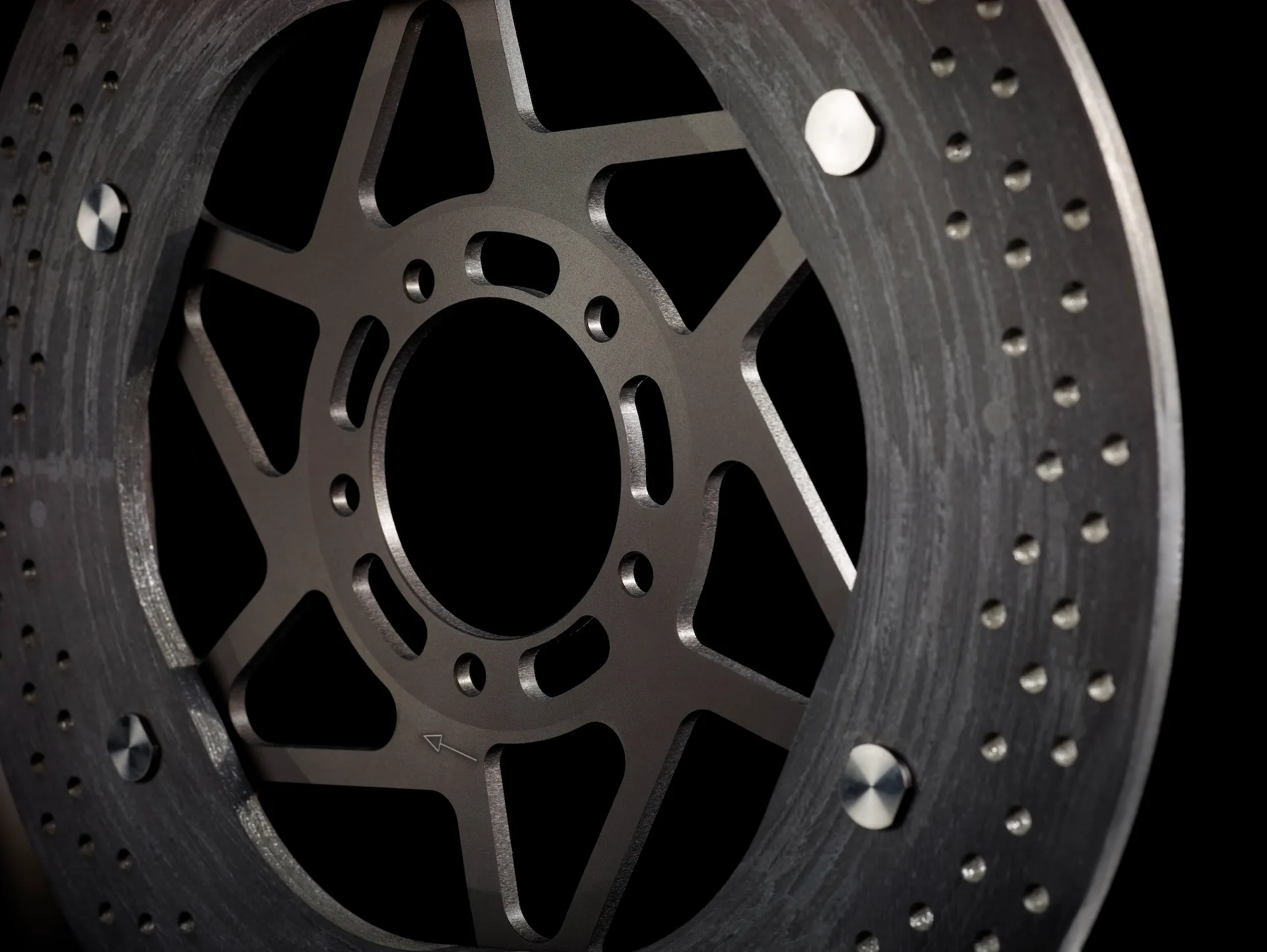
The Hyction disc uses a carbon ceramic composite with a carbon matrix reinforced by fibers and integrated with silicon and silicon carbide. Brembo said the material derives from its CCM-R technology used in hypercar applications, re-engineered here for two-wheel use. The composite provides high thermal resistance and structural stability under sustained braking loads.
The disc measures 340 mm in diameter with 8 mm thickness and a 35 mm braking surface. It features 132 ventilation holes designed to optimize heat dissipation. An asymmetric aluminum bell and a non-circular inner profile reinforce the six drive points while reducing rotating mass.
Weight and Inertia Impact
At 1.375 kg, the Hyction disc saves 450 grams per disc over a comparable steel unit. That equals 900 grams per wheel. Brembo also reported a 40% decrease in rotational inertia versus a conventional steel disc for road superbikes. The disc uses a MotoGP-derived floating mount system to maintain stability at high thermal loads.
GP4-HY Boosted Caliper
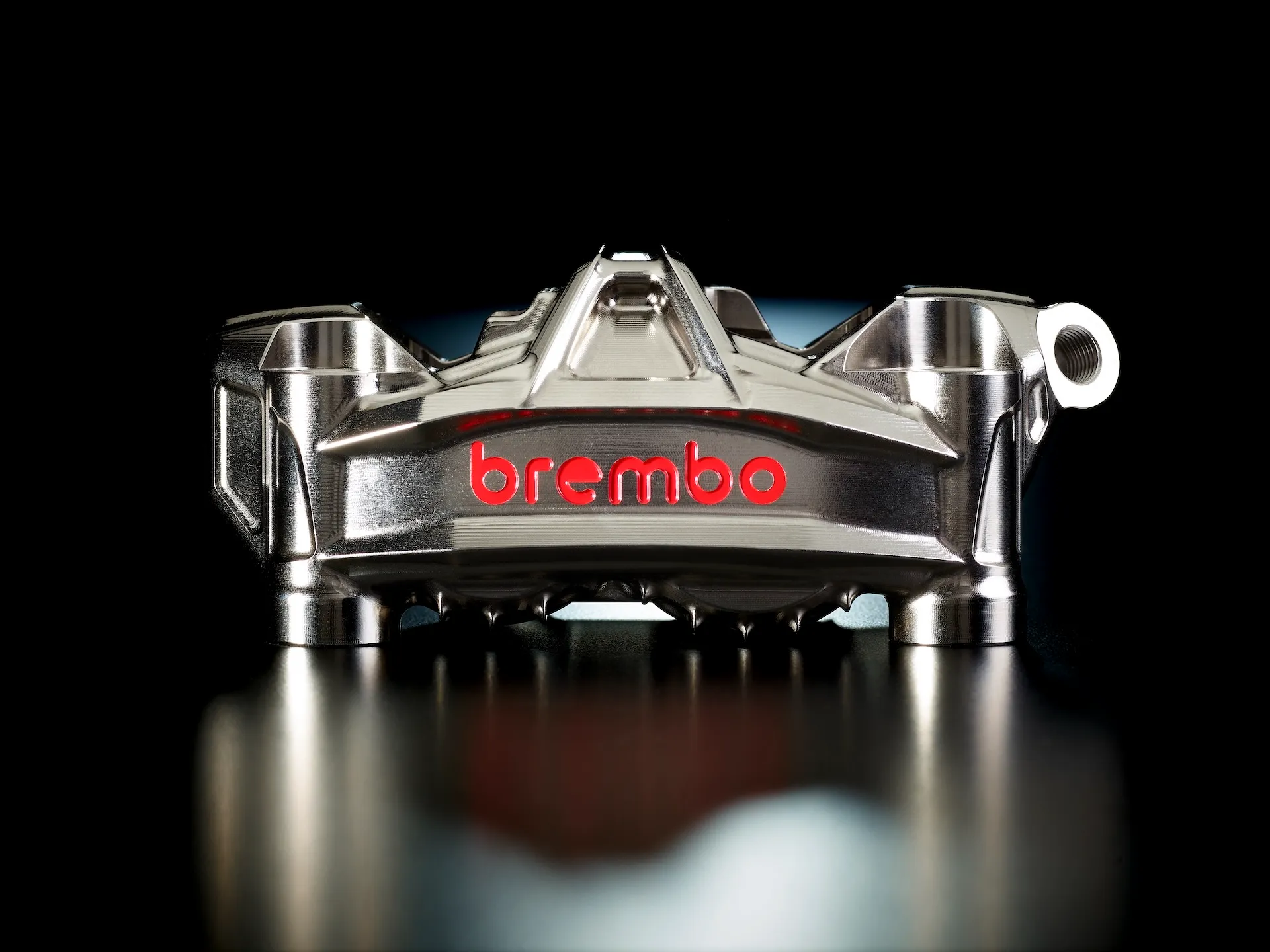
Brembo developed the GP4-HY as a radial monobloc caliper machined from a single aluminum block. The “HY” designation indicates it was specifically designed for use with the Hyction disc. At its core is a racing-derived boosted mechanism. An oblique sliding motion of the pads generates greater brake force while requiring the same lever pressure from the rider.
Inside, differentiated pistons measuring 30 mm and 34 mm work with a patented system to limit residual torque and reduce pad wear. A dedicated anti-drag spring retracts the pads immediately upon lever release. Additionally, Brembo developed a new organic pad compound specifically for carbon ceramic applications to improve feel and modulation.
Rear Disc and Master Cylinder
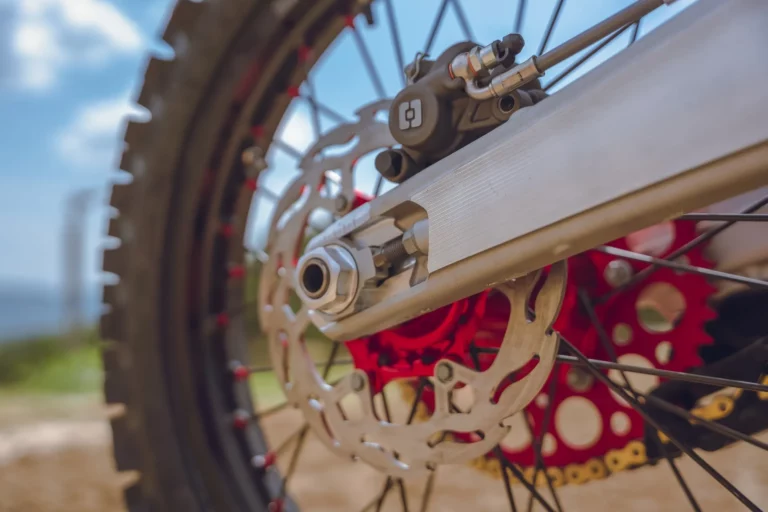
The rear brake features a floating steel disc with an aluminum bell, measuring 223×4.5 mm. Aluminum bushings replace conventional steel bushings, a technique derived from racing. As a result, the floating rear disc provides weight savings over a fixed unit while maintaining precise rear braking balance.
The system also includes the MCS (Multiple Click System) brake master cylinder. This is a radial master cylinder with adjustable lever distance and ratio.
Öhlins NPX 25/30 Carbon Fork
The Öhlins NPX 25/30 Carbon fork is the first pressurized carbon fiber fork fitted to a production road motorcycle. It features carbon fiber outer tubes made with unidirectional layers. Consequently, weight drops by 8% compared to the Panigale V4 R and by 10% versus the standard Panigale V4.
A pressurized cartridge reduces cavitation, providing consistent support through braking and corner entry. At the rear, the Öhlins TTX36 GP LW shock absorber uses a lightweight steel spring and MotoGP-derived valves. It also allows tool-free hydraulic adjustment. Non-adjustable titanium suspension linkages contribute further weight reduction.
Subscribe to The BRAKE Report. Get free sample chapters.