
Active steering and braking interventions helped prevent a potential collision in 243,977 cases across BMW’s analyzed European fleet in the last month, a figure the company cited as it made an expanded portfolio of active safety assistance systems standard across multiple model series with the launch of the Neue Klasse. The functions run under BMW Symbiotic Drive, which reads steering inputs and driver line of sight to decide when a system should act. For brake engineers, the significant change is where the vehicle now commands deceleration on its own: forward, rearward, and for the first time laterally.
Highlights
- 243,977 interventions — active steering and braking interventions helped prevent a potential collision across BMW’s analyzed European fleet in the last month, according to the company.
- Braking at the sides — Active Park Distance Control applies the brakes at the rear and, for the first time, at the sides to stop the vehicle when it detects stationary or moving objects.
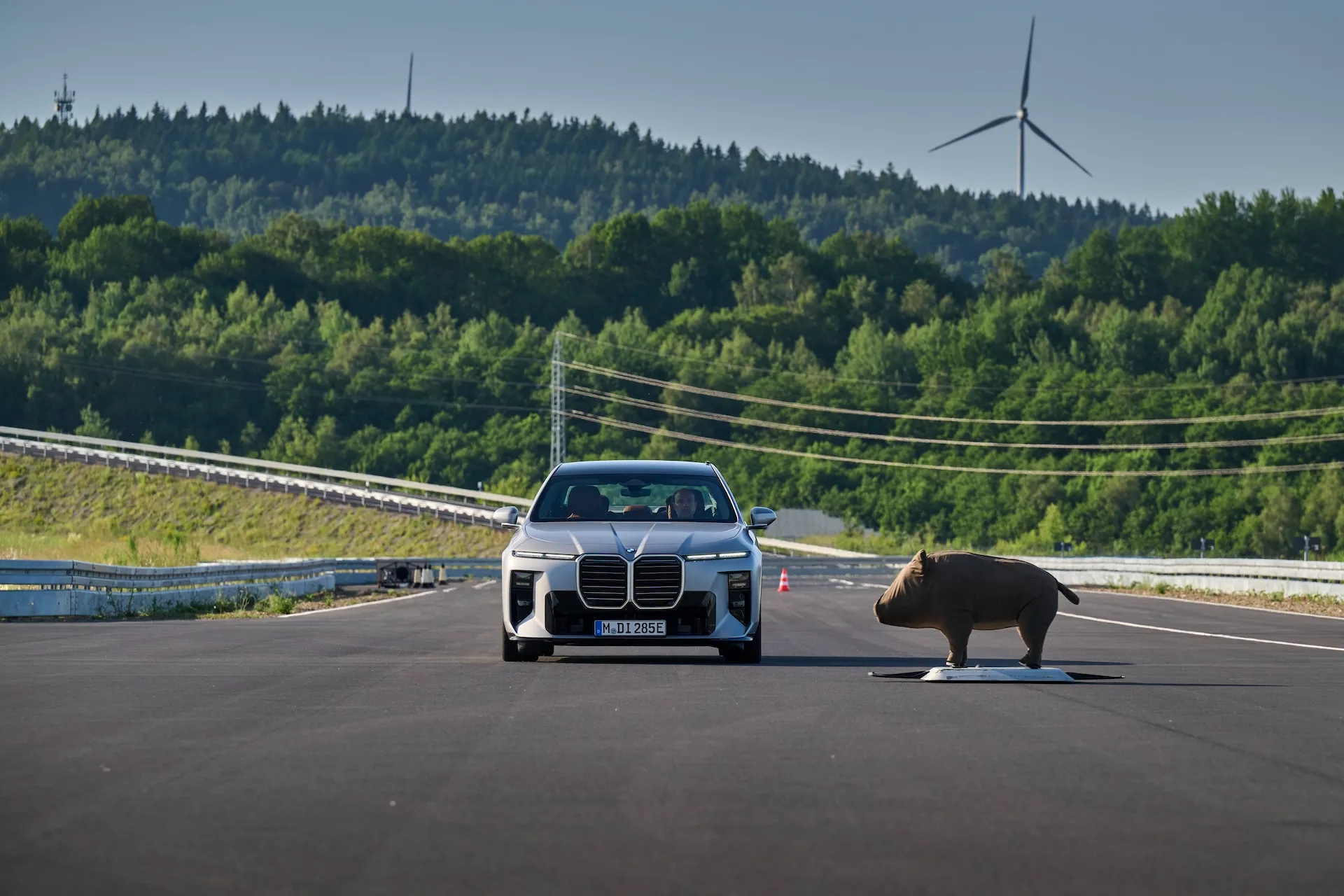
- Full deceleration — the Emergency Brake Assistant with evasive steering support can apply the brakes up to full deceleration against imminent head-on collisions, now extended to animals on the road and wildlife crossings.
- Pedal misapplication braking — standard start monitoring intervenes at obstacle distances under about 3.3 feet (one meter) at speeds up to 1.2 mph (2 km/h).
Where the System Applies the Brakes
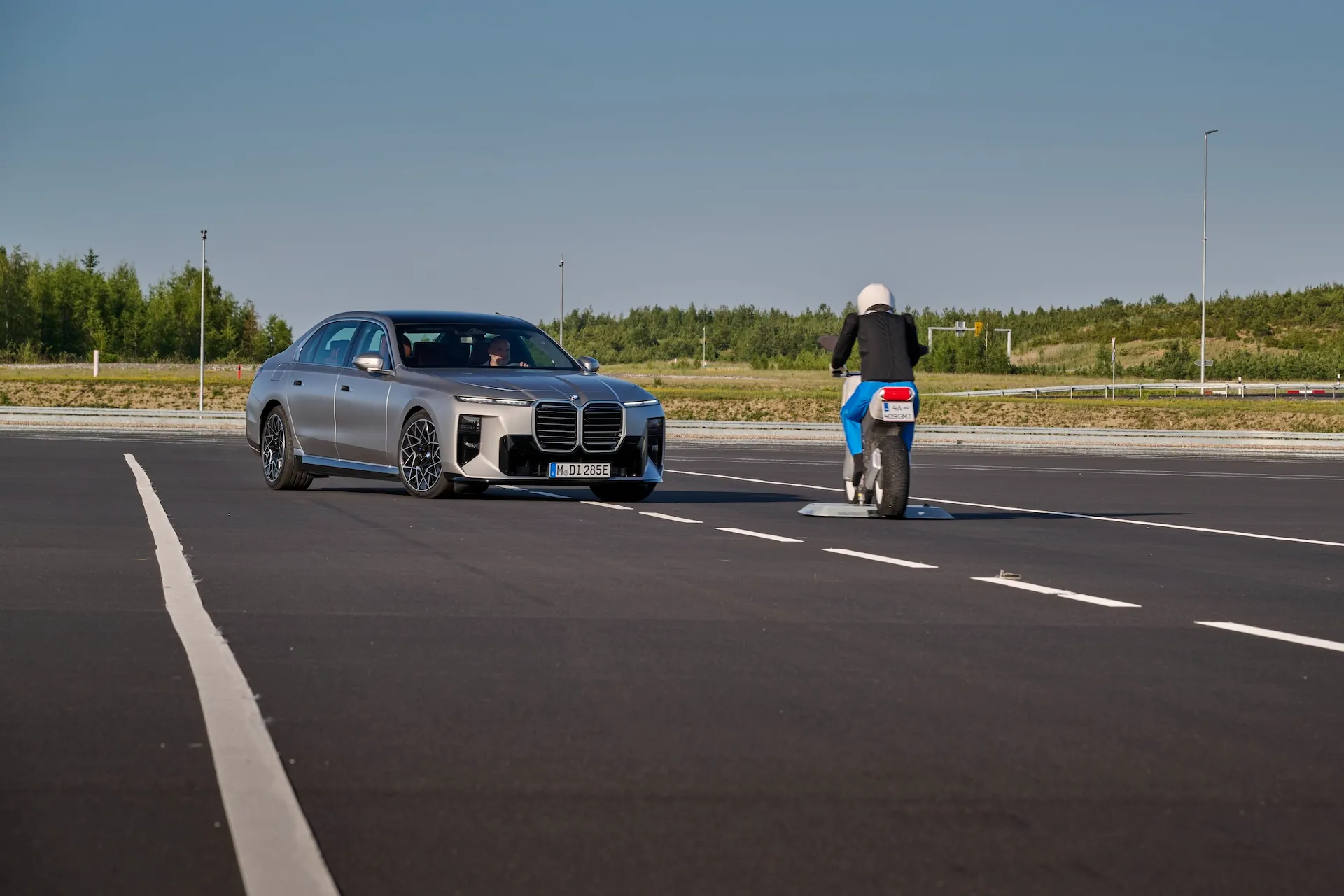
The braking-related functions in the standard package span emergency, parking, and low-speed scenarios:
- Emergency Brake Assistant with evasive steering support — helps prevent imminent head-on collisions and can automatically apply the brakes up to full deceleration. Improved sensor technology extends the function to situations involving animals on the road and wildlife crossings, a scenario set that has historically fallen outside the detection envelope of automatic emergency braking systems tuned for vehicles and pedestrians.
- Active Park Distance Control — uses ultrasonic sensors and surround-view cameras, applying the brakes at the rear and, for the first time, at the sides to bring the vehicle to a stop when stationary or moving objects are detected.
- Emergency braking for cross-traffic — covers backing out of a parking space onto a busy street. Rear side radars scan the surrounding area, while the rearview camera and bird’s-eye-view display on the Central Display supply additional visibility.
- Start monitoring — standard equipment that detects pedal misapplication, such as confusing the accelerator with the brake.
How Does Start Monitoring Catch a Pedal Misapplication?
The system looks for two conditions at once. If it detects an obstacle less than about 3.3 feet (one meter) away at speeds up to 1.2 mph (2 km/h), and simultaneously registers an unusually rapid and forceful depression of the accelerator pedal, it intervenes. The vehicle then brakes in a controlled manner, either forward or backward, until it comes to a stop.
Cooperative Braking and Steering Thresholds
Under BMW Symbiotic Drive, the system interprets driver intent through steering inputs and line of sight, and assistance functions intervene only when necessary. Functions such as the Lane Keeping Assistant issue warnings or steering interventions only when the vehicle detects an unintended lane departure or an imminent collision. When the driver initiates a maneuver deliberately, the system stands down, provided there is no foreseeable risk of a collision or of the vehicle leaving the roadway. Indicators of driver intent include activating the turn signal, making an active steering input, or performing a shoulder check.
“The broad rollout of our new active safety functions as standard is based on our ‘Smart, Symbiotic, Safe’ philosophy. We bring drivers and assistance systems together into a cooperative system that works in harmony. At BMW, active safety functions operate as quiet, intelligent companions in the background, discreet yet highly effective when it matters most in critical situations,” said Dr. Mihiar Ayoubi, Senior Vice President Driving Experience Development at the BMW Group.
The Compute Layer Behind the Interventions
With the BMW iX3 and subsequent models, all new active safety, automated driving, and automated parking functions are managed by the central “Superbrain of Automated Driving,” a water-cooled high-performance computer that BMW says carries approximately 20 times the computing power of the previous system. The iX3 was the first Neue Klasse production model to feature these technologies, with the BMW i3, BMW X5, and BMW 7 Series to follow.
Alongside the braking functions, the exit warning adds active door opening delay. Side radars monitor the traffic area around the parked vehicle, and the electronic door lock delays the door from opening until the hazard has passed if a collision risk is detected.
Fleet Data and Validation
BMW says analysis of customer-consented data from its connected vehicle fleet demonstrates that the functions contribute to greater road safety. The analysis covers 1.3 million BMW vehicles equipped with the previous generation of driver-assistance technology whose owners consented to data collection. In the last month alone, that European fleet covered about 994 million miles (1.6 billion kilometers) and produced roughly 8 million visual and acoustic collision warnings, alongside the 243,977 intervention cases.
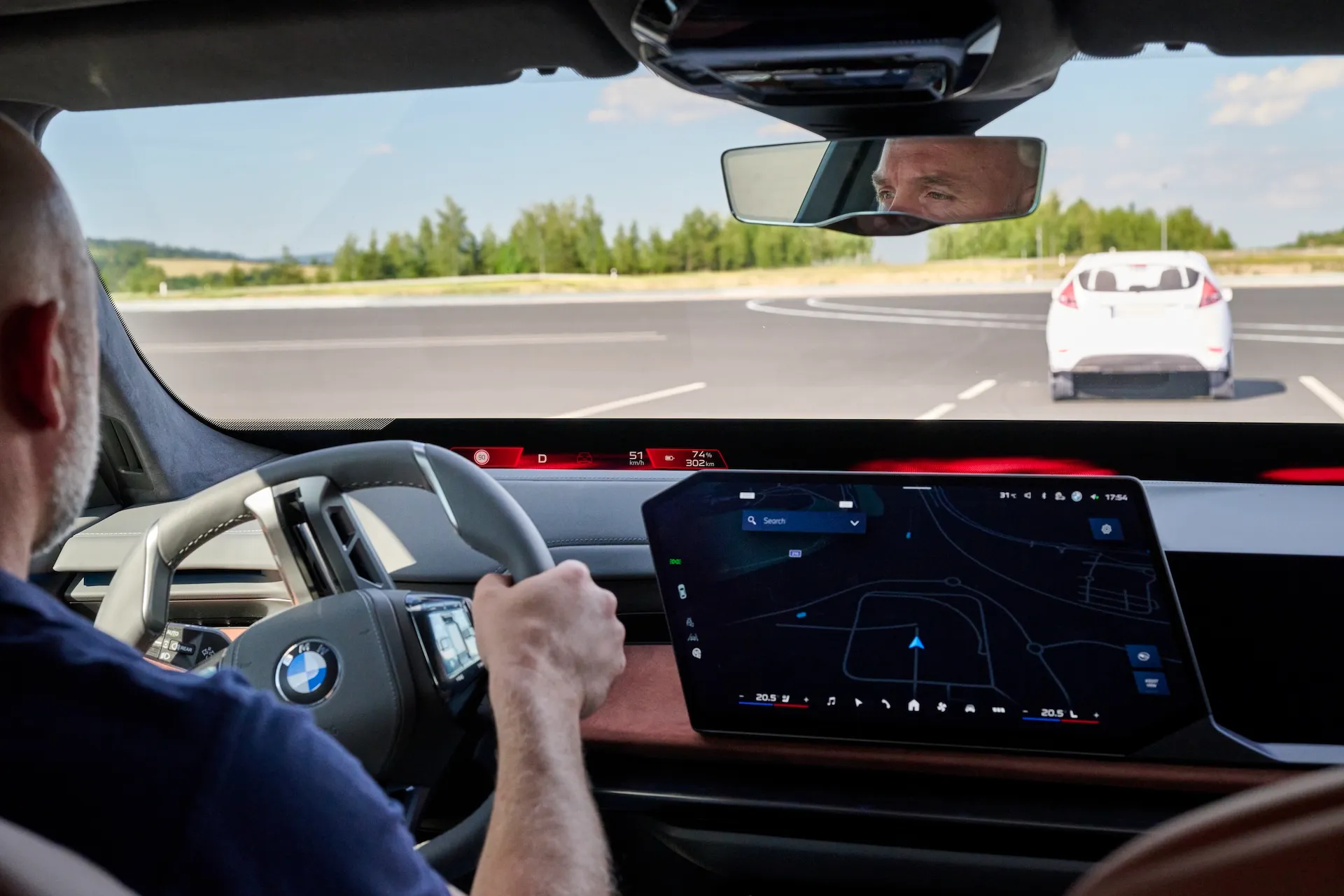
The Future Mobility Development Center in Sokolov, Czech Republic, which opened in 2023, contributed to development of the systems. At around 1,483 acres (600 hectares), the proving ground offers approximately 15.5 miles (25 kilometers) of test tracks covering urban traffic, highway driving, and automated parking maneuvers. The BMW iX3 received a five-star rating in the latest Euro NCAP safety test, which BMW says exceeded the required scores, and was among the first vehicles evaluated under test protocols revised in 2026.
Subscribe to The BRAKE Report. Get free sample chapters.