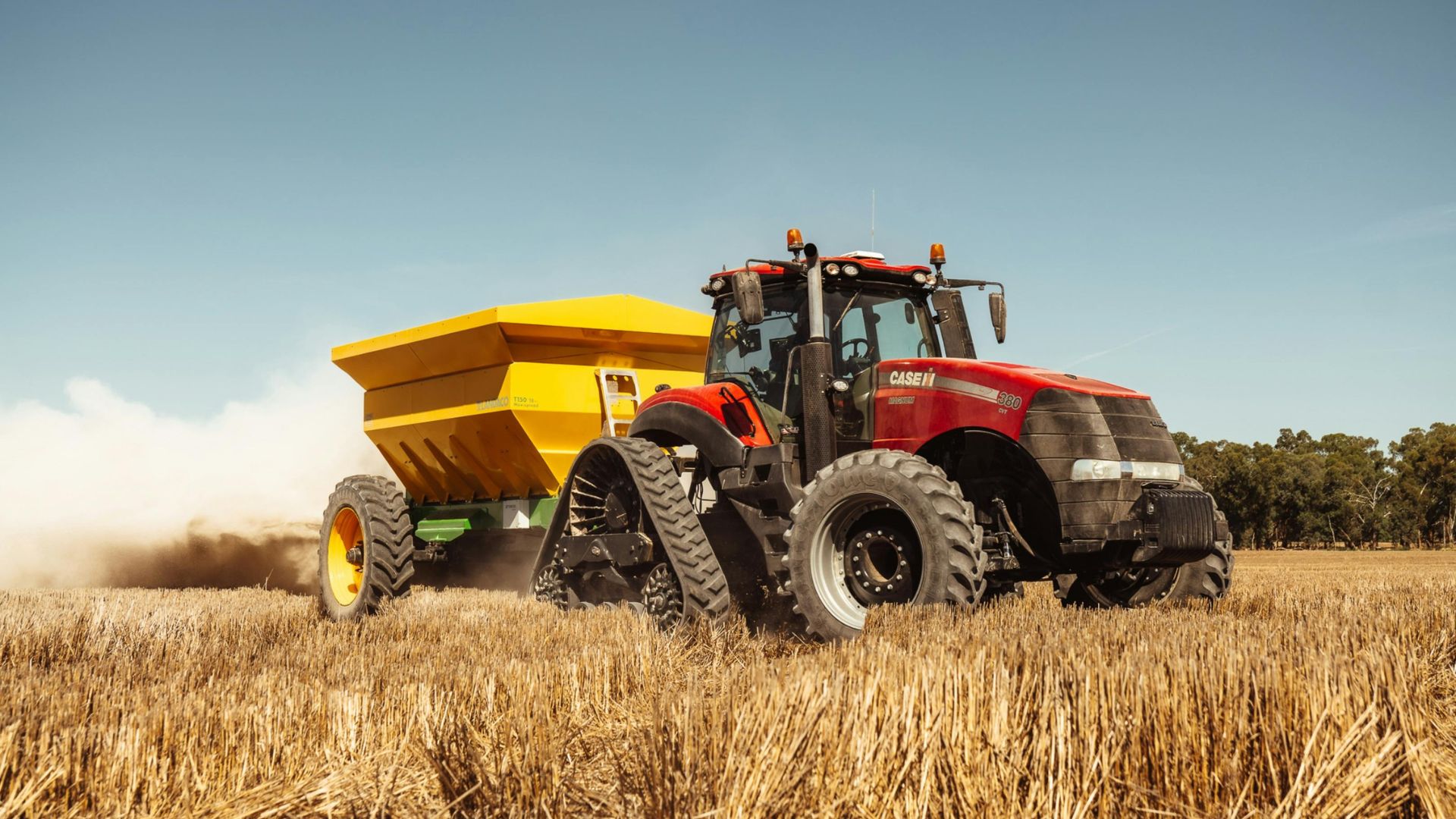

In the race for agricultural efficiency, size has become the ultimate metric. We are no longer talking about the quaint tractors of the past; we are dealing with industrial behemoths. Today’s agricultural landscape is dominated by machines that have scaled up exponentially to feed a growing population and combat unpredictable weather windows. But as horsepower and payloads skyrocket, a critical, often overlooked vulnerability has emerged: the physics of stopping.
When you couple a 700-horsepower tractor with a trailer hauling 30 tons of payload, you aren’t just driving farm equipment—you are piloting a massive kinetic weapon. The friction point? The legacy braking technology struggling to keep up with this massive jump in mass and momentum. For fleet managers and operators, understanding this gap is no longer just about compliance; it is about survival.
As detailed in a recent technical report by Haldex, the scale of this shift is staggering. The disparity between past and present equipment highlights the urgent need for updated safety infrastructure:
“Modern agricultural tractors now develop power outputs of up to 700 horsepower, a tenfold increase over the machines used 20 years ago, while trailers can carry payloads of 20 to 30 tonnes, compared to 3 to 5 tonnes previously. This dramatic increase in size and capacity has brought with it new safety challenges, requiring increasingly sophisticated braking solutions.”
The “Push” Effect
The core engineering challenge lies in the mismatch between tractor and trailer signaling. While commercial trucks have long standardized on pneumatic (air) systems, agricultural tractors often generate braking signals via hydraulic systems. Converting that hydraulic signal to a pneumatic one for the trailer creates a physical delay.
In that split second of lag, the trailer—carrying 30 tons of momentum—is not braking. Instead, it pushes the tractor forward. In low-traction environments like muddy fields or icy rural roads, this “push” can cause jackknifing or a total loss of control. The industry is moving away from relying on driver skill (pumping brakes) to technological intervention.
The Era of Smart Braking Integration
We predict that by 2030, the “mix-and-match” approach to tractor-trailer braking will become obsolete, driven by stricter EU and North American regulations. Technologies like the Solenoid-Controlled Trailer Control Valve (STCV), which uses an electric signal to pre-trigger trailer brakes, will become standard OEM equipment rather than aftermarket upgrades.
Furthermore, we anticipate a consolidation of components. Just as ABS became standard in cars, integrated “Emergency Line Release” (ELR) and response-optimizing valves will be baked into the chassis design of every heavy-duty ag trailer. The future is not just bigger; it’s electrically synchronized.
Audit Your Pneumatic Architecture
For operators running mixed fleets of modern tractors and older trailers, the risk is highest.
- Check the Plumbing: As noted by Haldex experts, excessive elbows and bends in your trailer’s air lines act as bottlenecks, slowing down brake response times. Streamline the routing.
- Upgrade the Interface: If you are hauling 20+ tons, ensure your braking system utilizes an electric pilot signal (like STCV) to eliminate the hydraulic-to-pneumatic lag.
- Safety First: Verify your Emergency Line Release (ELR) valves are compliant. If a line fails, your trailer needs to dump pressure and lock up in under two seconds. If your equipment can’t do that, it’s not road-safe for 2025.
Subscribe to The BRAKE Report. Get free sample chapters.