

Sweden-based Dellner Group has expanded its North American footprint by acquiring Kuma Brakes, a Quebec-based manufacturer of sintered brake pads for wind turbines. The deal establishes Dellner Wind Solutions Canada, operating from Kuma’s existing facility in Gaspé, Quebec.
Highlights
- Dellner Group acquires Kuma Brakes, creating Dellner Wind Solutions Canada at the Gaspé, Quebec production facility.
- Kuma Brakes is the only certified producer of sintered wind turbine brake pads in North America, with products operating on nearly 50% of the continent’s turbines.
- The acquisition strengthens Dellner Wind Solutions’ global supply chain by adding in-house sintered brake pad manufacturing to its braking systems portfolio.
- Dellner Group continues its buy-and-build strategy, now operating 40+ companies across 30+ locations worldwide.
Strategic Value of Kuma Brakes
Kuma Brakes holds a unique position in the North American wind energy market. Founded in 2010 by Christian Babin, the company spent five years in research and development before opening its Gaspé manufacturing plant in 2015. Collaborations with Université Laval and Technische Universität Berlin helped refine its sintered metal powder friction material technology.
The company earned certification as an official supplier to General Electric, one of the largest wind turbine manufacturers globally. As a result, Kuma’s brake pads now operate on roughly half of all wind turbines across North America. Additionally, its facility runs on 100% renewable wind energy, as certified by Hydro-Québec.
Sintered Brake Pad Technology
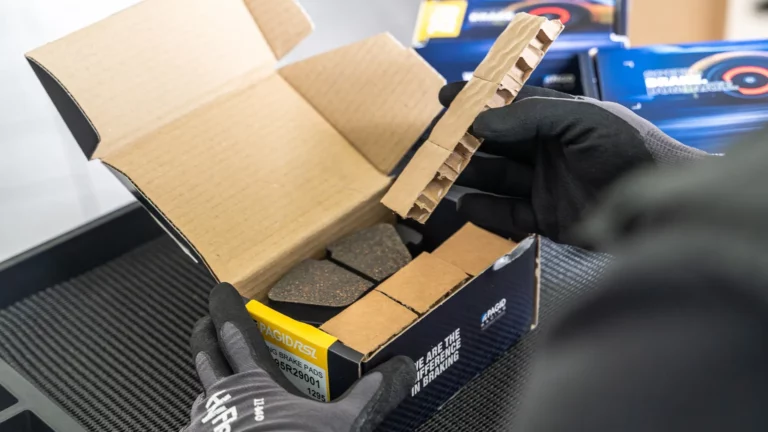
Kuma Brakes specializes in sintered brake pads manufactured from metallurgical powders. The sintering process fuses metal powders at temperatures just below the melting point. This produces a porous alloy texture that delivers several performance advantages over organic alternatives:
- Superior braking performance under extreme operating conditions
- Extended service life compared to conventional organic pads
- High corrosion resistance suited to harsh wind farm environments
- Consistent reliability for high-power wind turbine applications
The company manufactures 100% in-house, from product development and engineering through production and finishing. Its annual capacity reaches 10,000 brake pad sets. Furthermore, Kuma maintains large replacement stock to minimize turbine downtime for operators.
Dellner Wind Solutions’ Growing Portfolio
The acquisition fits Dellner Group’s long-standing buy-and-build investment strategy. Dellner Wind Solutions already offers a broad range of wind turbine braking and hydraulic products, including yaw brakes, rotor brakes, locking devices, hydraulic power units, pitch cylinders, and cooling systems.
However, the addition of Kuma Brakes fills a critical gap. Dellner Wind Solutions now has direct access to sintered brake pad manufacturing. This complements its existing caliper and braking system hardware. In turn, wind turbine operators gain a more integrated supply chain for both systems and consumable components.
Dellner Group’s Expansion Track Record
Dellner Group has built its braking and industrial portfolio through a series of strategic acquisitions. In 2017, the group acquired Gummi USA, a Houston-based brake and clutch company. The following year, it purchased German industrial brake manufacturer Pintsch Bubenzer. In 2023, Dellner acquired JHS Jungblut, a German specialist in wind energy brakes. Most recently, in 2024, the group added Spain-based Antec, which designs and manufactures brakes for wind turbines and industrial applications.
With more than 1,100 employees and annual turnover exceeding 250 million EUR, Dellner Group now operates across material handling, wind energy, marine, oil and gas, industrial, and transportation sectors. The Kuma Brakes acquisition marks the group’s first direct investment in Canada.
Regional Impact in Gaspé
Kuma Brakes has served as an anchor for industrial innovation in Quebec’s Gaspésie region. The company is strategically located near LM Wind Power’s blade manufacturing operations and the expanded Port of Gaspé. Its nearly fully automated plant employs a small team of mechanical and industrial materials engineers, helping address regional labor shortages while maintaining round-the-clock production.
The transition to Dellner Wind Solutions Canada preserves local operations while connecting the facility to a global manufacturing and distribution network spanning Europe, Asia, and the Americas.
Subscribe to The BRAKE Report. Get free sample chapters.