
Efforts to mitigate vehicle pollution have historically focused on exhaust output, leading to significant reductions in tailpipe pollutants over the last two decades. As combustion engines become cleaner and electric vehicle adoption grows, regulatory and engineering focus has shifted toward non-exhaust emissions (NEE). A new report commissioned by the UK Department for Transport (DfT) provides critical data on these emissions, specifically particulate matter derived from brake and tire wear.
Highlights
- Regenerative Braking Efficacy: Electric vehicles (EVs) produce significantly lower PM2.5 brake emissions than internal combustion engine (ICE) vehicles, offsetting the impact of increased vehicle mass.
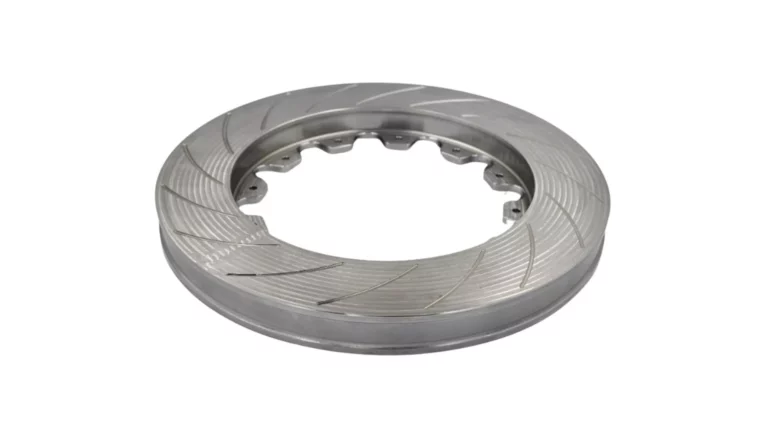
- Material Impact: Switching to ceramic or low-dust brake pads can reduce particle mass emissions by approximately 70% compared to budget organic pads.
- Tyre Emissions Characteristics: Tyre wear emissions are dominated by volatile particles, with larger 18-inch tires showing potentially higher mass loss rates than 16-inch variants.
- Mitigation Technology: Active filtration systems, such as the Tallano TAMIC, demonstrated PM2.5 reductions of over 40% in test conditions.
Regenerative Braking Offsets Vehicle Mass
A common industry concern regarding EVs is that their increased curb weight—necessitated by heavy battery packs—will lead to higher friction braking requirements and increased particulate generation. The Ricardo study challenges this assumption through comprehensive chassis dynamometer testing. The data indicates that regenerative braking systems significantly reduce reliance on friction braking.
The study compared an ICE Volkswagen Caddy, a Plug-in Hybrid (PHEV) Golf GTE, and a battery-electric (EV) eGolf. Despite the EV and PHEV carrying additional mass, the regenerative braking capability resulted in substantially lower brake particle emissions. Specifically, gravimetric PM2.5 emissions were highest from the ICE vehicle (2–3 mg/km), while the EV produced significantly less (0.3–1.2 mg/km).
Brake Pad Composition and Particulate Generation
The research highlighted a strong correlation between friction material composition and particulate output. Budget and organic brake pads consistently produced higher levels of PM2.5 and particle number (PN) emissions. Conversely, specific formulations offered substantial reductions in hazardous output.
Key findings on friction materials include:
- Lowest Emissions: Low-dust and ceramic brake pads demonstrated the lowest particle mass and number emissions, generating approximately 1 mg/km of PM2.5.
- Highest Emissions: Budget and organic pads produced the highest emissions, reaching up to 3.5 mg/km.
- Cost Correlation: Higher component cost did not necessarily correlate with lower emissions, though specific low-dust technologies proved effective.
Tyre Wear and Particle Characteristics
The study utilized a specialized sampling system to analyze tyre wear particles, distinct from brake dust. Results indicated that tyre emissions are dominated by volatile particles rather than solid particulates in the PM2.5 range.
Tyre testing revealed the following:
- Size Impact: Larger 18-inch tires exhibited higher mass loss rates (ranging from ~20 to 120 mg/km) compared to 16-inch variants, though tread wear rates were inconsistent between sizes.
- Volatility: Total particle number (PN) emissions from tires were dominated by volatiles, particularly when measured at high speeds or aggressive braking intervals.
- Wear Factors: Tyre wear rates accelerated significantly with mileage; a tire with ~23,500 km of use showed a mass emission rate roughly 300 times higher than a near-new tire.
Future Mitigation Strategies
The report suggests that immediate reductions in NEE can be achieved through technology selection rather than requiring complex vehicle redesigns. The implementation of regenerative braking is the most effective current method for reducing brake PM2.5. Furthermore, active particle capture devices showed promise. The Tallano TAMIC system reduced brake PM2.5 by over 40%. The Tyre Collective device successfully captured larger microplastic particles (>50 µm), though it showed limited efficacy for PM2.5 reduction.
View the full report here.
Subscribe to The BRAKE Report. Get free sample chapters.