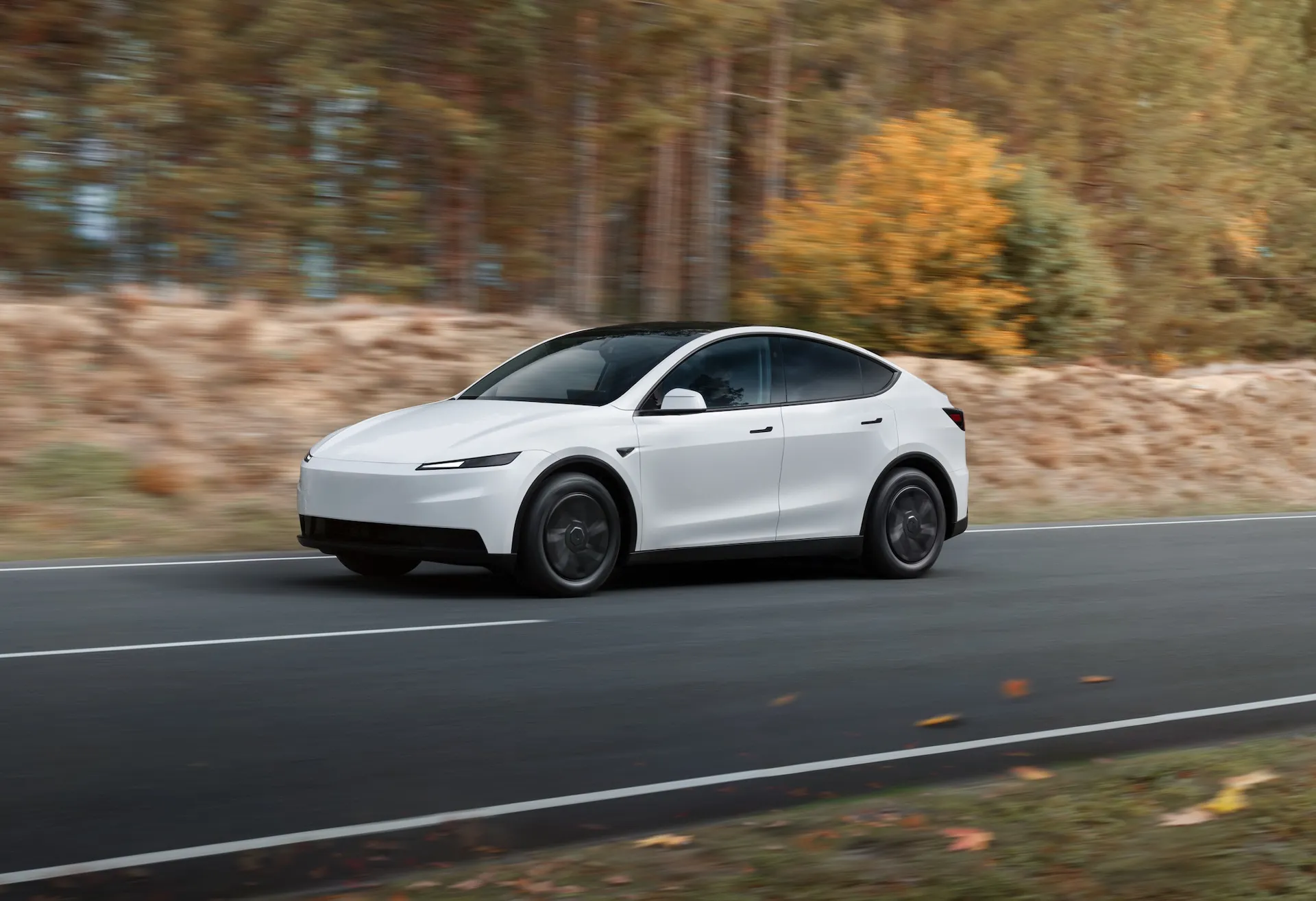

The 2026 Tesla Model Y is the first vehicle to pass NHTSA’s new pass/fail criteria for pedestrian automatic emergency braking and three other ADAS evaluations, the agency announced on May 7, 2026. Five of the eight categories the Model Y cleared depend directly on integrated brake-system performance, including pedestrian AEB, crash imminent braking, and dynamic brake support. The result applies to Model Y units manufactured on or after November 12, 2025, under the updated New Car Assessment Program.
Highlights
- The Model Y passed eight ADAS categories total, five of which require brake-system actuation: pedestrian AEB, lane keeping assistance, crash imminent braking, dynamic brake support, and forward collision warning.
- Pedestrian AEB is the most demanding new addition, requiring the brake system to actuate fast enough to avoid contact with a pedestrian incursion.
- NHTSA postponed full NCAP implementation in September 2025, moving the new ADAS criteria from model year 2026 to model year 2027 after the Alliance for Automotive Innovation requested more time.
- The agency separately mandated AEB and pedestrian AEB on all new passenger vehicles by September 2029 under FMVSS No. 127.
What the Brake System Has to Do
The four newly added NCAP categories are pedestrian automatic emergency braking, lane keeping assistance, blind spot warning, and blind spot intervention. Pedestrian AEB carries the heaviest brake-system demand — the system must detect a pedestrian incursion, decide, and command full braking force quickly enough to avoid contact. Crash imminent braking and dynamic brake support, both already in NCAP, set a similar bar for vehicle-to-vehicle scenarios.
That performance envelope has been a known challenge for hydraulic brake actuation. Industry comments submitted to NHTSA during earlier rulemaking flagged that conventional electronic stability control units, which many PAEB systems rely on for pressure generation, can struggle to deliver the flow rates required for autonomous braking at low ambient temperatures, when brake fluid viscosity rises. Higher-speed pump motors and revised hydraulic architectures have been one supplier response.
The Model Y also passed the four original NCAP ADAS categories: forward collision warning, crash imminent braking, dynamic brake support, and lane departure warning. NHTSA Administrator Jonathan Morrison framed the pass as a benchmark for the broader industry. “Today’s announcement marks a significant step forward in our efforts to provide consumers with the most comprehensive safety ratings ever,” Morrison said. “By successfully passing these new tests, the 2026 Tesla Model Y demonstrates the lifesaving potential of driver assistance technologies and sets a high bar for the industry. We hope to see many more manufacturers develop vehicles that can meet these requirements.”
Why Other Vehicles Have Not Been Tested
The new ADAS criteria were finalized in December 2024 and originally scheduled to take effect for model year 2026. In September 2025, NHTSA postponed full implementation by one model year to MY2027 after the Alliance for Automotive Innovation, the trade group representing most major automakers, requested additional time. The trade group cited unresolved test procedures, technical questions, and timeline concerns.
Under the postponement, NHTSA still issues checkmarks for any MY2026 vehicle whose manufacturer attests it has passed the new criteria — the path the Model Y has now used. The delay means most other automakers have not submitted vehicles for testing under the new framework, not because the underlying brake hardware is missing. Pedestrian AEB and AEB are widely deployed on recent vehicles from Toyota, Hyundai, Honda, BMW, and other manufacturers, and most major suppliers — including Bosch, Continental, ZF, and Brembo — have shipped the integrated radar, camera, and electronic brake control needed to clear the test categories.
The new NCAP evaluations sit alongside FMVSS No. 127, the federal motor vehicle safety standard mandating AEB and pedestrian AEB on all new passenger vehicles by September 2029. NCAP is consumer information; FMVSS No. 127 is a binding standard. Vehicles will need to meet both.
Pedestrian AEB Performance Data
Recent third-party data backs the agency’s framing. A 2025 study from the Partnership for Analytics Research in Traffic Safety (PARTS) found that pedestrian AEB systems have produced statistically significant reductions in single-vehicle frontal pedestrian crashes — early evidence that the technology, where deployed and validated, is performing as intended. NHTSA’s separate Final Regulatory Impact Analysis for FMVSS No. 127 projects at least 360 lives saved and 24,000 injuries avoided per year once the standard is fully in force. The pillar page on the NHTSA recall process and Part 573 explainer (pending) will provide additional regulatory context for readers tracking related defect proceedings.
Subscribe to The BRAKE Report. Get free sample chapters.