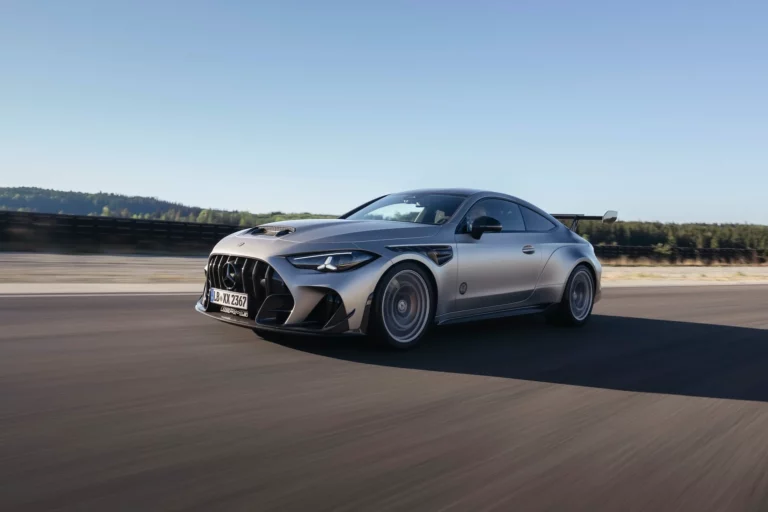


Bugatti has completed four weeks of cold-weather validation on the Tourbillon hypercar at the Colmis Proving Ground in Arjeplog, Sweden, focused heavily on the brake-by-wire system that blends regenerative braking from three electric motors with hydraulic foundation brakes. The program, documented in the latest episode of the marque’s A New Era docuseries, tested ABS, ESC, traction control, and brake-by-wire response across polished ice, packed snow, slush, and asphalt at temperatures reaching minus 30 degrees Celsius. Chief Development Driver Miroslav Zrnčević led a 20-person team through the program. Calibration centered on MU-jump events, where the prototype transitions from one grip surface to another in a single braking event.
Highlights
- Brake-by-wire architecture blends regen from three electric motors with hydraulic foundation brakes; both layers calibrated together during the four-week winter program
- ABS and ESC validated through MU-jump events, including transitions from heated asphalt onto polished ice mid-stop
- Test program covered polished ice, packed snow, slush, and asphalt at temperatures reaching minus 30 degrees Celsius
- Three drive modes (Comfort, Sport, Track) progressively open the safety-system envelope while keeping AWD, ABS, ESC, and traction control active
Brake-by-Wire Architecture
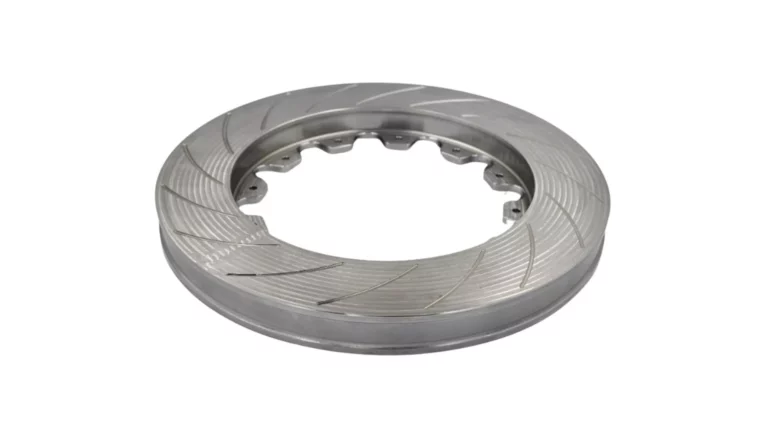
The Tourbillon’s braking system is one of the more complex elements of its hybrid architecture. A brake-by-wire system handles the relationship between regenerative braking from the electric motors and the hydraulic foundation brakes, with the goal of delivering pedal response that feels natural to the driver while remaining precise across radically different surfaces.
That blending challenge sits at the center of cold-weather validation. On a hybrid hypercar producing 1,800 HP from a naturally aspirated V16 and three electric motors, the braking system has to coordinate regen torque from two front-axle motors and a third rear-axle motor with hydraulic clamping at all four corners — and do so at a pedal position the driver can read instinctively, on surfaces ranging from dry asphalt to polished ice.
ABS and ESC on Low-MU Surfaces
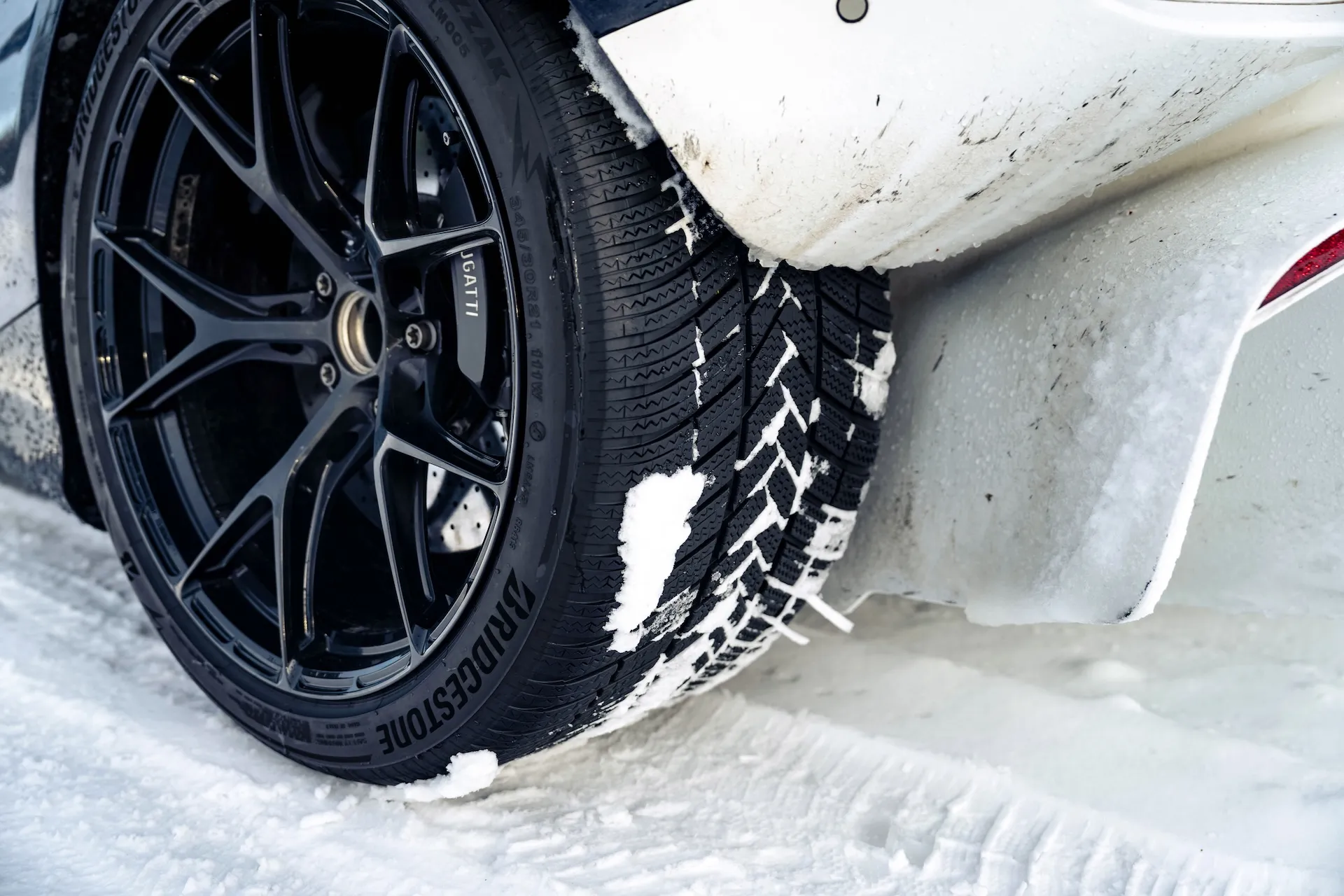
The Sweden program centered on what Bugatti calls low-MU conditions, where the coefficient of grip is dramatically reduced. Engineers evaluated ABS and ESC response across polished ice, packed snow, slush, and asphalt, with particular attention to MU-jumps — moments where the prototype transitions from one grip level to another mid-event.
“In this scenario, what we look for in the system is its ability to fight and master various kinds of conditions, so in essence different types of grip on the tire,” said Zrnčević, Chief Development Driver at Bugatti Rimac.
A typical MU-jump test sees the car begin braking on dry or heated asphalt before continuing onto polished ice, forcing the ABS and ESC to recognize and respond to the sudden change in adhesion. The control envelope also has to coordinate with the all-wheel-drive torque distribution being managed by the front-axle electric motors.
Drive Modes and Calibration Envelope
The Tourbillon offers three drive modes that progressively open the dynamic envelope while keeping ABS, ESC, traction control, and AWD active throughout.
Comfort mode prioritizes stability, with the safety systems intervening early to keep the car composed in low-grip conditions. Sport mode shifts toward neutrality and allows more engine character through. Track mode pushes torque further rearward and permits greater side slip while the safety systems continue operating.
“We have different driving modes on the car and, of course, depending on what the customer wants, the car can be driven in a completely different way,” Zrnčević said. “So we are changing the balance of the car, the vehicle dynamics, but also the safety systems, opening or closing the envelope of the safety systems.”
The architecture is a meaningful step beyond what Continental Engineering Services delivered for the Bugatti Bolide track car, which combined Motorsports ABS, ESC, and TCS into a five-mode system but used carbon-carbon foundation brakes without regen blending. The Tourbillon’s brake-by-wire layer adds a second variable to the calibration: how much torque comes from regen versus hydraulics at any given moment, modulated continuously across grip surfaces.

Test Program Scope
The program ran for four weeks, with conditions shifting throughout. Initial sessions hit minus 30 degrees Celsius before warmer weather altered surface characteristics, prompting the team to add night sessions to extend the working window. Twenty people supported the program, with a six-person core team rotating through two shifts across weekends.
“We are here to test and develop the Tourbillon in extreme conditions, to do various different tests on the HVAC system, on ABS, on ESC systems, traction control and vehicle dynamics in general,” Zrnčević said.
Bugatti had completed an earlier winter session the previous year, but the current campaign represented the bulk of cold-weather development for the platform. The full episode, “A New Era: Extreme Conditions,” is available on the official Bugatti YouTube channel.
Subscribe to The BRAKE Report. Get free sample chapters.