
German aftermarket parts manufacturer MEYLE is calling on workshops to prioritize brake system inspections this spring, pointing to a combination of road salt exposure, freeze-thaw cycles, and worsening pothole damage as factors that have accelerated wear on safety-critical components through the winter months.
Highlights
- MEYLE is urging workshops to treat spring as a critical window for brake inspection and preventative maintenance
- Industry data cited in the release pegs the cost of fixing potholes across England and Wales at roughly £18.6 billion (~$25.15 billion USD)
- Pothole impacts can drive disc thickness variation, lateral runout, uneven pad wear, and pedal pulsation
- MEYLE’s brake portfolio covers about 95 percent of the European car parc with 3,000 combined pad and disc references
Road Conditions Driving Workshop Demand
MEYLE argues that the scale of UK road damage is reshaping the spring service window. The company cites Asphalt Industry Alliance research estimating that repairing potholes across local roads in England and Wales would cost approximately £18.6 billion (~$25.15 billion USD), with more than one million potholes identified across the network. RAC data referenced in the release indicates the motoring organization attended more than 9,000 pothole-related breakdowns in a single quarter of early 2025.
For independent workshops, the company positions spring as the period when cumulative winter damage typically surfaces — much of it hidden from drivers until symptoms emerge.
How Pothole Impacts Reach the Brake System
Impact loads from a pothole strike travel through the wheel hub into the braking assembly. MEYLE identifies several resulting failure modes:
- Disc thickness variation (DTV) caused by repeated impact loading
- Lateral runout affecting caliper-to-disc geometry
- Uneven pad wear, often presenting as vibration or pedal pulsation
- Disc distortion from repeated impacts over time
- Accelerated corrosion driven by road salt and moisture exposure
Left unaddressed, these conditions reduce braking efficiency, extend stopping distance, and shorten component life.
Material and Friction Strategy
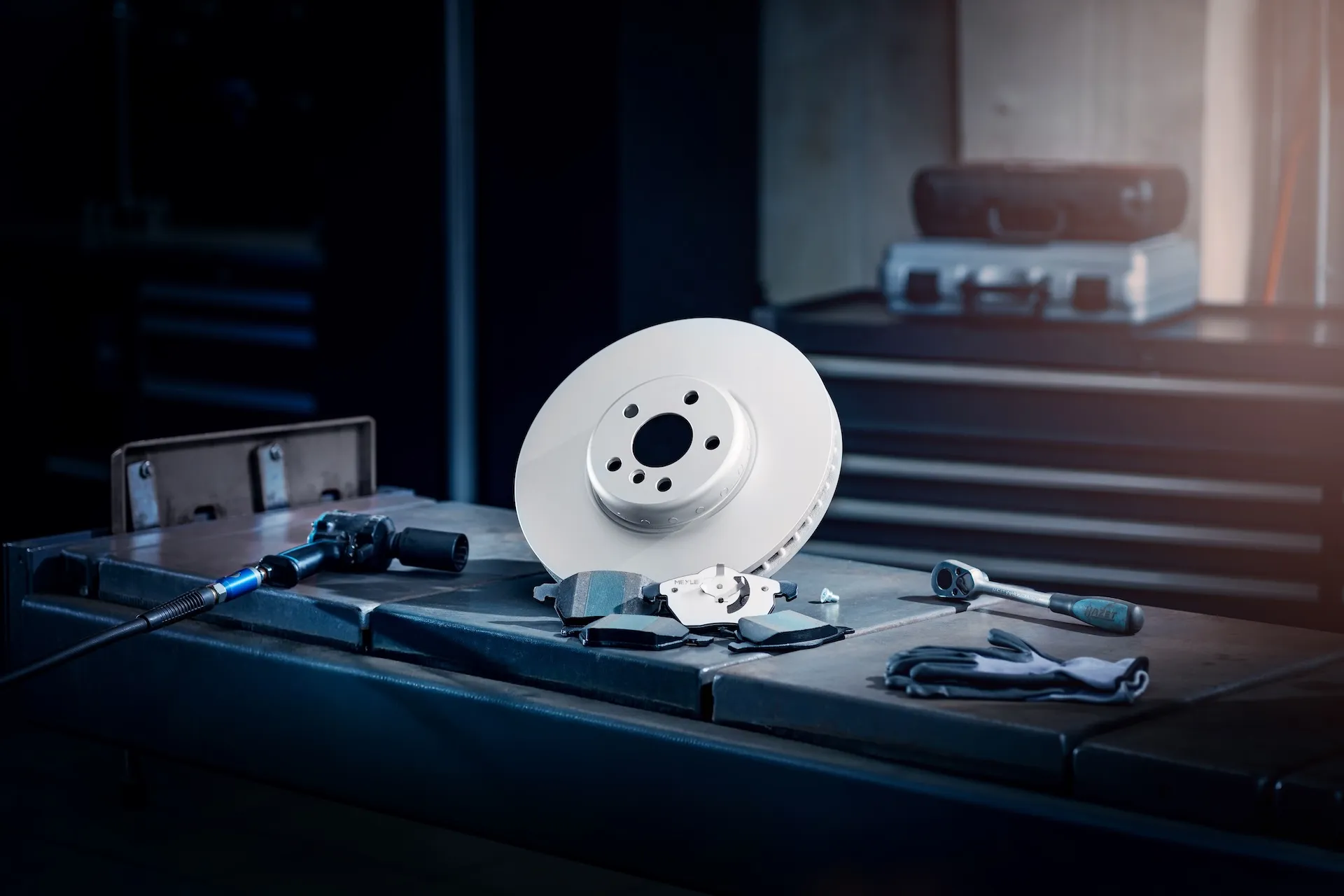
MEYLE points to high-carbon brake discs as offering improved resistance to heat distortion and more consistent performance, with protective coatings intended to limit corrosion and ease installation. On the friction side, the company describes a compound strategy tailored to specific vehicle applications, balancing stopping performance against noise, wear resistance, and dust output.
Noise control is a recurring workshop concern. MEYLE brake pads use vehicle-specific shims as vibration dampers, pad chamfers to manage initial disc contact, and slots intended to dissipate heat and debris while limiting cracking under thermal load. A vibration-decoupling adhesive layer between the shim and carrier plate is positioned as a further damping measure.
Standards, Testing, and Installation
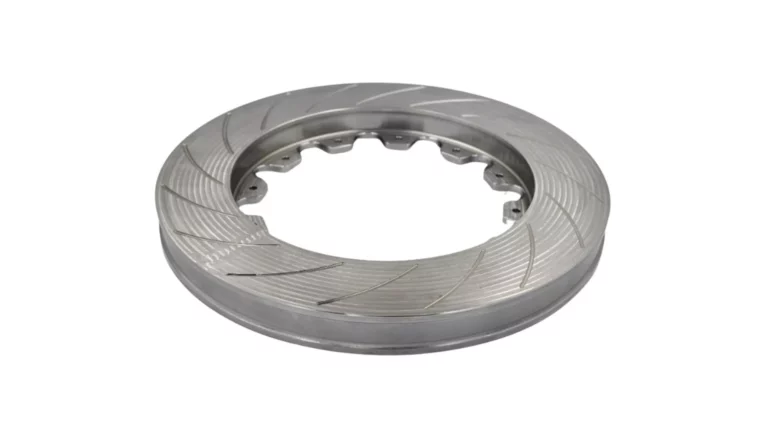
MEYLE states that its brake discs and pads are manufactured in accordance with ECE R90, the European type-approval standard for replacement brake components, and claims its validation program includes durability testing, braking simulations, and independent assessments. The company’s broader aftermarket catalog includes two-component brake discs for common BMW and Mercedes applications within its PD line.
The release also flags installation discipline as a limiting factor on component performance. MEYLE highlights the need for clean mounting surfaces, correct torque application, proper bedding-in procedures, and replacement of pads and discs in pairs to avoid runout and imbalance issues. Pre-coated discs and included fittings are cited as measures to reduce installation time and error.
Workshop Takeaway
With UK pothole-related brake damage drawing heightened attention from aftermarket suppliers this spring, MEYLE frames the season as a preventative-maintenance opportunity. The company contends that early identification of DTV, corrosion, and pad wear — paired with quality replacement components — can reduce repeat repairs and shore up customer confidence during a high-volume inspection period.
Subscribe to The BRAKE Report. Get free sample chapters.