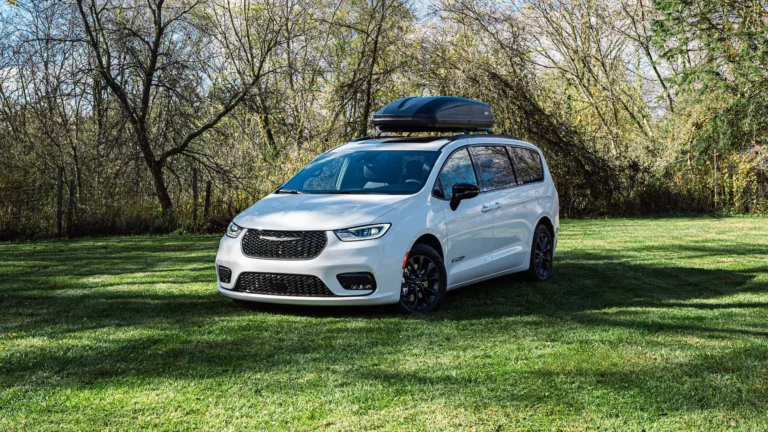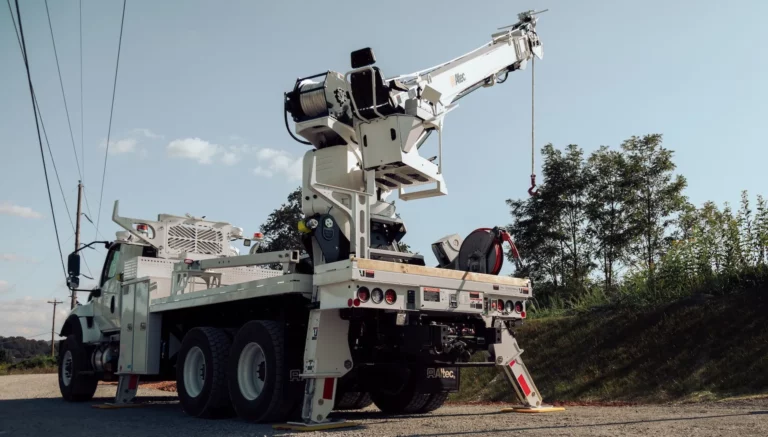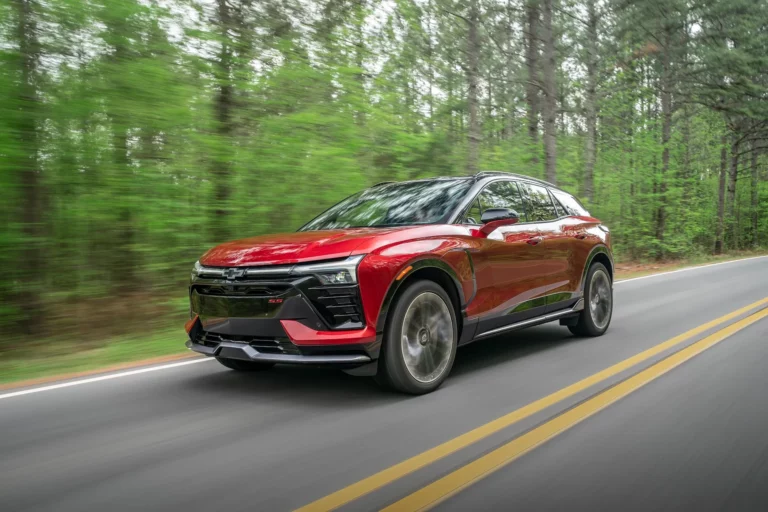

April delivered a different mix than March. Where March was dominated by trailer-brake software and electronic brake booster issues spanning millions of vehicles, April brought an Audi pushrod recall expansion, a heavy-truck Bendix modulator action, two motorcycle brake campaigns, and a software-driven phantom braking story that GM still hasn’t resolved.
Here’s what brake industry professionals, aftermarket distributors, and fleet operators need to know.
Audi Pushrod Recall Expands to Nearly 19,000 E-Tron EVs
The biggest April recall by significance — if not by volume — is Audi’s expansion of an earlier brake pedal action.
NHTSA campaign 26V240, filed April 15, covers 18,853 model year 2019–2024 Audi E-Tron and 2020–2024 E-Tron Sportback EVs in the US. Transport Canada filed the parallel campaign (2026-187) covering 1,860 Canadian units. The defect: the screw connection between the brake pedal input rod and the brake booster actuator rod may not have been torqued to specification. If the joint loosens enough, the brake pedal can detach from the booster entirely. Drivers would then be reliant solely on the emergency brake function.
NHTSA flagged the campaign with “Do Not Drive” and “Park Outside” advisories — unusually severe language for an inspect-and-torque remedy. Audi’s recall code is 46P7.
This is the second piece of a defect Audi first addressed in August 2024 under campaign 24V621, which covered roughly 1,453 units. Between January and March 2026, Audi received two field parts from vehicles outside that original scope. A renewed analysis turned up three additional defective parts. On April 8, the Audi Product Safety Committee determined that all parts produced at the affected screwdriving station prior to the May 2024 process optimization — and not already covered by the earlier action — needed to be recalled. The expanded scope covers more than twelve times as many vehicles as the 2024 campaign.
The supplier connection matters. The screwdriving station deviation traces to the supplier of the Continental MK C1 EVO brake system. A related supplier-side campaign was filed in early 2025 addressing the same underlying issue. Affected part numbers are 4KE614100AP, 4KE614100AD, 4KE614100AS, and 4KE614100AR.
The remedy is straightforward: dealers inspect the pushrod screw joint and torque it to spec. No parts replacement required. Audi reports no crashes, fires, injuries, or fatalities tied to the defect as of early April. Owner letters mail by June 12, 2026.
Volvo and Mack Recall 5,137 Heavy Trucks Over Bendix Modulator Defect
Volvo Trucks North America and Mack Trucks filed parallel recalls in late April covering 5,137 combined heavy-duty tractors over an unprotected electrical connector on the Bendix rear brake modulator that can short-circuit and disable both ABS and electronic stability control.
The split: Volvo recalled approximately 2,800 model year 2025–2027 VNL and 2026–2027 VNR trucks (recall RVXX2605). Mack recalled the balance — 2025–2027 Pioneer and 2026–2027 Anthem trucks. Volvo reported 43 field reports and 43 warranty claims tied to 50 VINs, with no accidents or injuries. Mack reported 5 field reports and 4 warranty claims across 6 VINs.
The defect mode is straightforward: the rear brake modulator’s electrical connector can short, taking ABS and ESC offline together. There are no warning signs prior to failure. Dealers will inspect, install a protective cover, and replace the modulator if needed. Owner notification letters mail June 22.
This is the latest in a multi-year string of Bendix-related commercial vehicle actions. Earlier campaigns covering the Bendix EC-80 advanced ECU affected nearly 190,000 Volvo and Mack trucks, more than 105,000 International trucks, and Peterbilt and Kenworth fleets. The April action centers on a different component — the rear brake modulator rather than the ECU — but the pattern of Bendix-related campaigns rippling across multiple OEMs continues.
Harley-Davidson Recalls 16,994 Softails Over Rear Brake Line Defect
Harley-Davidson filed NHTSA campaign 26V234 on April 13 covering 16,994 model year 2025–2026 Softail motorcycles across four variants: FLHC Heritage Classic, FXBB Street Bob, FXLRS Low Rider S, and FXLRST Low Rider ST.
The defect is a clearance issue. On the affected models, the rear brake line (part 41800974) may contact the Body Control Module mounted next to the battery. Over time, that contact wears a hole through the line. Brake fluid escapes. If the loss goes undetected, rear braking is compromised.
The frame geometry detail is worth noting: only the four Softail variants built on the new narrow-frame electrical architecture are affected. The Breakout, Fat Boy, and Gray Ghost — built on the wider Softail frame — provide enough physical clearance between the BCM and the brake line and are excluded. Harley estimates 100% of the recall population is exposed to the defect.
The investigation timeline shows fast escalation. Harley’s Technical Subcommittee was alerted March 5 after a service report flagged inoperable brakes on a 2025 Low Rider ST. Three additional warranty claims for fluid loss or rear brake failure surfaced over the next three weeks. The company placed all in-inventory units on ship hold, called field parts back for inspection, reviewed CAD models, and inspected pre-production motorcycles that had completed mileage testing. The Field Action Committee received findings March 25. The Executive Decision Authority authorized the recall April 6 — roughly one month from first complaint to filing.
Production units shipped after March 18, 2026 already incorporate the redesigned BCM caddy. Dealers will replace the caddy (part 69203217) and associated hardware on all affected motorcycles, then inspect the rear brake line and replace it if compromised. Owner letters mail between May 18 and May 25.
This is the third Harley-Davidson rear brake line routing recall in recent years. In 2023, 2,212 FLHXSE and FLTRXSE CVO models were recalled after a frame rail clamp failed to retain the rear brake line, allowing it to contact the exhaust. In 2024, a separate action addressed front brake line routing on FXRST and FXLRST Softails.
BRP Halts Production of Can-Am Origin EV Over Brake Caliper Failure
BRP filed NHTSA campaign 26V220 on April 7 covering 398 model year 2025 Can-Am Origin electric motorcycles in the US — 100% of the population delivered to date.
The defect is a fatigue weakness in the front brake caliper support that can fracture after repeated hard or emergency braking. If the support fails, the front brake stops working. BRP traced the root cause to a data input error in the finite element analysis used to validate the caliper mount. The fix is a caliper support reinforcement kit, but parts aren’t yet available. BRP has halted production of the Can-Am Origin until the reinforcement kit is in place.
Affected bikes were produced between May 2, 2024 and June 17, 2025. The Can-Am Origin is BRP’s first all-electric motorcycle and represents the brand’s return to the two-wheeler segment. The Origin shares architecture with the Can-Am Pulse, which BRP has separately retrofitted at the factory.
BRP is using a two-letter notification approach — first letter to alert owners the recall exists, second letter when parts are available. First letters mail May 14.
The 398-unit US population is small, but the production stoppage and the underlying engineering analysis error are significant. The Origin recall lands while the broader powersports OEM community is still digesting the year-long Bendix EC-80 cycle and a parallel run of motorcycle brake actions across Harley-Davidson, Ducati, and Triumph.
Jeep Cherokee Day-One Brake Module Recall
Stellantis filed a recall covering 241 model year 2026 Jeep Cherokee SUVs (FCA recall 29D, NHTSA campaign 26V223) for an ABS and ESC software defect in the brake system control module. ZF North America is the BSCM supplier; the affected part number is 68724672AB.
The unit count is small, but the timing is notable. The 2026 Cherokee is Stellantis’s relaunched mid-size SUV nameplate — the model that drove the company’s Q1 wholesale beat. Affected vehicles were produced for the US market between December 4 and December 27, 2025 at the Toluca, Mexico assembly complex. Stellantis became aware of the issue in February 2026, and owner notification letters began mailing April 28. This is the second Cherokee recall of the year — the all-new SUV was first recalled in February 2026 over inoperative trailer lighting and trailer brake failure.
Stellantis is not aware of any crashes related to the BSCM defect. Dealers will reflash the brake system control module software at no charge.
GM Suspends Phantom Braking Fix on Super Cruise Vehicles
This isn’t a recall in the traditional sense — but it’s a story the brake industry should track.
General Motors suspended the dealer repair procedure for Unwanted Integrated Brake Assist on Super Cruise–equipped 2026 Cadillac CT5, Chevy Equinox EV, Chevy Silverado EV, and GMC Sierra EV. The original technical service bulletin (N252521591-02, dated February 10) covered a software anomaly that triggers aggressive, unprompted brake-assist activation. Tech bulletin coverage originally included full-size SUVs (Escalade, Tahoe, Suburban, Yukon) plus the EVs and CT5. As of late April, the full-size SUVs continue to receive the fix. The Super Cruise–equipped variants do not.
GM hasn’t publicly disclosed the reason for the suspension. The implication is that the existing reprogramming didn’t interact correctly with the Super Cruise hands-free driver-assistance stack and requires further calibration before it can be reinstated. There is no timeline for resumption.
That leaves dealerships holding vehicles they’re not permitted to deliver, and customers who already took delivery driving with the underlying condition unresolved.
The phantom braking question has become an industry-wide concern. A long-running class action against Honda over its collision mitigation braking system recently advanced toward trial. Comparable suits are pending against Volkswagen and Nissan. Earlier this year, GM separately recalled non–Super Cruise 2025 Equinox EVs for a different brake control software defect affecting adaptive cruise control braking.
The technical lesson: layering ADAS calibration on top of vision-based active safety systems creates failure modes where adjusting one parameter to fix one problem introduces conflicts with another subsystem. Software-defined braking is generating a category of defect that didn’t exist a decade ago.
C8 Corvette Stop-Sale Over Brake Light Detection Fault
GM also issued a stop-sale (NHTSA campaign 26V213, GM program N252541250) covering 3,324 Chevrolet C8 Corvettes — 2,886 model year 2026 units and 438 model year 2025 units — over an exterior lighting control module defect.
The issue is software-only. The Rear Brake Light Outage Detection system fails to notify the driver if a rear turn signal lamp stops working, putting affected vehicles out of compliance with FMVSS 108. The C8’s brake lights and turn signals share lighting hardware, so the same module manages both functions.
The 2026 cars get the fix via OTA software flash. The 2025 cars are stuck — at the time of filing, GM had not yet developed a remedy for the older model year, leaving 438 cars in dealer inventory with no path to delivery. Dealers can’t sell, trade, auction, or use these for demonstration.
This is one of several recent C8 quality actions. The Z06 and ZR1 saw separate brake-related recalls earlier this cycle.
What to Watch Next Month
A few threads from April will continue to develop.
The Audi pushrod recall scope may not be done expanding. Audi’s renewed parts analysis in Q1 2026 surfaced three additional defective components outside the original 24V621 scope. If field returns continue producing similar finds, a third expansion isn’t out of the question. The Continental MK C1 EVO involvement also raises the question of whether other Volkswagen Group platforms running the same booster will see related actions.
GM’s Super Cruise phantom braking issue has no fix timeline and no recall — yet. If the dealer-level workaround can’t be calibrated for the Super Cruise stack, the path forward likely escalates into a formal Part 573 filing.
The Ford trailer brake module recall (26C10) and the Stellantis trailer tow module recall (03D) from March remain in the field. Combined, the campaigns cover more than five million vehicles. April brought no further developments on either, but the OTA rollouts and parts logistics will drive dealer service volume well into Q2.
A few legal items in April are worth flagging even though they aren’t recalls. The California court reversed the $160 million Suzuki GSX-R brake failure verdict earlier in the month. The Range Rover brake defect lawsuit cleared a key class certification hurdle. And the GM brake master cylinder lawsuit was refiled with three plaintiffs. None of these are recall actions, but they all represent the same pressure pattern — brake defects driving litigation, regulatory attention, and supplier-side scrutiny.
The BRAKE Report tracks international brake recall activity monthly using Transport Canada, the EU Safety Gate, Germany’s Kraftfahrt-Bundesamt (KBA), Australia’s Department of Infrastructure, and the OECD GlobalRecalls portal.
Recall references: NHTSA 26V240 / Audi 46P7 (Audi E-Tron pushrod expansion). Transport Canada 2026-187 (Audi Canada). Volvo RVXX2605 / Mack parallel campaign (Bendix modulator). NHTSA 26V234 (Harley-Davidson Softail rear brake line). NHTSA 26V220 (BRP Can-Am Origin caliper). FCA 29D / NHTSA 26V223 (Jeep Cherokee BSCM). GM TSB N252521591-02 (Super Cruise Unwanted Integrated Brake Assist). NHTSA 26V213 / GM N252541250 (Corvette brake light detection).
Subscribe to The BRAKE Report. Get free sample chapters.