
March was busy. The BRAKE Report tracked 14 safety campaigns involving braking systems in Canada, the EU, and Germany — plus several large US recalls with cross-border implications. All told, more than five million vehicles are affected.
Here’s what brake industry professionals, aftermarket distributors, and fleet operators need to know.
Ford and VW Electronic Brake Booster Recalls Now Span Two Continents
Electronic brake booster problems keep spreading. Both Ford and Volkswagen are now dealing with EBB-related recalls — and the vehicles involved share a platform.
Ford’s EBB issues started in August 2025. The company recalled 312,120 model year 2025 F-150, Expedition, Bronco, Ranger, and Lincoln Navigator vehicles in the US (NHTSA 25V488000). The problem? The EBB module could enter a faulted state while driving. A voltage disturbance would trigger an over-current fault, killing power brake assist until the module completed a full sleep cycle with the vehicle off.
Ford pushed an over-the-air software fix. Then in December 2025, a follow-on recall (NHTSA 25SD4) covered 679 more units that needed physical module replacement due to an integrated circuit manufacturing deviation.
The problem went global in late January 2026. The EU Safety Gate published a recall for 340,756 model year 2024–2025 Ford Rangers in Europe — same issue, same EBB malfunction. That confirmed this wasn’t a North America–only manufacturing anomaly.
Then Volkswagen entered the picture. In early February, the Safety Gate published alert SR/00355/26 covering 8,078 model year 2025 VW Amarok pickups built between January and June 2025. The defect sounds nearly identical: loss of braking power from the EBB module, increased pedal travel, extended stopping distances. VW recall code 47CW.
The Amarok isn’t sold in the US. But here’s why it matters: the current Amarok rides on Ford’s T6.2 platform — the same one under the Ranger. Both vehicles come off the line at Ford’s Silverton plant in South Africa.
Neither Ford nor VW has named the EBB module supplier. The shared platform and shared assembly plant make component commonality very likely. If the same Tier 1 is behind both recalls, that’s a supplier-level defect pattern spanning 350,000-plus vehicles across two brands and two continents. The EBB segment is dominated by Continental, Bosch, and ZF. No supplier has been publicly identified in either OEM’s filings to date.
Why This Matters for the Brake Industry
The EBB is no longer a specialty part. It’s becoming standard equipment as electrification kills off engine vacuum — the traditional power source for brake boosters. These modules introduce failure modes that didn’t exist in vacuum booster designs: voltage transients, over-current faults, IC deviations.
For aftermarket distributors and independent shops, there’s a serviceability question too. EBB faults typically need OEM-level diagnostics. Some require OTA software infrastructure that independent repair channels simply don’t have access to.
Trailer Brake Failures: Five Million Vehicles Across Two Recalls
Two of the biggest recalls this quarter aren’t about the vehicle’s own brakes — they’re about trailer braking. Both started in the US and crossed into Canada.
Ford recall 26C10 is the larger of the two. It covers 4,381,878 vehicles in the US across model years 2021–2027, including the F-150, Super Duty lineup, Maverick, Ranger, F-600, Expedition, Navigator, and E-Transit. Transport Canada confirmed the Canadian scope on March 6: another 627,267 vehicles, pushing the North American total past five million.
The integrated trailer module can lose communication with the vehicle when a trailer is connected. When that happens, trailer stop lamps and turn signals go dark. On vehicles with the high-series module, trailer brakes stop working entirely. Ford is rolling out an OTA software update.
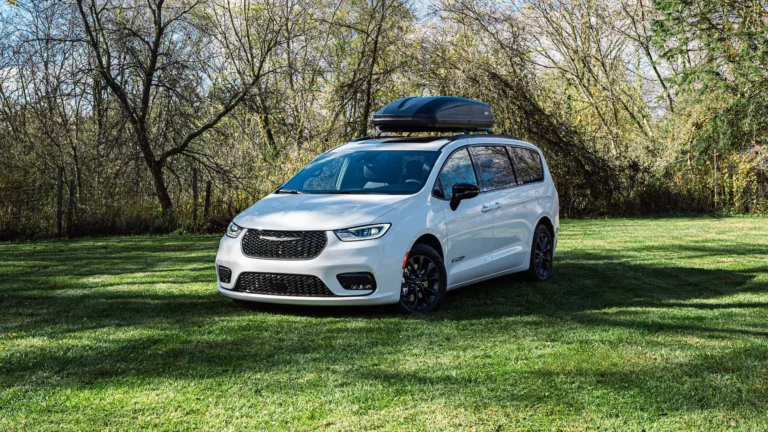
Stellantis recall 03D covers 456,287 Ram and Jeep vehicles — 2025–2026 Ram 1500/2500/3500 and heavy-duty cab chassis, the 2024–2026 Wagoneer S, and the 2026 Cherokee. An improperly designed trailer tow module causes total loss of trailer braking and lighting.
One notable detail: the Stellantis filing names Grand Haven Stamping Plant and Continental Auto Guadalajara as the two module suppliers. That kind of supplier transparency in a recall document is uncommon and valuable for anyone tracking component-level exposure.
Missing Pins, Loose Bolts: Brake Pedal Defects at Four Facilities
Four separate recalls this month involve the simplest possible brake failure — a missing fastener at the brake pedal assembly. Different OEMs. Different plants. Different countries. Same result: total brake loss.
Ford Transit (recall 26C07): The cotter pin securing the brake booster pushrod to the pedal may be missing on 15,965 model year 2025 Transit cargo vans. NHTSA and Transport Canada both issued stop-drive advisories. About 3,000 Canadian units are affected.
Ford F-53/F-59 (recall 26C17): Later in March, Ford recalled 2,422 model year 2025–2026 commercial stripped chassis vehicles. The brake lights may stay illuminated continuously — the inverse symptom of a pushrod issue. Dealers will inspect and repair the brake booster push rod. The F-53 and F-59 are the platform behind most Class A motorhomes and many commercial walk-in vans. Notifications went out around March 23.
Oshkosh NGDV (NHTSA 26V074000): The mounting pin and retaining clip on 5,242 USPS mail delivery trucks were missing from the brake pedal assembly. One field report alleged complete service brake failure. Oshkosh quarantined all in-process builds within 24 hours and implemented parts-scanning verification.
Citroën C3/C3 Aircross (recall code GQ8): In Europe, 2025 C3 and C3 Aircross models had a brake pedal support pin that was missing or poorly assembled. If the pin falls out, the brake pedal disconnects. The vehicle can’t stop.
These aren’t exotic electronic failures. They’re assembly omissions. Oshkosh’s rapid deployment of poka-yoke scanning is the right response. Whether Ford and Citroën have implemented comparable process controls hasn’t been disclosed.
Renault and Dacia: Electronic Parking Brake Defect Hits Six Models
Renault Group recalled the 2024–2025 Dacia Duster, Renault Captur II, Megane E-Tech, Scenic E-Tech, Espace VI, and Rafale for a shared electronic parking brake actuator defect.
A mispositioned position sensor places the stopping pin incorrectly in the ‘P lock’ position. The parking brake doesn’t engage properly when the driver presses P, turns off the engine, unbuckles, or opens the door. The Duster recall alone covers 181,726 units worldwide. The backup assisted parking brake still works, but the primary automated engagement does not.
Dacia recall code 0EYA. Renault recall code 0EWQ.
None of these models are sold in the US. But the shared component across six models on three different platforms (CMF-B, CMF-C, CMF-EV) points to a common Tier 1 parking brake actuator supplier. The Renault-Nissan-Mitsubishi Alliance shares supplier relationships globally, so a defect pattern here could extend beyond the Renault brand.
Alfa Romeo Tonale: EU Recall With No US Parallel
The EU Safety Gate flagged the 2023 Alfa Romeo Tonale MHEV/PHEV in January 2026 for a brake pedal assembly that could collapse under braking.
The Tonale is sold in the United States. No matching NHTSA recall has appeared. That makes this a potential international-first action — and a story lead worth watching.
Commercial Vehicle Brake Recalls
March was particularly active for trucks, buses, and fleet vehicles.
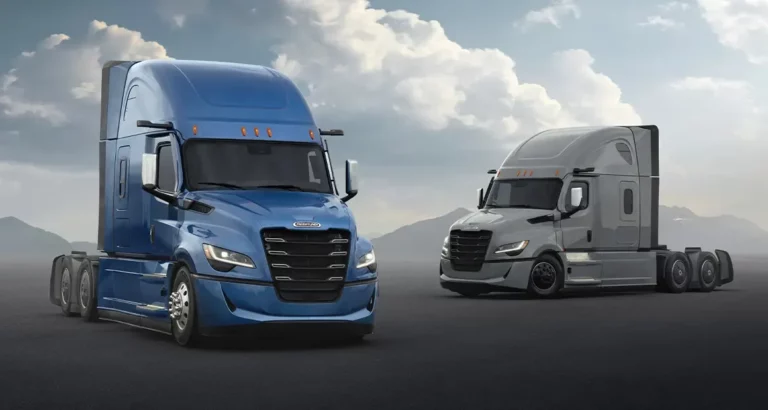
Volvo VNL (recall RVXX2601): Volvo recalled 800 model year 2024–2027 VNL trucks. In weight bias mode, the electronic suspension may not put enough load on the parking brake axle, producing inadequate hold force and rollaway risk. This isn’t a brake hardware failure — it’s a system-level interaction between the electronic suspension and the parking brake. Dealers will replace the brake chambers with units that include auxiliary parking brakes.
International Motors (Transport Canada 2025647 / recall 25524): About 11,418 model year 2023–2026 LT and RH trucks have a defective quick release valve in the parking brake air system. The auto-neutral feature can’t tell the parking brake is set, which means the truck may move unexpectedly after the driver exits.
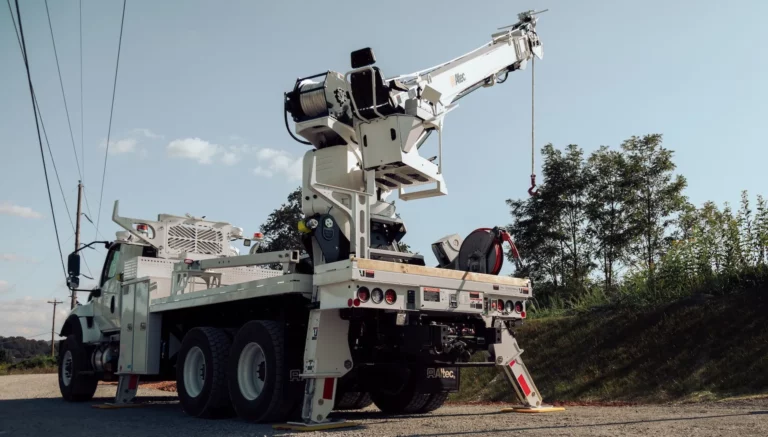
ARBOC Specialty Vehicles (Transport Canada 2026109): Model year 2018–2026 Spirit of Mobility and Spirit of Freedom paratransit buses built on a Chevrolet chassis have rear brake lines that may not be properly connected to the ABS control module. ABS and stability control may not function correctly. Transit agencies running these accessible buses should prioritize inspection.
Autocar: Certain vehicles were recalled after the brake ECU software was found to fail during adaptive cruise control or hill hold assist. Dealers will update the software. Notifications expected April 13, 2026. Another entry in the growing list of software-dependent braking failures hitting commercial platforms.
What to Watch Next Month
A few threads from March need continued attention.
The EBB supplier question is the big one. Whether the Ford and VW Amarok recalls trace back to a common Tier 1 has major implications for the brake component supply chain.
The Alfa Romeo Tonale brake pedal recall still hasn’t surfaced at NHTSA. If it doesn’t appear soon, that’s a story.
Ford’s brake booster pushrod problem has now generated two distinct recall actions (Transit and F-53/F-59). That pattern may not be done expanding.
And the trailer brake module recalls from Ford and Stellantis — more than five million vehicles combined — will drive significant parts demand and dealer service volume well into summer.
The BRAKE Report tracks international brake recall activity monthly using Transport Canada, the EU Safety Gate, Germany’s Kraftfahrt-Bundesamt (KBA), Australia’s Department of Infrastructure, and the OECD GlobalRecalls portal.
Recall references: Ford 25S77 / NHTSA 25V488000. Ford 25SD4. EU Safety Gate, Ford Ranger, Week 4/2026. EU Safety Gate SR/00355/26, VW Amarok, Week 5/2026. VW recall 47CW. Ford 26C10 / NHTSA 26V104000. Transport Canada (Ford ITRM, 627,267 units). FCA recall 03D / NHTSA 26V046000. Ford 26C07 / NHTSA 26V069000 (Transit). Ford 26C17 (F-53/F-59). Oshkosh NGDV_TSB_059 / NHTSA 26V074000. Citroën GQ8. Dacia 0EYA. Renault 0EWQ. Transport Canada 2025647 / International 25524. Volvo RVXX2601. Transport Canada 2026109 (ARBOC). Autocar brake ECU software recall.
Subscribe to The BRAKE Report. Get free sample chapters.