Friction One has acquired the Raybestos brand, taking on the product formulations, engineering specifications, application data, and catalog resources behind a braking name that dates to 1902. The deal pairs Raybestos with Friction One‘s multi-plant manufacturing operations in Mexico and China, and the company describes its approach to the brand as “Authentic Raybestos.” The first Raybestos-branded products under the new owner are expected to reach distribution in Q4 2026.
Highlights
- Friction One has acquired the Raybestos brand along with its product formulations, engineering specifications, application data, catalog resources, and marketing assets.
- The first Raybestos products under Friction One are expected in Q4 2026, beginning with friction, drums, and rotors.
- Friction One reports its portfolio covers more than 99% of global passenger and commercial vehicle applications across 15,000-plus SKUs.
- Raybestos traces to 1902 and introduced the woven brake lining in 1906.
What Friction One Acquired
The acquisition covers the Raybestos brand and the assets that have supported its braking products, including product formulations, engineering specifications, application data, catalog resources, marketing assets, and related technical materials. Friction One frames the purchase as preserving the engineering foundation behind Raybestos while setting a longer-term strategy for the brand.
“We are thrilled to complete this deal, as Raybestos is one of the most respected names in the industry. The concept of ‘Authentic Raybestos’ defines our approach,” said Jim Zhang, Founder and CEO of Friction One. “Our commitment is to carry that legacy forward through disciplined engineering, advanced manufacturing capability, rigorous validation, continued innovation, and long-term investment.”
Manufacturing and Engineering Behind the Brand
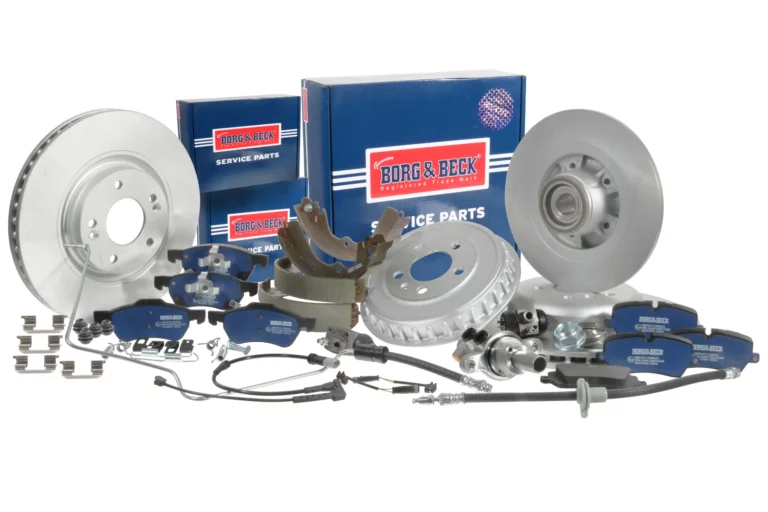
Friction One operates a multi-plant manufacturing platform with operations in Mexico and China, supported by U.S.-based distribution, engineering, catalog management, product development, and supply chain resources. The company manufactures and distributes brake drums and rotors, pads and shoes, calipers, hoses, and hydraulics, and says its portfolio spans more than 15,000 SKUs covering over 99% of global passenger and commercial vehicle applications.
The company also pointed to engineering continuity in its plans for the brand. Nate Kinkley, Director of Product Engineering at Friction One, previously held the same title at Brake Parts Inc., where he worked on the Raybestos product portfolio.
“This represents a full-circle moment in my career,” said Kinkley. “I’ve had the privilege of supporting Raybestos across its products, customers, and engineering heritage. Friction One stands out as the ideal steward for that legacy, and I’m honored to help guide the brand forward.”
Richard Speros, Vice President of Sales, North America, tied the acquisition to continuity for the brand’s customers. “Authentic Raybestos means respecting what customers have trusted while building the support structure needed for the future,” he said. “For customers, that comes down to coverage, consistency, and support. Raybestos application coverage remains central to the strategy, and Friction One is committed to supporting that coverage with catalog management, engineering resources, and supply discipline.”
First Products Expected in Q4 2026
The first Raybestos-branded products under Friction One are expected to reach distribution in Q4 2026, beginning with friction, drums, and rotors. Friction One says it will continue developing the portfolio through engineering review, product validation, application coverage, supply chain stability, and production.
A Braking Name Dating to 1902
Founded in 1902, Raybestos built its reputation on early innovation, including the woven brake lining it introduced in 1906, and supplied braking and friction materials for more than a century, including service to the U.S. military during both World Wars. Long known to technicians as “The Best in Brakes” and “The Technician’s Choice,” the brand spans friction, rotors, drums, calipers, and related braking components.