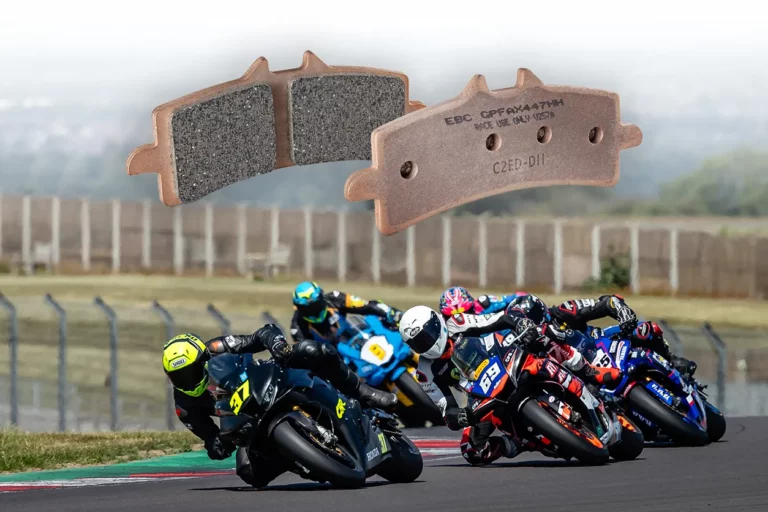

Brembo will supply customized braking systems to all 22 riders competing in the 2026 MotoGP season. The milestone marks the 25th anniversary of the premier class under its current name. Since 2016, the Italian manufacturer has equipped 100% of the grid. Additionally, riders using Brembo components have won every world championship since the class rebranded from “500cc” in 2002.
Highlights
- Brembo has supplied 100% of the MotoGP grid since 2016, with all 11 teams relying on its calipers, discs, master cylinders, and pads for 2026.
- Brembo Group subsidiaries extend beyond brakes, with Öhlins, AP Racing, and Marchesini supplying forks, clutches, and wheels to most teams.
- The MotoGP braking system weighs approximately 2.3 kg, featuring carbon discs that operate between 250° and 850°C.
- Brembo also dominates Moto2 and Moto3, providing calipers to 100% of teams in both lower categories.
Brembo Group’s Broader MotoGP Footprint
Brembo’s presence in MotoGP extends well beyond braking systems. Through strategic acquisitions over the past 25 years, the Brembo Group now supplies forks, shocks, clutches, and wheels to most teams on the grid. As a result, the company’s influence covers a significant portion of each motorcycle’s wheel-side componentry.
The subsidiary breakdown for 2026 includes:
- Öhlins – Carbon fiber forks and aluminum shocks for 9 of 11 teams
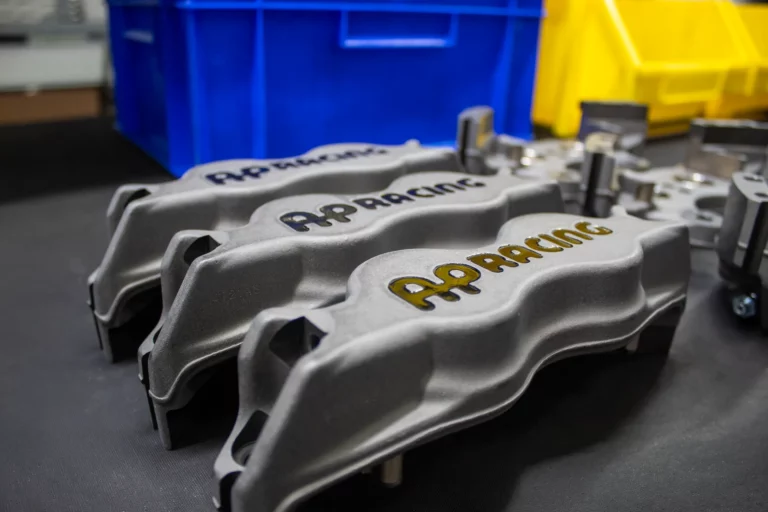
- AP Racing – Carbon clutch technology for 5 of 11 teams
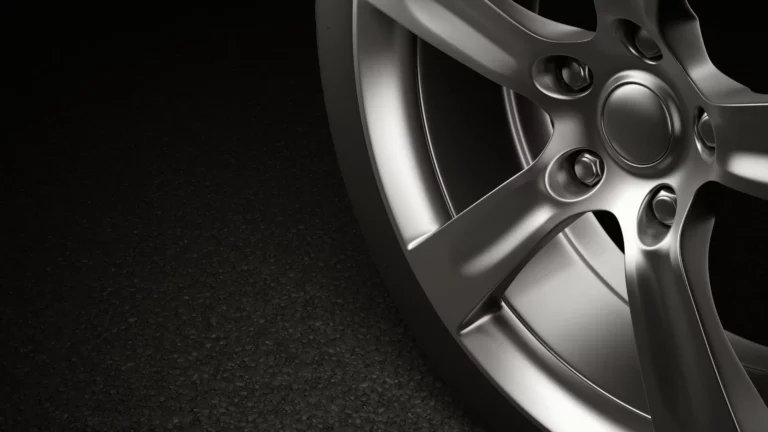
- Marchesini – Forged magnesium wheels (5 Y-spoke or 7-spoke configurations) for 9 of 11 teams
Brembo has also served as MotoGP’s Braking Inspiration Partner since 2023. Furthermore, the company will return as Title Sponsor of the Italian GP at Mugello in 2026.
Technical Specifications for 2026
For the upcoming season, Brembo will continue working with riders and teams to optimize braking component selection. The complete MotoGP braking system weighs roughly 2.3 kg. Riders can choose from multiple carbon disc options based on riding style and personal preference.
Disc and Caliper Details
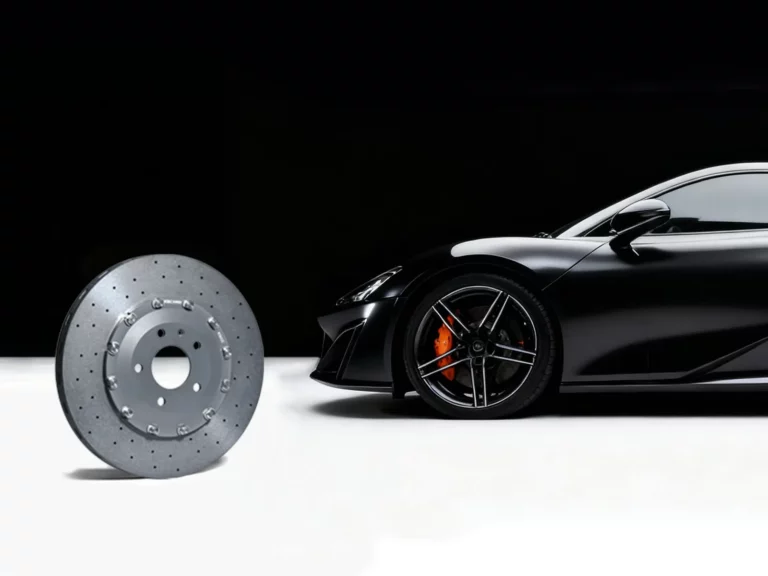
The finned disc remains among the most popular choices. It allows greater heat dissipation during heavy braking zones. Each disc weighs 1.4 kg and must maintain an operating temperature between 250° and 850°C.
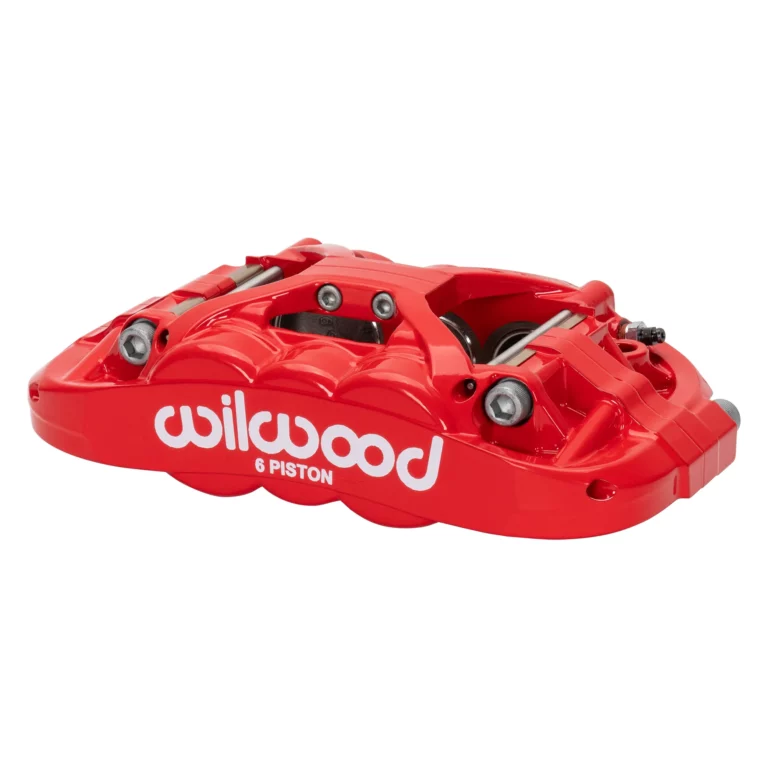
Meanwhile, all riders will continue using the GP4 finned caliper. Brembo first introduced this caliper design in 2020. It has since become the standard across the entire MotoGP field.
Brembo’s Role in Moto2 and Moto3
Brembo confirms its position as the sole caliper supplier in both lower World Championship categories. However, market share varies across other components. For the 14 Moto2 teams and 13 Moto3 teams racing in 2026, Brembo’s supply breakdown includes:
- Calipers – 100% of teams in both classes
- Pads – Approximately 80% of teams
- Master cylinders – Roughly 90% of teams
- Steel discs – About 30% of teams
- Marchesini wheels – Just under 30% of teams
Öhlins suspensions also maintain a strong presence, equipping 70% of the Moto2 grid and 50% of the Moto3 grid.
Lower-Class Disc Specifications
Both Moto2 and Moto3 teams can select from finned or light steel discs. The choice depends on circuit severity. In contrast to MotoGP’s carbon discs, these steel options must stay below 650°C for peak performance.
The size and weight differences between classes are notable. The Moto3 disc measures Ø218 mm and weighs approximately 0.5 kg. In comparison, the Moto2 disc is Ø305 mm and weighs 1.3 kg — nearly triple the smaller-class disc. Brembo also offers finned calipers in both categories, derived from the GP4 caliper used in MotoGP.
Overall braking system weight reaches about 6 kg in Moto2 and close to 4.5 kg in Moto3. These figures include both front and rear wheel assemblies.
Subscribe to The BRAKE Report. Get free sample chapters.