
Originally reported by Sécheron at Railway-News (7 Apr 2026). Read the full story →
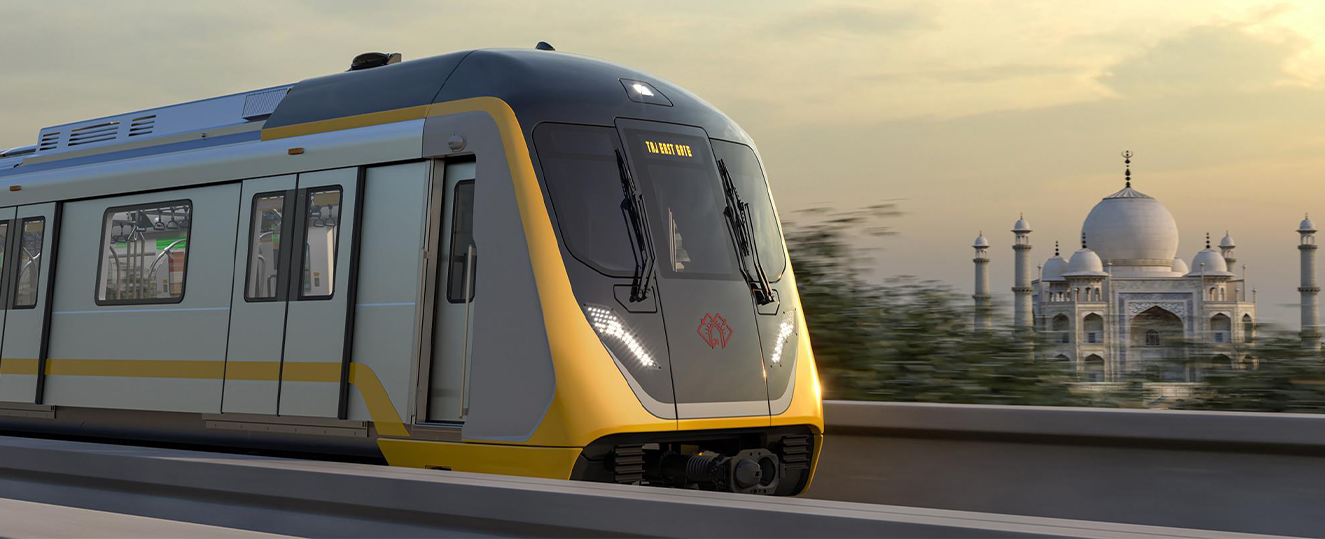
Fleet electrification TCO models are changing fast. Heavy transit operations prove that wasting kinetic heat is a massive financial loss. In its first year, India’s Agra Metro slashed electricity costs by ₹5 million (USD $58,000). They achieved this simply by capturing and redirecting kinetic waste.
The core of this efficiency gain is an advanced IGBT inverter system. Deployed by Sécheron, it is the first installation of its kind in India. For fleet managers navigating high capital expenditures, this underscores a critical reality. Regenerative braking is no longer just a sustainability talking point. It is a fundamental pillar for achieving aggressive ROI.
The Mechanics of Grid-Tied Regen Technology
Conventional heavy transit systems bleed immense amounts of kinetic energy. This energy is lost as thermal waste during deceleration. Sécheron’s solution interrupts this loss.
It uses a specialized Insulated-Gate Bipolar Transistor (IGBT) inverter. This architecture captures regenerative braking energy and routes it backward. The bidirectional flow feeds directly into the electrical grid. Those electrons are then instantly repurposed by other accelerating trains.
Integrating active energy recovery requires robust power electronics. The hardware must handle massive, instantaneous voltage spikes safely. The inverter-transformer acts as a high-efficiency buffer. It smooths erratic braking power into a stabilized, usable current.
TCO Impact and Operational Metrics
The financial argument for these systems is clear. Agra Metro minimized its reliance on utility power during peak acceleration. This drastically lowered overall energy demand and associated penalties.
Key performance metrics include:
- Annual Savings: USD $58,000 generated by a single unit.
- Capital Recovery: Full payback expected in under five years.
- Lifecycle Yield: An estimated net return of USD $1.4 million.
Strategic Insight: Agra is a landmark deployment for Indian rail. However, the broader implication is for commercial EV fleets everywhere. Grid-tied inverters are rapidly becoming commoditized. Battery raw materials face supply bottlenecks. Therefore, OEMs must focus on highly efficient kinetic recovery to extend range. Hardware suppliers who deliver seamless, low-latency grid-tie systems will win future transit contracts.
Market Outlook for Fleet Electrification
Agra Metro serves as a high-visibility proof of concept. Urban centers are pushing to decarbonize public transportation. The demand for localized energy recovery is scaling exponentially.
Rapid transit systems are uniquely positioned to benefit. They rely on highly predictable, high-mass stop-and-go cycles. This technology sets a new baseline for heavy electrified fleets.
Future global transit procurements will likely mandate integrated regenerative architectures. Systems that merely dissipate heat will rapidly become economically unviable.
The Bottom Line
Agra Metro’s $58,000 savings proves the value of kinetic energy recovery. Advanced IGBT inverters fundamentally alter the TCO equation for heavy fleets. Grid-tied regenerative braking is shifting from an optional upgrade to a mandatory baseline. Watch for Tier 1 suppliers to scale this tech for commercial trucking soon.
Subscribe to The BRAKE Report. Get free sample chapters.