

We talk a lot about the future of braking—regenerative systems, brake-by-wire, the integration of braking with ADAS and autonomous platforms. These are real and exciting developments. But there’s a quieter challenge that doesn’t generate the same headlines, and it may prove just as consequential: Who’s going to do this work?
After years of recruiting exclusively in the brake industry, I’ve watched the talent landscape shift in ways that should concern every executive in this space. The engineers who built their careers optimizing friction materials and hydraulic systems are retiring. The next generation of engineering talent is being courted aggressively by EV startups, tech companies, and sectors that have done a better job telling their story. And too many brake industry employers are still recruiting like it’s 2010.
This isn’t a crisis—not yet. But it’s a problem that will only get harder to solve if we wait.
The Knowledge Walking Out the Door
The brake industry runs on institutional knowledge. The engineer who knows why a particular formulation behaves differently at altitude, or how a specific OEM’s validation process actually works versus how it’s documented, or which supplier relationships matter when production timelines compress—that knowledge took decades to accumulate. And much of it has never been written down.
We’re in the middle of a generational transition. The engineers who came up in the 1980s and 1990s, who built their expertise through cycles of development programs, field failures, and hard-won fixes, are aging out of the workforce. Some companies have succession plans. Many don’t. And even the best documentation can’t fully capture judgment that comes from 30 years of pattern recognition.
The challenge isn’t just replacing headcount. It’s replacing expertise that doesn’t transfer easily.
A Perception Problem
Here’s an uncomfortable truth: when a talented mechanical engineering graduate thinks about where to build a career, braking systems probably aren’t top of mind.
The perception—outdated but persistent—is that brakes are a mature, slow-moving technology. Pads and rotors. Hydraulics. Solved problems. The exciting work, the narrative goes, is happening in batteries, autonomy, software.
This is wrong, but we’ve done a poor job correcting it.
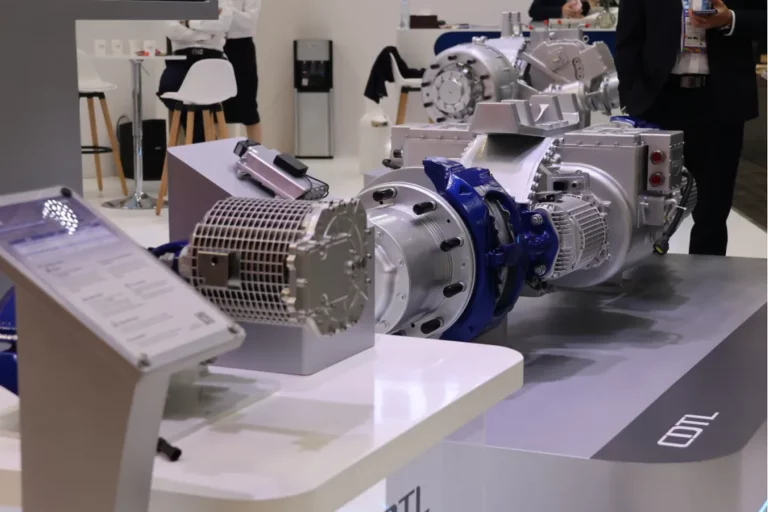
Modern brake engineering is systems engineering. It’s thermal management for regenerative braking in EVs, where the friction brakes may go months without significant use and then need to perform flawlessly in an emergency. It’s integrating brake-by-wire with vehicle dynamics software. It’s developing actuators for autonomous emergency braking systems that need to respond in milliseconds. It’s materials science, electronics, embedded software, and mechanical engineering converging in a safety-critical application where failure isn’t an option.
That’s a compelling pitch. But most companies aren’t making it. University recruiting still emphasizes legacy talking points. Career pages read like they were written a decade ago. And when a candidate considers offers from a brake supplier and a well-funded EV startup, the startup usually wins on narrative, even if the brake job offers better long-term prospects.
What Candidates Actually Want
Through hundreds of conversations with engineers at various career stages, patterns emerge about what drives decisions.
Stability matters more than people admit publicly. The startup layoffs of 2023 and 2024 made an impression. Candidates are asking harder questions about company fundamentals, backlog, and customer concentration. The brake industry’s ties to established OEMs—a perceived weakness in the “disruption” narrative—is increasingly an asset when candidates have families and mortgages.
Technical depth still attracts serious engineers. The candidates worth hiring aren’t just chasing the buzzword of the moment. They want to work on hard problems with real constraints. Brake systems offer that in abundance. But companies need to lead with the complexity, not assume candidates will discover it.
Global exposure is undervalued in recruiting conversations. A brake engineering career can take someone to Germany, Japan, China, and Mexico within a few years. For engineers interested in international experience, this industry delivers. Yet I rarely see employers emphasize it.
Mentorship and development are differentiators. Given the knowledge transfer problem, companies that can offer genuine apprenticeship—pairing newer engineers with experienced mentors on real programs—have an advantage. Candidates recognize when an employer is investing in their growth versus just filling a seat.
Compensation has reset. This is just reality. Expectations have shifted, and companies still anchored to 2019 salary bands are losing candidates to competitors. The market has repriced, and fighting it is a losing strategy.
What the Industry Must Do
None of this is insurmountable, but it requires deliberate effort rather than hoping the next generation will just show up.
Tell a better story. The brake industry needs to market itself to talent the way it markets products to customers. That means updated messaging, presence at engineering schools, and visibility in the media and forums where younger engineers pay attention. Companies should be highlighting the most sophisticated work they do, not leading with heritage.
Invest in structured knowledge transfer. Mentorship can’t be informal and haphazard when entire generations of expertise are at stake. Companies should identify their most critical institutional knowledge, document what can be documented, and create deliberate programs to transfer tacit knowledge before it’s too late.
Rethink where talent comes from. The ideal brake engineer doesn’t have to come from a brake company. Adjacent industries—aerospace, heavy truck, industrial automation—have produced excellent candidates. So have engineering disciplines that weren’t traditional feeders, like software and controls engineering. Rigid requirements about industry background will increasingly limit the candidate pool.
Compete on the full package. Compensation is part of it. So is flexibility, career pathing, development investment, and organizational culture. Candidates are evaluating all of it, and employers who treat recruiting as a transactional exercise will lose to those who treat it as relationship-building.
Partner with universities more seriously. Capstone projects, co-op programs, guest lectures, facility tours—these build awareness before candidates are comparing offers. The companies investing here today will have an advantage for years.
The Real Stakes
Braking systems are safety-critical. The work this industry does saves lives. That’s not marketing language—it’s the literal function of the product. The engineers who design, test, and manufacture these systems carry a responsibility that most industries can’t claim.
That sense of purpose is attractive to the right candidates. But they have to know about it first.
The brake industry has spent decades solving hard technical problems. Attracting and developing the next generation of talent is one more. It’s time to approach it with the same rigor.
Subscribe to The BRAKE Report. Get free sample chapters.