

Originally reported by Taylor Ramey at Jalopnik (January 17, 2026). Read the full story →
The performance envelope for factory braking systems continues to shrink. A recent analysis of production vehicle stopping distances reveals that today’s street-legal cars routinely achieve 60-0 mph distances that would have seemed impossible a decade ago, with the top performers now clustering between 86 and 92 feet regardless of significant weight differences.
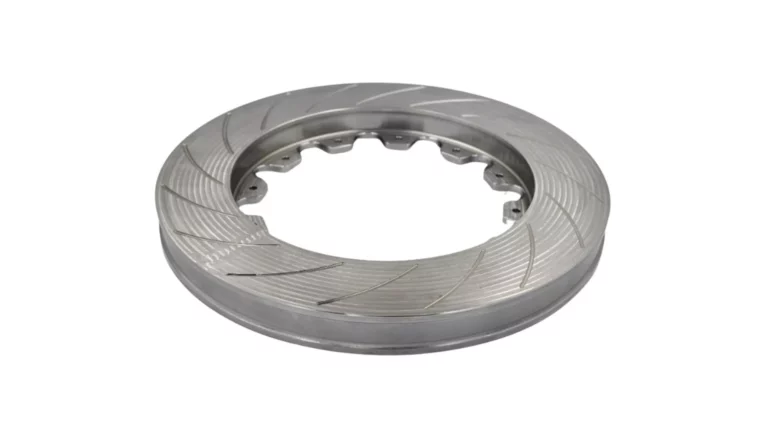
What makes these figures compelling for brake industry professionals isn’t just the raw numbers. It’s the engineering diversity behind them. Carbon-ceramic rotors, Brembo calipers, electronic brake boosters, and sophisticated brake-by-wire systems are all contributing to these outcomes, yet each vehicle achieves elite stopping power through different system architectures. The data underscores that braking performance has become a full-vehicle integration challenge rather than a component specification exercise.
Weight Management Redefines Performance Benchmarks
The most striking insight from current production data is how decisively system integration now trumps curb weight as a predictor of braking capability. The 2024 Ford Mustang Dark Horse achieved an 86-foot stop while carrying 3,925 pounds, matching the Porsche 911 GT3 Touring despite weighing 607 pounds more. That parity illustrates how tire compound selection, rotor thermal management, and electronic control strategies can compensate for mass penalties that would have been insurmountable in previous generations.
Brembo’s continued presence across multiple platforms in this performance tier validates the supplier’s investment in high-performance calipers and rotor designs. The Dark Horse’s combination of oversized front rotors, six-piston Brembo calipers, and an electronic brake booster represents a formula that domestic OEMs are increasingly adopting to compete with European marques on objective metrics. For aftermarket distributors, this signals sustained demand for premium brake hardware as performance expectations cascade from track-focused models into broader product lines.
The Ferrari SF90 Stradale presents a different engineering story. Despite tipping the scales at 3,839 pounds, the hybrid hypercar still achieved a 90-foot stop. Its brake-by-wire system coordinates regenerative and friction braking seamlessly, pointing toward an architecture that will become increasingly relevant as electrified performance vehicles proliferate.
Repeatability Emerges as the True Differentiator
For brake engineers and friction material specialists, single-run stopping distances tell only part of the story. The vehicles dominating these rankings share a common trait: they’re designed for repeated hard braking without significant degradation. The Porsche 911 GT3 RS and GT2 RS Weissach both emphasize thermal management and consistent pedal feel across multiple high-deceleration events, a characteristic that distinguishes performance braking systems from those optimized purely for initial bite.
This repeatability requirement has direct implications for friction material formulation. Compounds must deliver consistent coefficients across a wide temperature window while managing wear rates that remain predictable for consumers who use these vehicles on both street and track. The 2016 Dodge Viper ACR’s 89-foot stop demonstrates that mechanical grip and conventional hydraulic systems can still compete when tire selection and aerodynamic loading work in concert with appropriately specified friction materials.
How will these OEM benchmarks influence aftermarket upgrade expectations? Consumers who purchase vehicles capable of 90-foot stops will likely expect replacement components to maintain that standard, creating quality assurance challenges for parts distributors.
Carbon-Ceramic Adoption Accelerates Across Segments
The prevalence of carbon-ceramic brake systems among top performers reflects broader material science trends reshaping the industry. Ferrari, McLaren, and Porsche all rely on carbon-ceramic rotors for their flagship performance models, leveraging the technology’s weight savings, thermal stability, and fade resistance. As manufacturing costs continue to decline, this technology is migrating from hypercar exclusivity toward broader high-performance applications.
The Chevrolet Corvette lineup demonstrates this transition in real time. The 2019 ZR1 with ZTK package achieved an 88-foot stop at 3,650 pounds, while earlier C7 variants like the Grand Sport and Z06 clustered at 90 feet using iron rotors with premium friction materials. The performance gap between material technologies continues to narrow as conventional systems benefit from advances in metallurgy and compound chemistry.
Bottom Line
Factory braking systems have entered a performance plateau where sub-90-foot stops from 60 mph are achievable across multiple price points and vehicle architectures. For brake industry professionals, the implications extend beyond component specifications to system-level integration, thermal management strategy, and friction material consistency. As OEMs continue pushing these boundaries, aftermarket suppliers face both the challenge and opportunity of meeting elevated consumer expectations.
Subscribe to The BRAKE Report. Get free sample chapters.