

Sign up for our weekly email to stay on top of the latest news and insights!
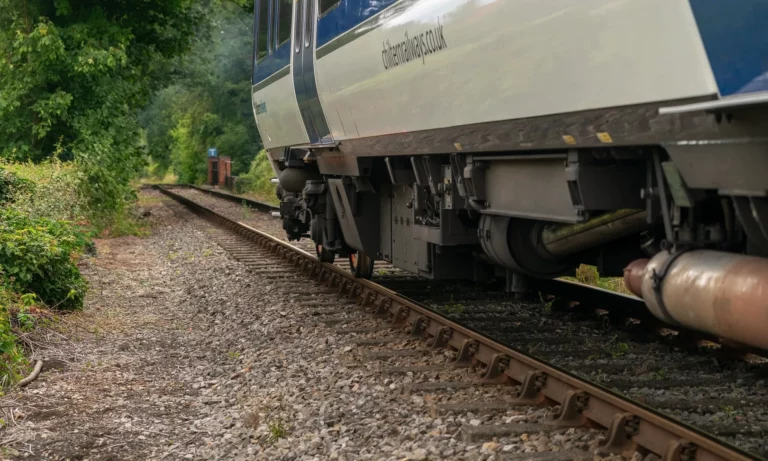
Stopping the majority of the world’s passenger trains, whether a consist of two or 10 cars, is much like stopping any other electric vehicle – either engine retardation, also known as regenerative braking, or friction-braking components or a combination of the two performs the task.
The difference comes in the execution and physical componentry. And even in the priority of braking system.
When it comes to the world’s passenger rail fleet, operating costs play a significant role in determining the primary braking methodology, According to Hervé Savary, Brakes & Couplers – marketing director for Wabtec Transit.
Savary spoke, via Zoom from Wabtec Transit’s headquarters in Gennevilliers, France during a Zoom interview with The BRAKE Report Magazine. He provided an explanation of the braking systems utilized in today’s rail systems and the magazine is providing a very brief overview of said systems.
“We have two types of brakes in a train – the service brake and the emergency brake [the train service brake is a combination of regenerative and friction operations]. Why two types? Because if you look at the cost of operation of a train, first of all, you have the energy to propel the train. That’s the cost number one, obviously. But then one of the next high cost is the friction material.
“So, we try to minimize the use of the friction brake, and therefore we give the priority to the ED brake, electrodynamic brake. It is like the retardation force that you get from the engine in your car.”
He takes the analogy even further, discussing how the regen system of electric trains do not return the energy produced to an onboard battery, but to the grid.
“So, instead of being used as in a traditional manner. the traction motor becomes a generator, and then you inject the energy in the catenary (the overhead wire system carrying the electricity to power the electric trains) so the other trains can use it.”
The distribution of braking between the ED and the friction brakes on a regular basis are not left to the discretion of the engineer but are determined by the train-systems’ computers, depending on the grid’s capacity to use the energy generated.
“So, the primary is the regeneration, the secondary is friction,” explained Savary.
“The determination between them is performed by a computer system and this is where I come to service break and emergency brake.
“If there is the need to brake the train in a regular mode, for example, because you are arriving at the station [for example], then you are using the service brake. You want to decelerate at a certain level, then your system will give the priority to the electrodynamic brake. But then if the deceleration requested is above the deceleration rate that the ED brake can provide, then you need to complete with the friction brake.”
And again, the system’s computers determine the amount of each type of brake force.
When it comes to the emergency braking system though, electronics are not part of the package.
Read the full article in the Q3 2025 issue of The BRAKE Report Magazine here.
Subscribe to The BRAKE Report. Get free sample chapters.