

SPONSORED CONTENT | Presented by Duroline
This article was written and provided by Duroline. It reflects the company’s own claims and testing.
Making a brake lining is a bit like baking. The quality, proportions and order of the ingredients determine much of the outcome, but preparation and technique matter just as much.
Brake linings follow the same logic. They are composite materials in which friction ingredients are mixed in a specific order and then bound together under high heat and pressure. The chemistry is critical, but so is the way the formula is prepared and densified in the press.
Most manufacturers rely on one of three common approaches:
- Some dump loose powder directly into smaller molds.
- Others fill long plastic bags with the mix and place them between the cavities of larger molds.
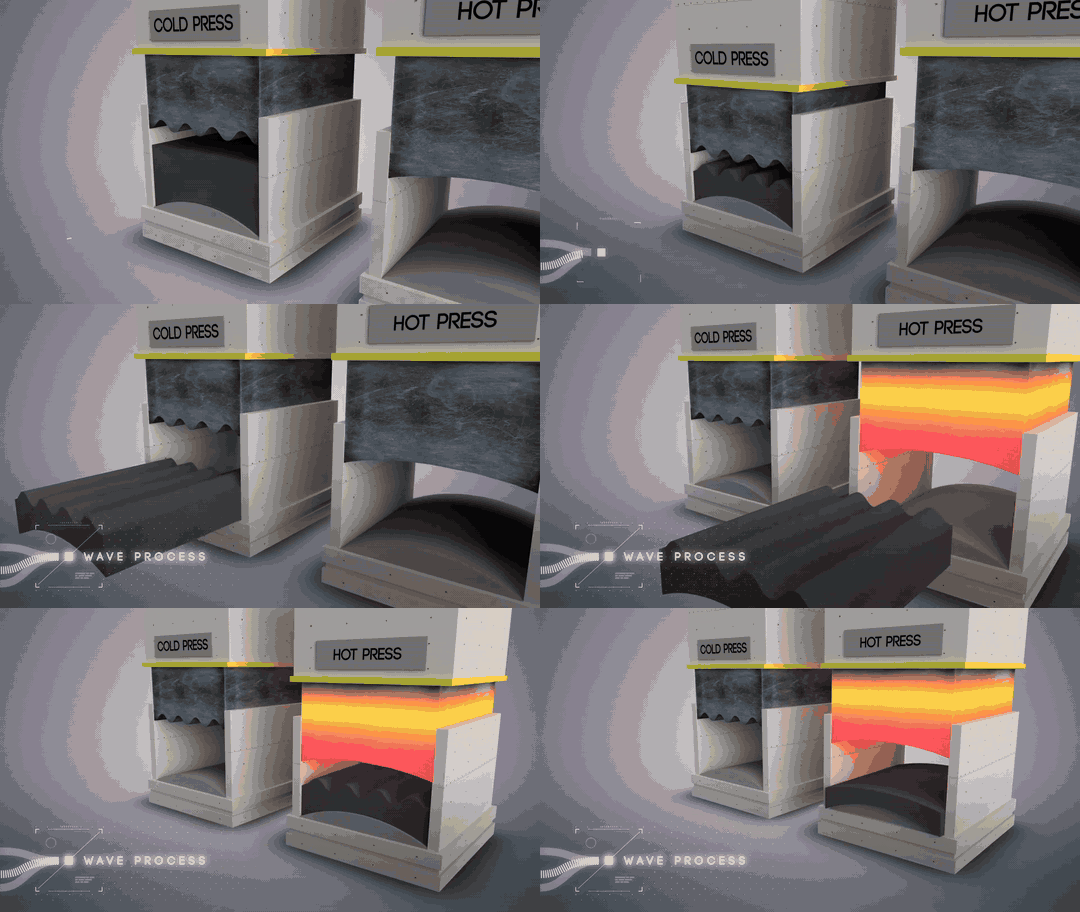
- Still others first cold-press the powder into preforms, which are then transferred to the hot press.
Each method has trade-offs in density control, consistency and production efficiency.
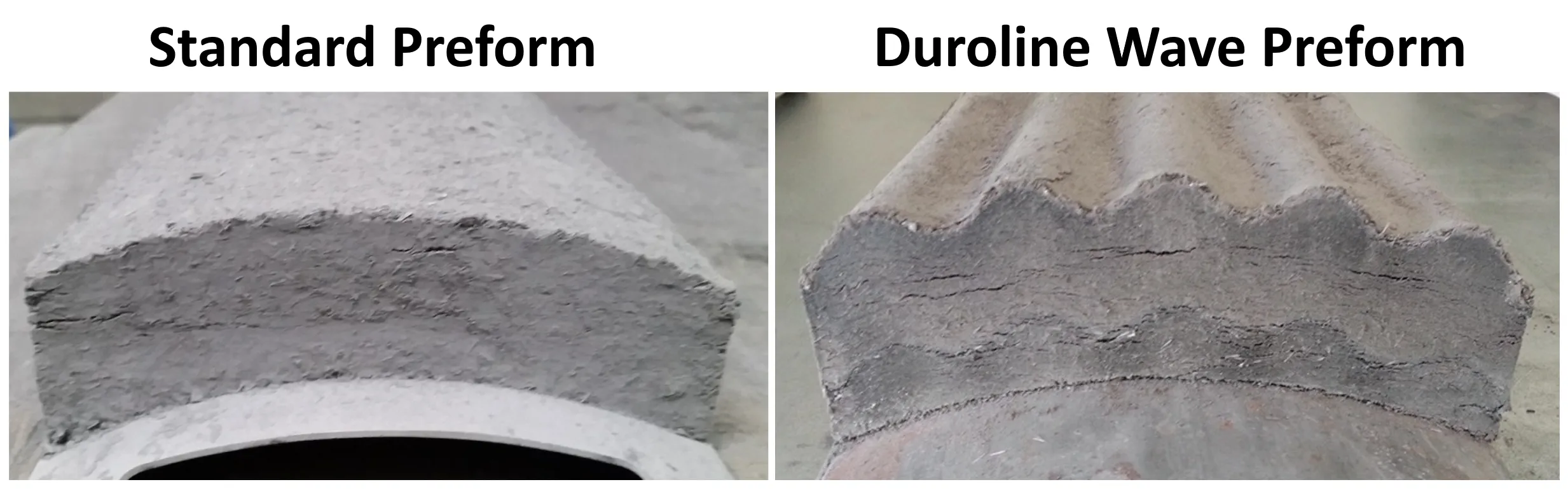
Duroline’s Wave-Process follows the latter approach, but with one key difference: instead of forming the preform in the conventional crescent shape, the company creates a deliberate wave pattern in it.
The Wave Effect
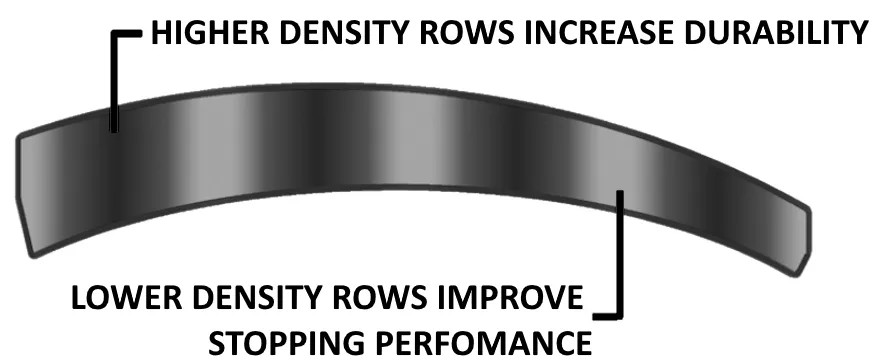
When the waves are compressed in the hot-press stage, the crests — areas of higher volume — become higher-density zones, while the troughs form lower-density zones.
The result is a combination of two otherwise conflicting characteristics: the wear resistance of harder, denser linings with the flexibility and stopping performance of lower-density materials.
In SAE J2115 dynamometer wear testing conducted by a fleet-components customer, identical formulations were pressed with and without the wave preform. The Wave-Process version showed roughly 12% better wear life.
Same ingredients. A smarter process.
The Advantages Don’t Stop There
The wave geometry also makes dual-layer construction practical — something many manufacturers have attempted but struggled to make work reliably.
The upper portion of the lining — the usable material that actually contacts the brake drum — is formulated for high durability and stopping power.
The lower portion, an anchoring layer that reaches only as high as the rivets or wear-indicator line, incorporates large quantities of high-strength reinforcing fibers. The wave structure mechanically interlocks the two layers, eliminating the risk of shear separation.
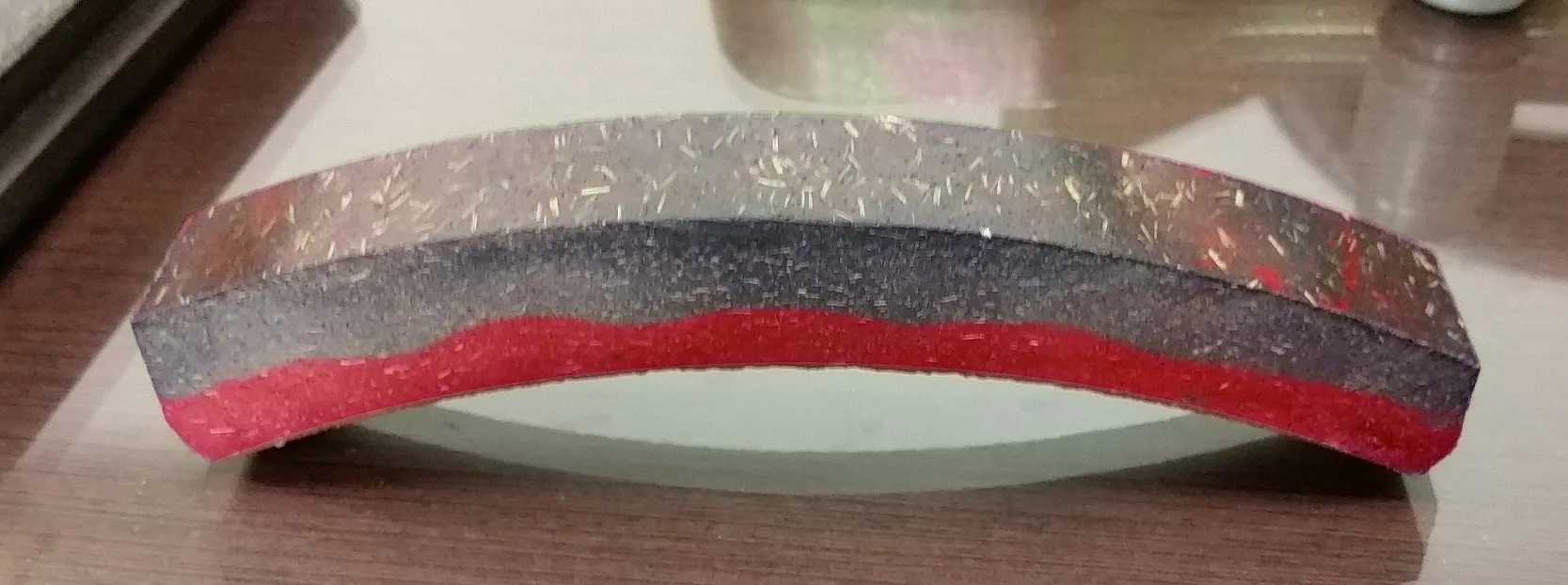
Using a red dye in the anchoring layer, the boundary where the two layers meet can be made visible.
In rivet pull-through testing, this anchoring layer has measured up to 20% stronger than comparable linings. In commercial vehicle service, those increments can translate into longer intervals between relines and fewer structural failures such as cracked linings or loose rivets.
Once finished, a Duroline brake lining looks the same as a conventional single-density, single-layer product — but performs better.
About Duroline
Since 1988, Duroline has manufactured premium heavy-duty brake linings for commercial vehicles, earning a reputation for engineering excellence, reliability and consistent performance.
Duroline products are exported worldwide, serving OEM and aftermarket customers across Latin America, North America, Europe, the Middle East and other international markets.
Duroline North America, headquartered in Norfolk, Virginia since 2002, supports customers throughout the United States with local inventory, distribution and brake-kit assembly, ensuring fast delivery, technical support and customized solutions.
More information is available at www.duroline.com, or by watching the company video.
This is sponsored content provided by Duroline. The BRAKE Report’s editorial staff did not write or independently verify its contents. For information on partner content, contact [email protected].